wayground logo

Free Printable Worksheets

Font size

S
M
L
XL
Worksheets

NC EOC Biology Review Evolution

Total questions: 25

Worksheet time: 50mins

Name
Class
Date
1.
Inherited trait that helps an organism survive is a(n) __________.
a)
Fossil
b)
Adaptation
c)
Ancestor
d)
Natural selection
2.
Survival of the fittest or when favorable adaptations reproduce faster is called what?
a)
Evolution
b)
Adaptation
c)
Natural selection
d)
Fossilization
3.

What do we call a change in a species over time?

a)

Adaptation

b)

Evolution

c)

Extinction

d)

Environmental influences

4.
The environment around Manchester, England, changed during the Industrial Revolution.  How did this change affect peppered moths living in the area?
a)
Natural selection favored moths with dark wings because predators could not see them on the soot-colored trees.
b)
Natural selection favored moths with white wings that were easy for predators to see.
c)
Natural selection favored moths with white wings because predators could not see them on the soot-colored trees.
d)
Natural selection caused moths with white wings to become extinct.
5.
Two organisms that are closely related would have
a)
very similar DNA sequence
b)
exactly the same DNA sequences
c)
no proteins in common
d)
completely different DNA sequence
6.
Comparing human hemoglobin of chimpanzees, horses, kangaroos, and chickens, reveal that humans have the fewest amino acid differences with 
a)
Kangaroos
b)
Horses
c)
chickens
d)
chimpanzees
7.

Which species are most closely related to the Blue Whale ?

a)

Pygmy hippopotamus

b)

Angus cattle

c)

White-tailed deer

d)

Wild boar

8.

A new organisms was discovered. It is unicellular, has no nucleus, and has a cell wall. In which kingdom would we classify this organism?

a)

Archaea

b)

Bacteria

c)

Protista

d)

Plantae

9.

Based on the information in the data table, which two organisms are most closely related?

a)

frogs and rodents

b)

lizards and gorillas

c)

fish and frogs

d)

lizards and birds

10.

The sequence of nucleotides is what makes up DNA. How could we use new nucleotide evidence from the table to determine changes in the classification of these organisms?

a)

We now know that the Spectacled Bear is most closely related to the Racoon.

b)

We know now that the lesser panda is most closely related to the giant panda.

c)

We now know that the lesser panda is most closely related to the raccoon.

d)

We know now that they giant panda is most closely related to the raccoon.

11.

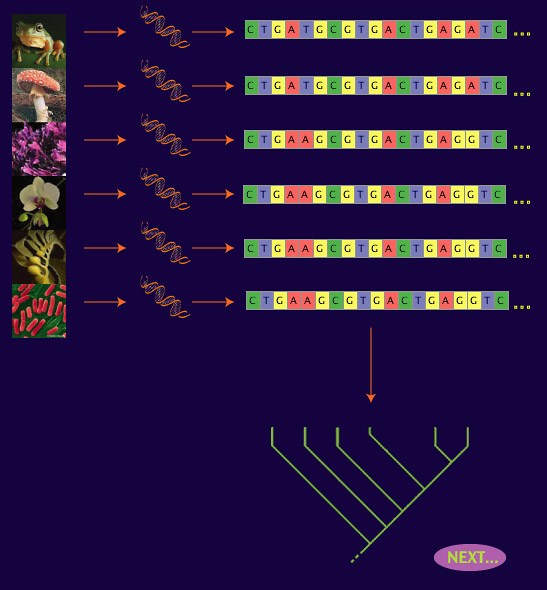
Why did scientists built the cladogram in this order?

a)

Cladogram is based on mode of nutrition

b)

Cladogram is based of similar habitats

c)

Cladogram is based on body size

d)

Cladogram is based of derived characteristics.

12.

Which is the correct order?

a)

Kingdom Phylum Order Class

b)

Class Order Family Genus

c)

Domain Phylum Kingdom Species

d)

Order Family Species Genus

13.

You find a species that seems to be unicellular and is eating smaller cells around it. It has organelles and a nucleus. Which kingdom is it MOST likely a part of?

a)

Fungi

b)

Bacteria

c)

Protists

d)

Plants

14.

Which scientific name is TYPED correctly

a)

carcharhinus melanopterus

b)

Carcharhinus Melanopterus

c)

Carcharhinus melanopterus

d)

Carcharhinus melanopterus

15.

Which taxa are used in a scientific name?

a)

Domain

b)

Genus

c)

Phylum

d)

Species

e)

Class

16.

What is the smallest taxa?

a)

Domain

b)

Kingdom

c)

Genus

d)

Species

17.

On this Cladogram, which animals have fur?

a)

Mouse, Chimp

b)

Pigeon, Mouse, Chimp

c)

Lizard, Pigeon, Mouse, Chimp

d)

Chimp

18.
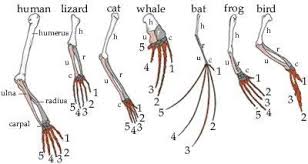
Refer to the illustration.  The similarity of these structures is one from of evidence that the organisms...
a)
share a common ancestor
b)
all grow at different rates
c)
evolved instantaneously
d)
live for a long time
19.

Arctic foxes and snowshoe rabbits have specific adaptations that evolved over time to help them survive. Both turn white in the winter and have fur on the pads of their feet. These are adaptations to:

a)

food source

b)

environment

c)

competition

d)

mating

20.

The structural similarity shown in the organisms pictured here suggests that –

a)

similar bones are the same size in all animals.

b)

the organisms have common ancestors.

c)

some bones in the skeleton have immovable joints.

d)

only quadrupeds need the humerus bone.
21.
What is this an example of?
a)
vestigial structures
b)
embryology
c)
homologous structures
d)
fossil record
22.
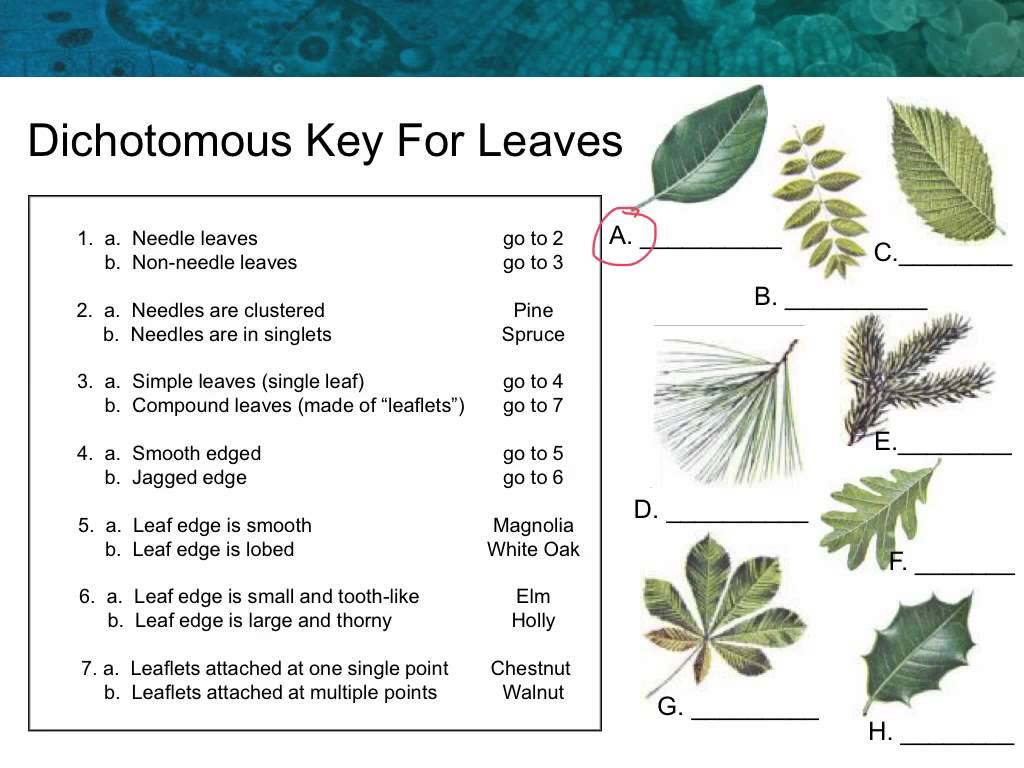
An illustration and a dichotomous key are given. What is the correct classification for this organism?
a)
Class Insecta
b)
Order Amblygygi
c)
Order Araneae
d)
Order Scorpiones
23.
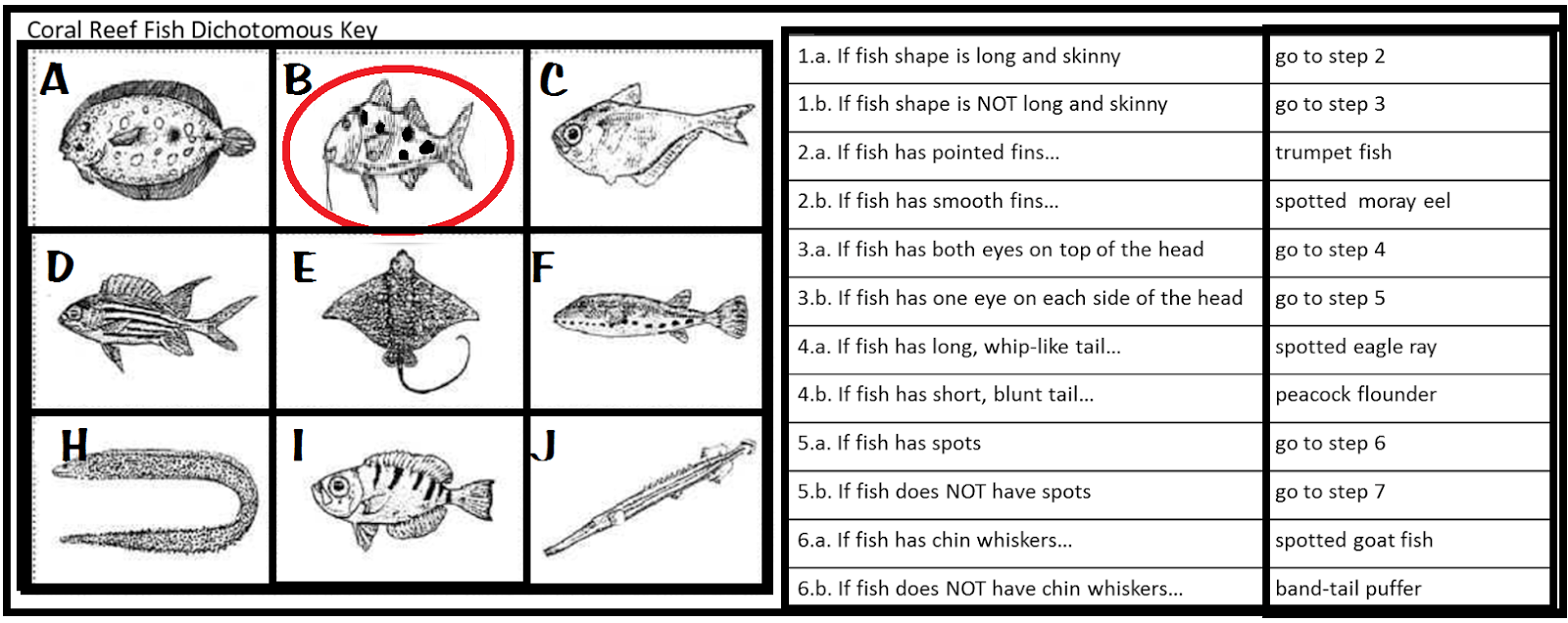
Using this dichotomous key, identity the name of the circled fish.
a)
band-tail puffer
b)
spotted goat fish
c)
peacock flounder
d)
trumpet fish
24.
A student discovers an arachnid with a segmented abdomen, long legs, and a tail with no stinger. The student uses the dichotomous key below to identify it. Which arachnid has the student found?
a)
Whip Scorpion
b)
Wind Scorpion
c)
Daddy long legs
d)
Scorpion
25.
What is a dichotomous key used for in science?
a)
To organize biomes
b)
Classify organisms
c)
Identify bacteria only
d)
None of these