
 Worksheets
Nuclear Chemistry and Decay Reactions
Total questions: 25
Worksheet time: 28mins
Name
Class
Date
1.
Which process produces alpha particles?
a)
Alpha decay
b)
Beta decay
c)
Gamma decay
d)
Nuclear fusion
2.
Which process produces beta particles?
a)
Alpha decay
b)
Beta decay
c)
Gamma decay
d)
Nuclear fusion
3.
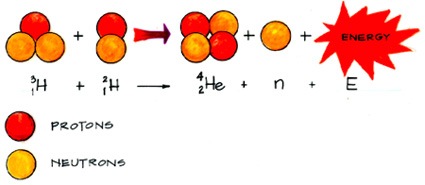
Which process involves the joining of small nuclei?
a)
Beta decay
b)
Alpha decay
c)
Nuclear fission
d)
Nuclear fusion
4.

Which process involves the splitting of large nuclei?
a)
Beta decay
b)
Alpha decay
c)
Nuclear fission
d)
Nuclear fusion
5.

Arrange in order of increasing ability to penetrate matter.
a)
Beta, gamma, alpha
b)
Alpha, gamma, beta
c)
Gamma, beta, alpha
d)
Alpha, beta, gamma
6.

Classify this process.
a)
Nuclear fission
b)
Nuclear fusion
c)
Alpha decay
d)
Beta decay
7.
Which type of radiation has the greatest penetrating power?
a)
Alpha
b)
Beta
c)
Gamma
d)
Microwaves
8.
What happens to the atomic number during alpha decay?
a)
The atomic number decreases by 4
b)
The atomic number increases by 1
c)
The atomic number decreases by 2.
d)
The atomic number stays the same.
9.
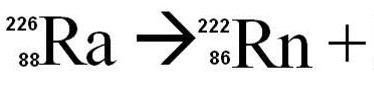
Complete the nuclear equation and determine the type of decay that is occurring in this reaction.
a)
alpha
b)
beta
c)
gamma
d)
none
10.
What is the missing isotope that will balance the following nuclear equation?
94Be + 11H → _____ + 42He
94Be + 11H → _____ + 42He
a)
105B
b)
105Ne
c)
63Li
d)
63C
11.
If Thorium-234 undergoes a beta decay, What element will be left in its place?
a)
Actinium-234
b)
Thorium-233
c)
Protactinium-234
d)
Radium-230
12.
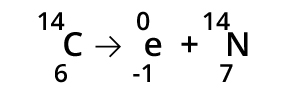
What type of nuclear equation is this?
a)
fusion
b)
fission
c)
alpha
d)
beta
13.
What sort of shield will block gamma rays?
a)
skin
b)
paper
c)
aluminum
d)
thick lead
14.
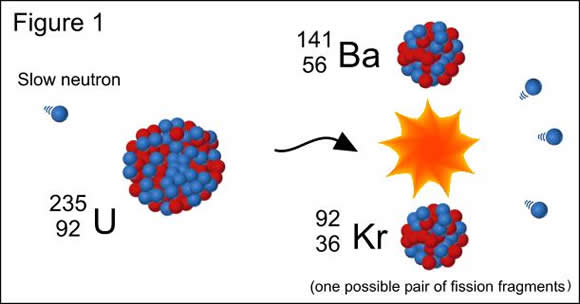
Which nuclear process is shown in the picture?
a)
fission
b)
fusion
c)
alpha decay
d)
beta decay
15.
Has a mass of 4 and a charge of +2
a)
Alpha
b)
Beta
c)
Gamma
d)
neutron
16.

What particle is produced in this reaction?
a)
positron
b)
proton
c)
alpha
d)
beta
e)
gamma
17.
Balance the following equation:
146C --> 0-1e + ________
146C --> 0-1e + ________
a)
145B
b)
146C
c)
147N
d)
42He
18.

Which type of nuclear radiation is being emitted here?
a)
Alpha
b)
beta
c)
gamma
d)
none
19.
When nuclei decay, massive amounts of __________ is released.
a)
energy
b)
jello
c)
protons
d)
neutrons
20.

What type of reaction is this?
a)
alpha
b)
beta
c)
gamma
d)
quiet
21.
Has the highest penetrating power. Can penetrate our body. Even several cm thick of lead or several meters thick of concrete cannot stop all of it.
a)
Alpha
b)
Beta
c)
Gamma
22.
Has the lowest penetrating power. Can only penetrate 0.05 mm into the body and can be stopped by a piece of paper or clothing.
a)
Alpha
b)
Beta
c)
Gamma
23.
A helium nucleus with two protons and two neutrons is called a(n) ____.
a)
alpha particle
b)
electroscope
c)
beta particle
d)
gamma ray
24.
Solve this equation for alpha decay.
85209At = ___ + 24He
85209At = ___ + 24He
a)
83205Bi
b)
86209Rn
c)
81207Tl
d)
85208At
25.
The following is an example of what type of reaction?
24395Am → 23993Np + 42He
24395Am → 23993Np + 42He
a)
alpha decay
b)
beta decay
c)
gamma decay
100 %

