wayground logo

Free Printable Worksheets

NEW

Font size

S
M
L
XL
Worksheets

Forms of Matter

Total questions: 32

Worksheet time: 22mins

Name
Class
Date
1.
What are the states of matter?
a)
solid, liquid, and juice
b)
solid and liquid
c)
solid and gas
d)
solid, liquid, and gas
2.
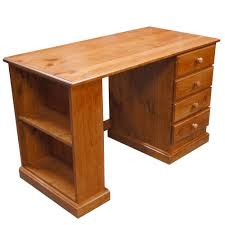
Which form of matter has a definite shape like this picture?
a)
liquid
b)
solid
c)
gas
d)
clay
3.
Which form of matter take the shape of a container like this juice?
a)
liquid
b)
solid
c)
glass
d)
gas
4.
Which form of matter fills the space like it has in the balloon?
a)
liquid
b)
string
c)
solid
d)
gas
5.
Which form of matter does not take the shape of its container?  It keeps it's shape.
a)
liquid
b)
gas
c)
solid
d)
air
6.
How many states of matter have we learned about?
a)
4
b)
1
c)
3
d)
2
7.
Which state of matter has tightly packed molecules (particles)?
a)
solid
b)
liquid
c)
gas
8.
Which state of matter has a definite shape and does not take the shape of its container?
a)
solid
b)
liquid
c)
gas
9.
The state of matter that has no definite size or shape is ______. It's particles are not connected.
a)
Solid
b)
Liquid
c)
Gas
10.
Particles of a liquid _______.
a)
are tightly packed together and stay in a fixed position.
b)
have no viscosity.
c)
decrease in volume with increasing temperature.
d)
are free to move around one another but still touch.
11.
Which type of matter has a greater distance (space) between particles?
a)
Solid
b)
Liquid
12.
Molecules (particles) are packed the closest together in a _______.
a)
Solid
b)
Liquid
c)
Gas
d)
plasma
13.
What does this picture represent? 
a)
solid
b)
liquid 
c)
gas
d)
plasma
14.
If the tops were removed from the cylinders, the following would happen:
a)
The solid would fly out of the container
b)
The liquid would fly out of the container.
c)
The gas would fly out of the container.
d)
They ALL would fly out of the container.
15.
The milk in the glass has volume and takes the shape of its container. Therefore, it is assumed that milk is a ______________.
a)
solid
b)
liquid
c)
gas
d)
plasma
16.
The molecules (particles) in the picture are tightly held together with little movement. They have shape and energy.  Therefore, the picture represents _________.
a)
solid
b)
liquid
c)
gas
d)
plasma
17.
Things that take up space are called?
a)
Toys
b)
Liquids
c)
Matter
d)
Space
18.
What is a solid?
a)
it keeps its shape and size
b)
it takes the shape of the container that holds it
c)
it has no shape, and spreads to fill the space they are in
d)
it changes with a temperature change
19.
What is an example of a solid?
a)
wind
b)
water
c)
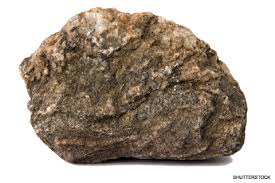
rock
d)
juice
20.
How can you describe this picture?
a)
liquid
b)
solid
c)
gas
21.
What is Gases?
a)
Gases are soft
b)
Gases spread to fill the space they are in.
c)
Gases are hard
d)
Gases are wet
22.
What is a liquid?
a)
feels wet and have no shape of their own
b)
never changes shape
c)
feels hard
d)
feels squishy
23.
What is a solid?
a)
it keeps its shape and size
b)
it takes the shape of the container that holds it
c)
it has no shape, and spreads to fill the space they are in
d)
it changes with a temperature change
24.

The mixture of gases that surrounds the Earth, which is made up of oxygen, nitrogen, and other gases.

a)

air

b)

solid

c)

liquid

d)

property

25.

A quality that something is known by; characteristic.

a)

liquid

b)

gas

c)

property

d)

air

26.

A form of matter that has a definite shape or form that can be measured in length, width, and height; not like a liquid or gas.

a)

air

b)

gas

c)

liquid

d)

solid

27.

A form of matter that has no definite shape, flows easily, and is neither a solid or gas.

a)

gas

b)

liquid

c)

solid

28.

A form of matter that has no definite shape and is neither a liquid nor a solid; rapidly spreads out when it is warmed and contracts when it is cooled.

a)

gas

b)

solid

c)

liquid

29.

All substances that contain atoms and take up space; matter includes solids, liquids, and gases.

a)

air

b)

mass

c)

matter

d)

weight

30.

Amount of matter in something.

a)

mass

b)

air

c)

weight

d)

liquid

31.

An instrument for measuring the mass of objects.

a)

balance scale

b)

mass

c)

weight

d)

air

32.

The downward pull on an object’s mass due to Earth’s gravity.

a)

mass

b)

balance scale

c)

gas

d)

weight