
NEW
Font size
S
M
L
XL
 Worksheets
Elements Compounds and Periodic Table
Total questions: 27
Worksheet time: 26mins
Name
Class
Date
1.

GOLD
a)
Al
b)
Ag
c)
Ar
d)
Au
2.

CHLORINE
a)
C
b)
Ca
c)
Cl
d)
Cu
3.

CALCIUM
a)
C
b)
Ca
c)
Cu
d)
Cl
4.

CARBON
a)
C
b)
Ca
c)
Cl
d)
Cu
5.

COPPER
a)
C
b)
Ca
c)
Cu
d)
Cl
6.

SILVER
a)
Au
b)
Ag
c)
Al
d)
Ar
7.

SULFUR
a)
Su
b)
S
c)
Sf
d)
Si
8.

SILICON
a)
S
b)
Si
c)
Su
d)
Sc
9.

SODIUM
a)
S
b)
So
c)
N
d)
Na
10.

HELIUM
a)
H
b)
He
c)
Hl
d)
Hm
11.
If I gain electrons I become
a)
Positive because I've added to my atom
b)
negative because I've added electrons
c)
same because i'm balanced
d)
equal because now I have electrons
12.
Atoms are stable if they have ____________.
a)
empty inner electron orbitals.
b)
eight protons and eight neutrons.
c)
full nuclei.
d)
full valence electron shells.
13.
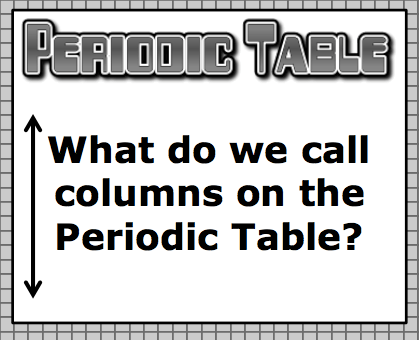
a)
Periods
b)
Groups
14.
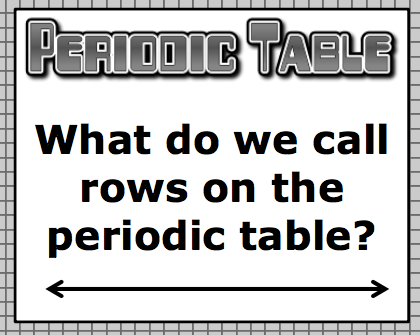
a)
Periods
b)
Groups
15.

a)
energy levels
b)
valence electrons
c)
protons
d)
neutrons
16.
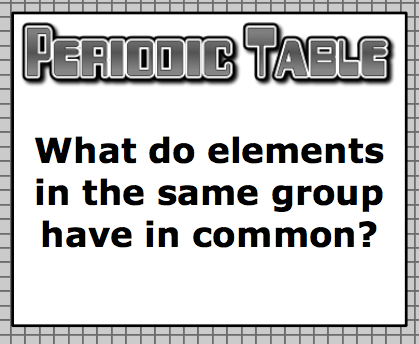
a)
energy levels
b)
valence electrons
c)
protons
d)
neutrons
17.
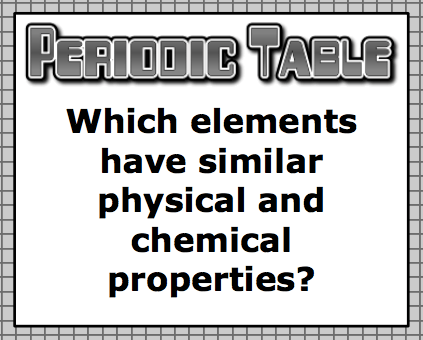
a)
Same group
b)
Same period
18.
all matter is made of what
a)
energy
b)
atoms
c)
electrons
d)
compounds
19.
The positive particles of an atom are
a)
electrons
b)
positrons
c)
neutrons
d)
protons
20.
the central region of an atom where its neutrons and protons are is its
a)
nucleus
b)
electron cloud
c)
core
d)
center
21.
an atom with atomic number 6 would have how many protons
a)
6
b)
12
c)
3
d)
cannot be determined
22.
Particles in an atom that are neutral and have no charge are
a)
negatrons
b)
electrons
c)
neutrons
d)
protons
23.
True or False? Neutrons have a negative charge
a)
True
b)
False
24.
What is the atomic number for an element with three protons?
a)
2
b)
1
c)
3
d)
6
25.
A particle that moves around the nucleus is a(n)...
a)
Proton
b)
Neutron
c)
Electron
d)
Quark
26.
In the modern periodic table elements are arranged by:
a)
atomic mass
b)
atomic number
c)
valence electrons
d)
number of isotopes
27.

What does the 1.00794 stand for?
a)
Hydrogen
b)
atomic number
c)
atomic mass
d)
atomic explosion
Reset

