wayground logo

Free Printable Worksheets

Font size

S
M
L
XL
Worksheets

Density-Dependent and Independent Limiting Factors

Total questions: 24

Worksheet time: 20mins

Name
Class
Date
1.

Due to stress, large numbers of female lemmings miscarry their young and fail to reproduce.

a)

Density-Dependent

b)

Density-Independent

2.

Many fish die due to a drastic change in water temperature.

a)

Density-Dependent

b)

Density-Independent

3.

An extensive drought in the plains threatens wildebeest, giraffe, zebra, and springbok populations.

a)

Density-Dependent

b)

Density-Independent

4.

Which of the following is a density-dependent limiting factor?

a)

human activities

b)

unusual weather

c)

competition

d)

natural disaster

5.
Which of the following is a density-independent limiting factor?
a)
natural disaster
b)
predation
c)
disease
d)
parasitism
6.

Which of the following would NOT be an example of a density dependent limiting factor?

a)

fire

b)

disease

c)

lack of food

d)

space

7.

Which of the following would NOT be an example of a density independent factor?

a)

predation

b)

tornado

c)

hurricane

d)

fire

8.

Which of the following are examples of a density independent factors?

a)

forest fire

b)

seasonal cycles

c)

storms

d)

disease

9.

Which of the following are density dependent factors?

a)

competition for resources

b)

predation

c)

disease

d)

natural disasters

10.

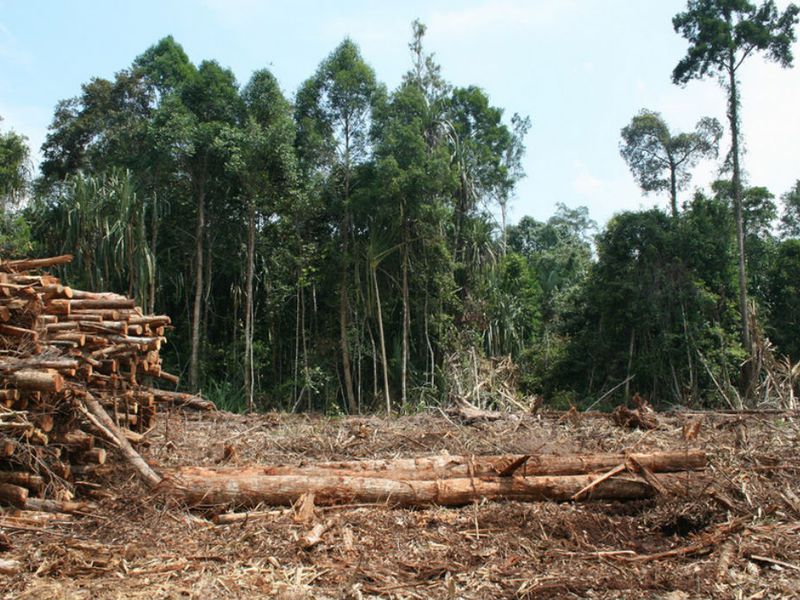
What would human alterations of the environment be considered? Ex. Cutting down the rain forests

a)

Density-independent

b)

Density-dependent

11.
When a specific population grows past the ecosystem's carrying capacity, what happens to the population?
a)
Density Independent limiting factors start to occur resulting in the population going farther above carrying capacity.
b)
Density Dependent limiting factors start to occur resulting in the population going back below carrying capacity.
c)
The population will go extinct due to lack of resources
d)
The population grows then finds a new carrying capacity
12.
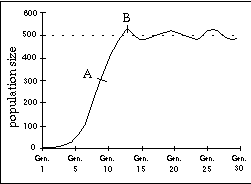
What is the carrying capacity of the graph?
a)
around 500
b)
more than 500
c)
less than 500
d)
around 600
13.
What is the carrying capacity of the following graph?
a)
1000
b)
8000
c)
800
d)
600
14.
The total number of individuals a habitat can survive with the resources it has available.
a)
Carrying capacity
b)
Limiting factors
c)
Resources
d)
Population
15.
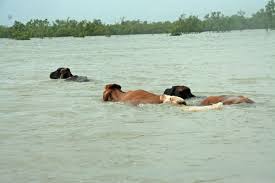
Excessive amounts of rain caused a flood in the southwest United States that resulted in substantial amounts of deaths in the rabbit population? This situation is an example of a density _____________ limiting factor.
a)
density-independent
b)
density-dependent
c)
density- too high
d)
density- too low
16.

Natural disasters can be considered limiting factors.

a)

true: density independent limiting factors

b)

false; natural disasters are not limiting factors

c)

true: density dependent limiting factors

d)

false: because Mrs. Schaffer said

17.
Limiting factors which impact the size of a population no matter how large that population is.
a)
Density Independent Limiting Factors
b)
Density Dependent Limiting Factors
c)
Carrying Capacity
d)
Exponential Growth
18.
An environmental factor such as storms and extreme heat or cold that decrease a population are considered to be. 
a)
density- dependent factor
b)
population density
c)
dispersion
d)
density- independent factor
19.

A lion and a cheetah attempt to occupy the same niche. The more aggressive lion survives; the cheetah does not.

a)

Density-Dependent: Competition

b)

Density-Independent: Competition

c)

Density-Dependent: Predator-Prey

d)

Density-Independent: Predator-Prey

20.

Coyotes cross the winter pack ice and enter Newfoundland. The moose population starts to decline.

a)

Density-Dependent: Competition

b)

Density-Independent: Competition

c)

Density-Dependent: Predator-Prey

d)

Density-Independent: Predator-Prey

21.
What does the graph represent?
a)
Emigration
b)
Exponential growth
c)
Immigration
d)
Logistic Growth
22.
If the number of births in a population is the same as the number of deaths in a population, what will happen to the growth of the population?
a)
It will increase.
b)
It will decrease.
c)
It will stay the same.
d)
It will fluctuate.
23.
If the number of births is greater than the number of deaths in a population, what will happen to the growth of the population?
a)
It will increase.
b)
It will decrease.
c)
It will stay the same.
d)
It will fluctuate.
24.
What growth pattern describes a population whose growth rate slows or stops following a period of exponential growth?
a)
logistic growth
b)
population growth
c)
exponential growth
d)
predator-prey cycle