Wayground logo

Free Printable Worksheets

Font size

S
M
L
XL
Worksheets

Characteristics of Sound Waves

Total questions: 30

Worksheet time: 52mins

Name
Class
Date
1.
A mechanical wave requires a ________.
a)
Motion
b)
Medium
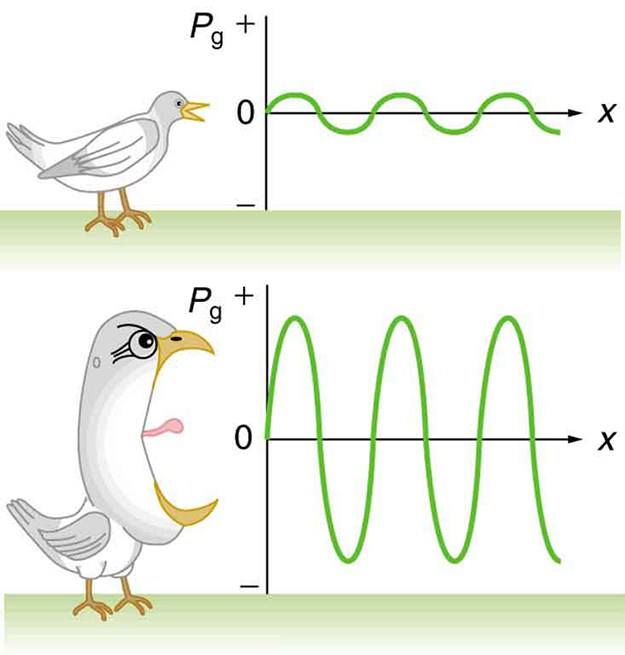
c)
Vacuum
d)
Car
2.
The wave crest is represented by which letter?
a)
A
b)
B
c)
C
d)
E
3.
The wave trough is represented by
a)
A
b)
B
c)
C
d)
D
4.
The amplitude of a wave is given by
a)
A
b)
B
c)
C
d)
D
5.
a)
Amplitude
b)
Crest
c)
Trough
d)
Wavelength
6.
a)
Frequency
b)
Amplitude
c)
Wavelength
d)
Trough
7.

The hearing range of human ear is _____.

a)

20 Hz to 20,000 Hz

b)

Less than 20 Hz

c)

More than 20,000 Hz

d)

20 Hz to 25,000 Hz

8.

The pitch of sound depends on _____.

a)

Frequency

b)

Amplitude

c)

Both of these

d)

None of these

9.

Sound cannot travel through (a)   .

10.

Large amplitude of sound vibrations will produce ______.

a)

Loud sound

b)

Meak sound

c)

Slow sound

d)

Shreak

11.

Flash and thunder are produced simultaneously. But thunder is heard a few seconds after the flash is seen. Why?

a)

The speed of sound is faster than the speed of light.

b)

The speed of sound is equal to the speed of light.

c)

The speed of light is faster than the speed of sound.

d)

All of the above

12.

When we hear a sound, which part of our body vibrates?

a)

Hands

b)

Ear Drum

c)

Legs

d)

None of the above

13.

What are the characteristics of sound?

a)

Frequency

b)

Amplitude

c)

Speed

d)

Velocity

e)

All of the above

14.
The number of wavelengths that pass a point each second
a)
frequency
b)
wavelength
c)
pitch
d)
amplitude
15.
How high or low a sound is; depends on the frequency (greater frequency= higher pitch)
a)
pitch
b)
frequency
c)
sound
d)
medium
16.
A reflected sound wave
a)
frequency
b)
pitch
c)
echo
d)
rarefaction
17.
Which of the following would you hear as a low pitched sound? 
a)
sound wave with a frequency of 50 Hz
b)
sound wave with frequency of 10,000 Hz
c)
sound wave with an intensity of 10 dB
d)
sound wave with an intensity of 100 dB
18.
If a wave is traveling at 260 m/s and has a wavelength of 0.8 m/s, what is its frequency?
a)
208 Hz
b)
325 Hz
c)
430 Hz
d)
160 Hz
19.
This is the unit used to measure the volume of a sound. 
a)
Decibel
b)
Medium
c)
Vibration
d)
Oscilloscope
20.
When a sound is louder what measurement gets bigger?
a)
Frequency 
b)
Amplitude 
c)
Wavelength 
d)
Crest
21.

Which of these waves would produce a high pitch sound?

a)

Low frequency wave

b)

High frequency wave

22.

A sound wave with low amplitude produces which type of sound?

a)

High

b)

Low

c)

Loud

d)

Soft

23.

Two sound waves of different frequencies interfere and produce a resulting waveform shown with four points (W, X, Y, and Z) marked on the new wave.


At which point will the sound be the loudest ?

a)

W

b)

X

c)

Y

d)

Z

24.

Frequency of waves is measured in

a)

Hertz

b)

Decibels

c)

Watts

25.

Find the period of the wave

a)

1 s

b)

2 s

c)

3 s

d)

4 s

26.

What is the frequency of the wave?

a)

2 Hz

b)

4 Hz

c)

1 Hz

d)

.5 Hz

27.

What is the wavelength of the wave?

a)

2 m

b)

4 m

c)

6 m

d)

8 m

28.

How are frequency (Hz) and period (T) related?

a)

The same

b)

directly related

c)

Inversely related

d)

Different

29.

If you increase the frequency, what happens to the wavelength?

a)

Stays the same

b)

Increases

c)

No effect

d)

Decreases

30.
Period is defined as...
a)
Number of waves or cycles generated per second.
b)
The maximum displacement of a wave from its equilibrium position.
c)
The time interval between two consecutive waves.
d)
The distance between two identical positions on two consecutive waves.