
 Worksheets
Space Science
Total questions: 15
Worksheet time: 8mins
Name
Class
Date
1.
The collection of objects that orbits our Sun is called
a)
a. the solar system
b)
b. Saturn
c)
c. the galaxy
d)
d. the Universe
2.
Which of the following planets is considered a gas giant?
a)
Earth
b)
Jupiter
c)
Mars
d)
Venus
3.
Which of the following planets is an inner planet?
a)
Venus
b)
Jupiter
c)
Neptune
d)
Moon
4.
Which planet has rings?
a)
Earth
b)
Jupiter
c)
Mars
d)
Saturn
5.
What is the definition of an astronomical unit (AU)?
a)
a. the time it takes light to go from the Sun to Earth
b)
b. the time it takes light to go from Earth to the Moon
c)
c. the distance between the Sun and Earth
d)
d. the distance between Earth and the Moon
6.
What do you call a scientist who studies the objects in the night sky?
a)
astrologer
b)
astronomer
c)
meteorologist
d)
physicist
7.
Which astronomical event determines the length of the year?
a)
a. the time it takes the Moon to revolve around Earth
b)
b. the time it takes Earth to revolve around the Sun
c)
c. the time it takes Earth to rotate on its axis
d)
d. the time it takes the Sun to go across the sky
8.
What elements are fusing in the Sun that provides its energy?
a)
2 hydrogen to 1 helium
b)
2 helium to 1 hydrogen
c)
2 helium to 1 oxygen
d)
2 oxygen to 1 iron
9.
How long does it take for the Moon to rotate around the Earth?
a)
24 hours
b)
27.6 days (1 month)
c)
365 days
d)
12 months
10.
How many moons does Mars have?
a)
0
b)
1
c)
2
d)
63
11.
Which is the smallest of the following: Planets; Solar System; Galaxy; Universe
a)
Universe
b)
Solar System
c)
Planets
d)
Galaxy
12.
What is the largest planet in our solar system?
a)
Mars
b)
Jupiter
c)
Mercury
d)
Venus
13.
What is the unit of measurement used to measure the distance of galaxies or stars?
a)
light year
b)
centimeter
c)
millimeter
d)
grams
14.
What is the smallest planet in our solar system?
a)
Mars
b)
Mercury
c)
Earth
d)
Venus
15.
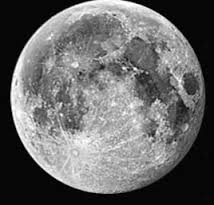
Name the moon phase
a)
First Quarter
b)
Last Quarter
c)
New Moon
d)
Full Moon
100 %

