
NEW
Font size
S
M
L
XL
 Worksheets
Ib Photosynthesis
Total questions: 26
Worksheet time: 32mins
Name
Class
Date
1.
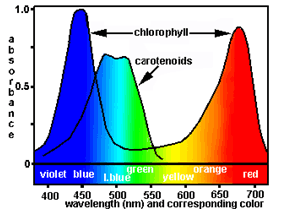
What is one function of the other pigments besides chlorophyll, in the chloroplast?
a)
to block damaging wavelengths of light
b)
to absorb different wavelengths than the chloroplasts
c)
to provide different colors to the leaves
d)
to transfer energy to a separate photosystem beside the one using chlorophyll a and b.
2.
What is the primary function of the light reactions of photosynthesis?
a)
To produce glucose
b)
To produce NADPH and ATP
c)
To use ATP
d)
To produce RuBP
3.

What supplies the electrons that are lost in PS I?
a)
the electrons from PS II
b)
water
c)
glucose
d)
oxygen
4.
What is the function of NADP+?
a)
It absorbs light
b)
It is an electron carrier
c)
It is a light-reflecting pigment
d)
It acts as long-term energy storage
5.

Which of the following molecules is not needed for the Calvin Cycle?
a)
CO2
b)
ATP
c)
NADPH
d)
H2O
6.
Green plants reflect ________ light.
a)
Red
b)
Green
c)
All
d)
Red and Violet
7.
Where does the carbon come from that is used to form glucose?
a)
The soil
b)
CO2 in the air
c)
From other carbohydrates
d)
Calvin Cycle
8.
The light reactions occur in the ________ and the dark reactions take place in the ________.
a)
Chloroplast / thylakoid membrane
b)
stroma / thylakoid
c)
mesophyl / stomata
d)
thylakoid membrane / stroma
9.
Where is glucose synthesized
a)
Photosystem II
b)
Photosystem I
c)
Calvin Cycle
d)
Glycolysis
10.
Where does the Calvin cycle take place?
a)
stroma of the chloroplast
b)
thylakoid membrane
c)
outer membrane of the chloroplast
d)
interior of the thylakoid membrane
11.
When oxygen is released as a result of photosynthesis, it is a direct by-product of
a)
reducing NADP+
b)
splitting water molecules
c)
chemiosmosis
d)
electron transfer in photosystem II and I
12.
What is the primary function of the Calvin cycle?
a)
regenerate
ATP for use in the light reactions of photosynthesis
b)
produce carbon dioxide for use in the light
reactions of photosynthesis
c)
produce oxygen by oxidizing water
d)
produce simple sugars from carbon dioxide
13.

Plants with the largest amount of which pigment will be best suited for growing conditions where light has a green hue.
a)
Chlorophyll A
b)
Chlorophyll B
c)
Carotenoids
d)
A combination of all 3
14.
How many sugar molecules are produced from every six molecules of carbon dioxide that enter the Calvin cycle?
a)
1
b)
3
c)
6
d)
12
15.
The H+ concentration gradient is used to
a)
make NADPH
b)
split a water molecule
c)
generate ATP
d)
form water
16.
Which of the following is NOT a limiting factor for photosynthesis?
a)
Light intensity
b)
Concentration of CO2
c)
Concentration of O2
d)
Wavelength of light
e)
Amount of water
17.

Why is photosynthesis essential to life on Earth?
a)
It converts unusable radiant energy into usable chemical energy
b)
We need the CO2 removing from the air as it is a harmful greenhouse gas
c)
It gives plants a purpose
d)
It isn't essential as we have solar technology now
18.

What type of organisms conduct photosynthesis?
a)
Autotrophs
b)
Heterotrophs
c)
Biotrophs
d)
Chemotrophs
19.

What is the name of a pigment-containing complex found in a thylakoid?
a)
chlorophyll a
b)
photosystem
c)
grana
d)
stroma
20.
When carbon first enters the Calvin cycle, what molecule does it combine with?
a)
PGA
b)
G3P
c)
RuBP
d)
ATP
21.
Which of the following is NOT a product of the light reactions?
a)
ATP
b)
NADPH
c)
Oxygen
d)
Glucose
22.
What does ATP synthase do?
a)
Create ATP in chemiosmosis.
b)
Break down ATP in chemiosmosis.
c)
Break down NADPH.
d)
Create NADPH.
23.
Which of the following is the correct equation for PHOTOSYNTHESIS?
a)
CO2 + light + H2O --> O2 + glucose
b)
CO2 + glucose + H2O --> O2 + light
c)
O2 + light + H2O --> CO2 + glucose
d)
CO2 + O2 + H2O --> Light+ glucose
24.
Where is chlorophyll found in the chloroplast?
a)
in the stroma
b)
within photosystems
c)
in the ATP synthase
d)
in the electron carrier molecule
25.
What is the purpose of splitting water in PS2 of the light dependent reaction?
a)
Provides e- for PS2 and H+ for the thylakoid space
b)
To produce Oxygen for animals
c)
There is no purpose
26.
How are cellular respiration and photosynthesis related, in terms of energy?
a)
The energy captured in photosynthesis is used to power cellular respiration.
b)
The energy transformed in cellular respiration is used to power photosynthesis.
c)
Photosynthesis and respiration perform the same task in terms of energy transformation
d)
Energy is not involved in either photosynthesis or cellular respiration.
Reset

