
 Worksheets
Earth Quakes
Total questions: 20
Worksheet time: 13mins
Name
Class
Date
1.
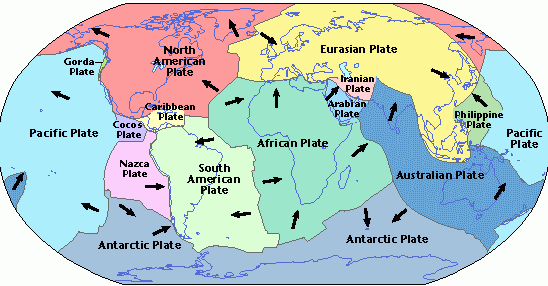
Many earthquakes happen along the borders of...
a)
Countries
b)
Tectonic Plates
c)
Climate Zones
d)
None of the above.
2.
The Richter scale measures:
a)
the amount of radon gas released
b)
the movement of plates
c)
the strength of an earthquake
d)
the weight of tectonic plates
3.

The first wave of an earthquake is . . . .
a)
tsunami
b)
surface wave
c)
p wave
d)
s wave
4.

The epicenter of an earthquake shows up where?
a)
Below the surface of the earth.
b)
On the surface of the earth.
c)
Next to the P Wave.
d)
At the end of a Surface Wave
5.
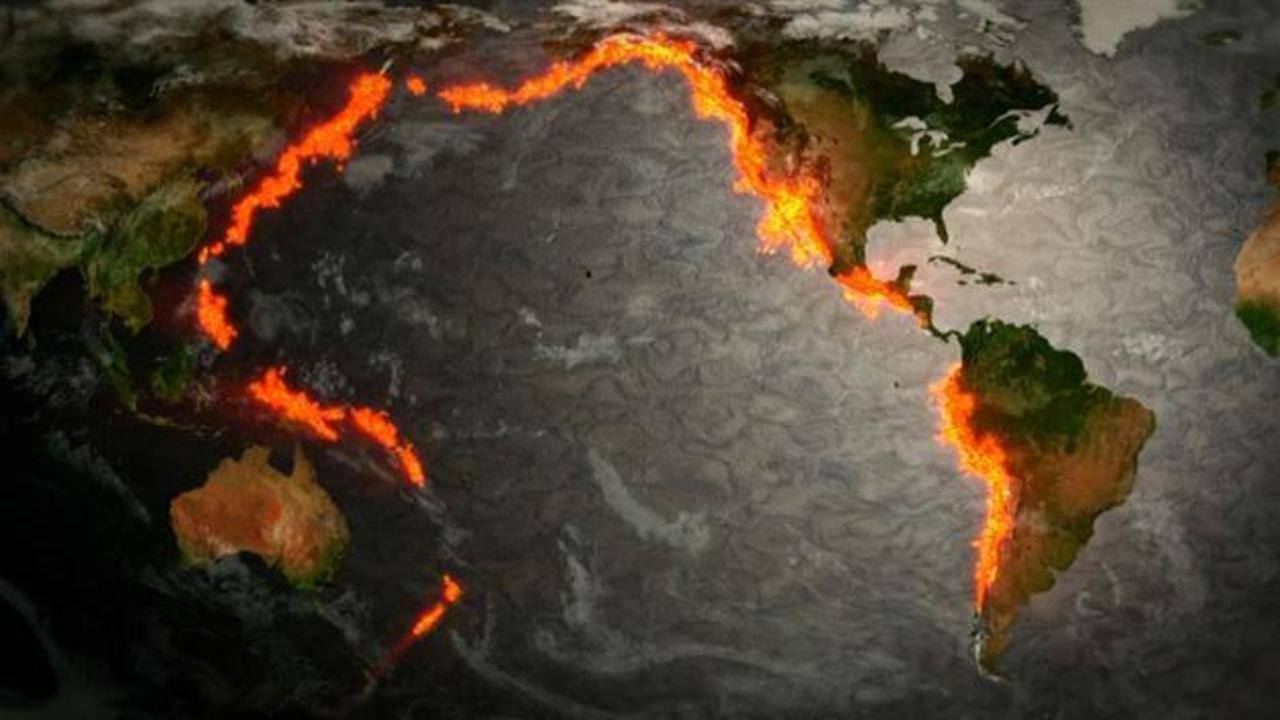
Which ocean in the world is also known as the "Ring of Fire"
a)
Atlantic
b)
Indian
c)
Arctic
d)
Pacific
6.
Which of these seismic waves creates the most damage during an earthquake?
a)
primary
b)
secondary
c)
surface
7.
An instrument that detects and measures earthquakes is a
a)
seismogram
b)
focus seismic map
c)
focus
d)
seismograph
8.
How much bigger is a magnitude 8 earthquake compared to magnitude 7 one on the Richter Scale?
a)
1 time bigger
b)
10 times bigger
c)
100 times bigger
d)
1000 times bigger
9.
Earthquakes under the water can cause _________________________________.
a)
tornadoes
b)
tsunamis
c)
lightening
d)
hailstorms
10.
The focus of an earthquake is
a)
The point below Earth's surface where rock first breaks
b)
The closest seismic station
c)
The place where the greatest damage occurs
d)
A fault
11.
A break in the lithosphere along which movement has occurred is called a(n)
a)
fault
b)
earthquake
c)
epicenter
d)
volcano
12.

Earthquakes happen every day. Most are too small for humans to notice.
a)
True
b)
False
13.
The record of a seismic wave is the
a)
Seismogram
b)
Seismograph
c)
Seismometer
d)
Richter scale
14.

The outside layer of the earth is called ______________________.
a)
core
b)
crust
c)
mantle
d)
outer core
15.
What is the minimum number of seismograph stations needed to locate an earthquake epicenter?
a)
1
b)
2
c)
3
d)
1 billion
16.
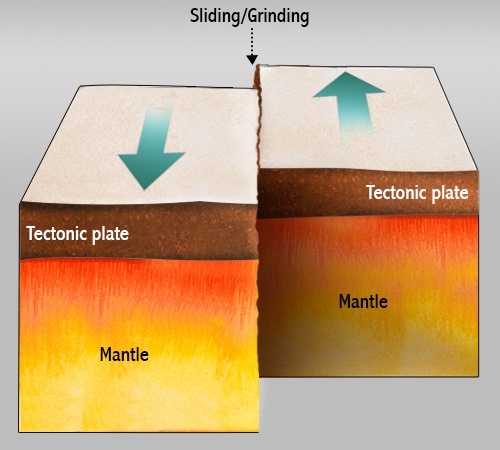
Which Plate Boundary does the picture illustrate?
a)
Spreading Boundary
b)
Fault Boundary
c)
Colliding Boundary
d)
Seismic Boundary
17.

This picture shows which kind of Plate Boundary?
a)
Colliding Boundary
b)
Fault Boundary
c)
Spreading Boundary
d)
Seismic Boundary
18.

Which Plate Boundary does the picture illustrate?
a)
Spreading Boundary
b)
Fault Boundary
c)
Colliding Boundary
d)
Volcanic Boundary
19.
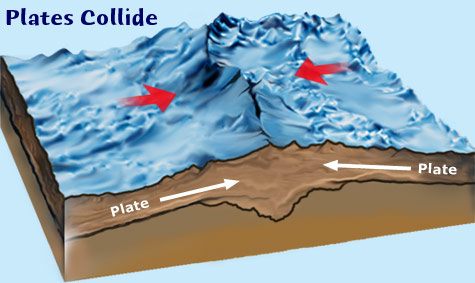
What Geologic Activity is occurring in this picture?
a)
Sea-floor Spreading
b)
Volcano forming
c)
Earthquake
d)
Mountain building
20.

What is the name of the geologic process when one plate slips underneath another plate?
a)
Subduction
b)
Subway
c)
Convergence
d)
Slip
100 %

