
 Worksheets
Phase Changes and Phase Diagrams
Total questions: 24
Worksheet time: 12mins
Name
Class
Date
1.
Which of the following terms identifies the change from a liquid to solid?
a)
Melting
b)
Condensation
c)
Vaporization
d)
Freezing
2.
Which of the following terms identifies the change from a liquid to gas?
a)
Vaporization
b)
Condensation
c)
Deposition
d)
Sublimation
3.
What is the freezing point of ice?
a)
0° Celcius
b)
50° Celcius
c)
75° Celcius
d)
100° Celcius
4.
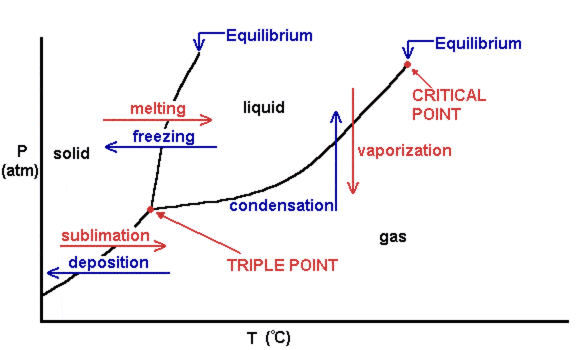
What is the triple point?
a)
Where the solid, liquid and gas connect.
b)
Solid, liquid and gas are equal.
c)
Between solid and gas
d)
Between solid and liquid
5.
Phase change from a solid to a gas.
a)
sublimation
b)
deposition
c)
condensation
d)
evaporation
6.
Phase change from a solid to a liquid.
a)
melting
b)
sublimation
c)
boiling
d)
condensation
7.
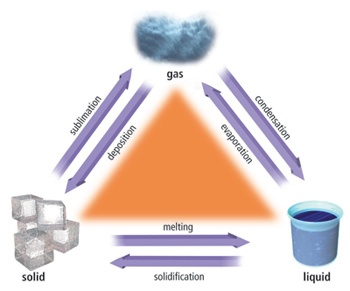
During a phase change, the temperature...
a)
Increases
b)
Decreases
c)
Does nothing
8.
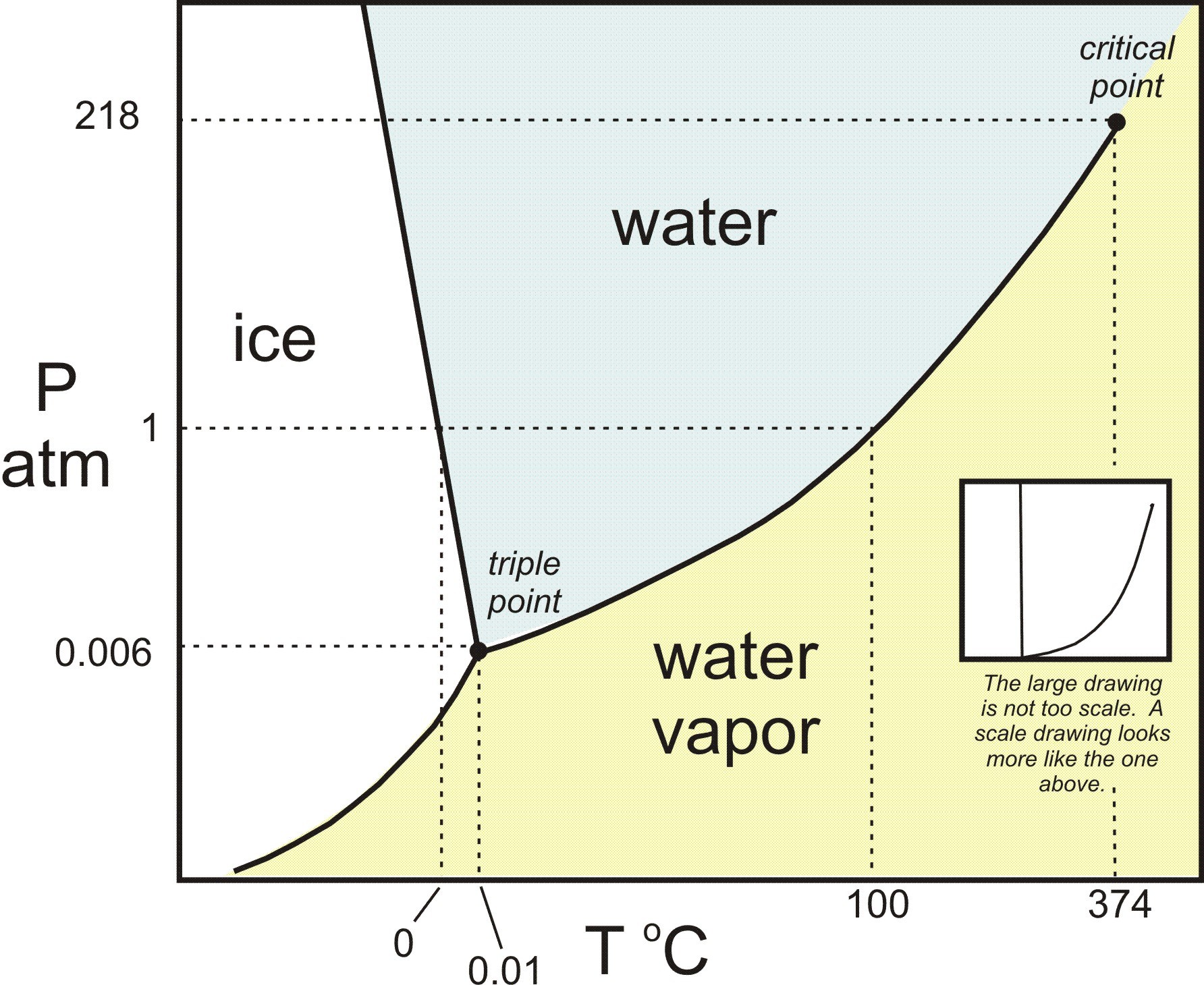
What is the phase change of sublimation?
a)
Liquid to solid
b)
Gas to liquid
c)
Liquid to gas
d)
Solid to gas
9.
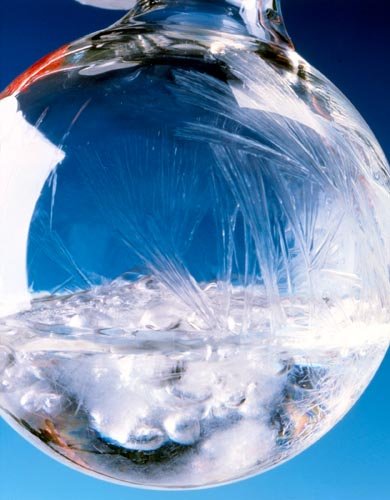
When do all three phases of matter exist at the same time?
a)
At the triple point
b)
At sublimation
c)
When it melts
d)
When it boils
10.
Change from Gas to Solid is called........
a)
Sublimation
b)
Deposition
c)
Fusion
d)
condensation
11.
What happens to particles when they are heated?
a)
They speed up and spread out
b)
They slow down and compress
c)
They stop moving
d)
They move closer together and speed up
12.
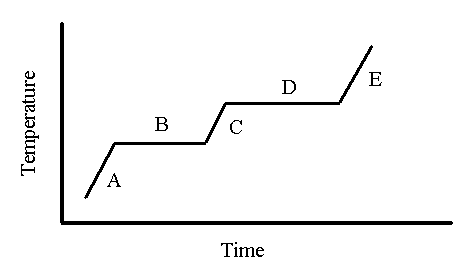
At what point(s) is a phase change occuring?
a)
A
b)
B and D
c)
D
d)
C and A
13.
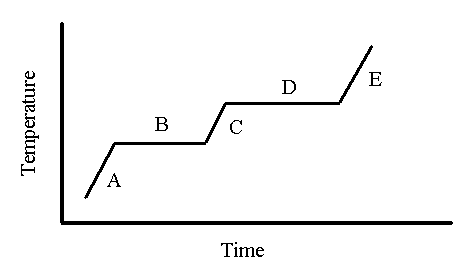
What is the dependent variable in the graph?
a)
Time
b)
Temperature
14.
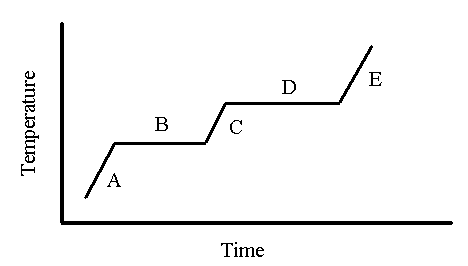
Point "B" is known as the:
a)
melting point
b)
freezing point
c)
boiling point
d)
both freezing and melting point.
15.
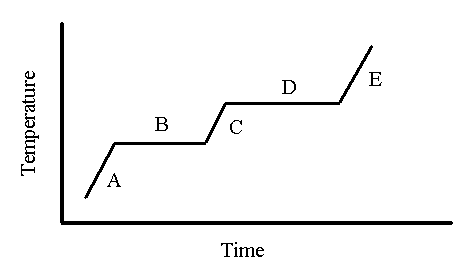
At which point is this substance a liquid?
a)
A
b)
C
c)
E
16.
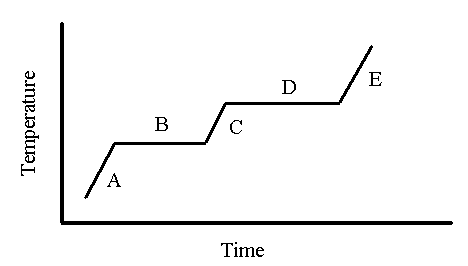
Point "D" is known as the:
a)
vaporization point
b)
condensing point
c)
boiling point
d)
both vaporization and condensing point
17.
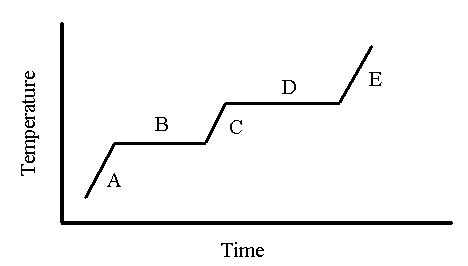
At which point is the substance a solid?
a)
A
b)
C
c)
E
18.
Formation of a precipitate is usually evidence of
a)
the separation of a mixture
b)
a chemical change
c)
the formation of a mixture
d)
a physical change
19.
Exothermic reactions...
a)
Absorb energy
b)
Release energy
c)
Release Color
d)
Absorb Color
20.
Endothermic reactions...
a)
Absorb energy
b)
Release energy
c)
Release Color
d)
Absorb Color
21.
Phase change from a solid to a liquid.
a)
melting
b)
sublimation
c)
boiling
d)
condensation
22.
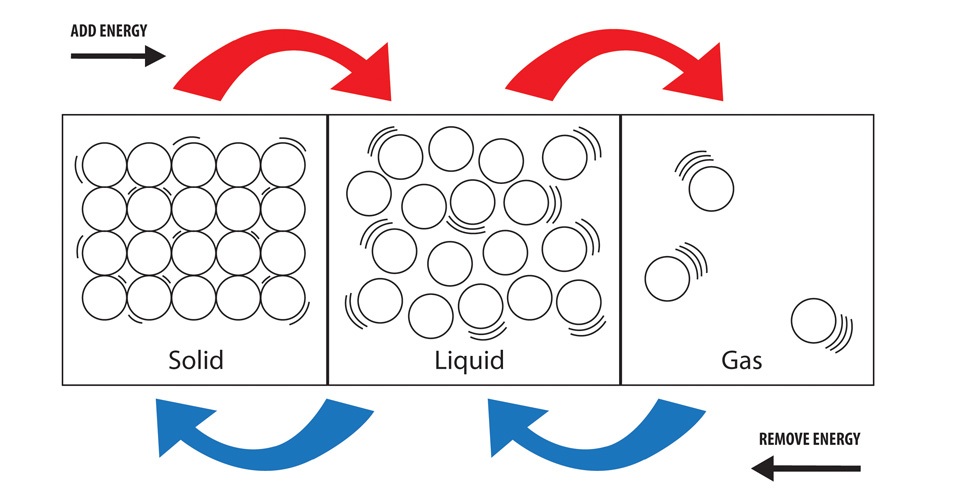
The phase change going from a liquid to a solid is called...
a)
Melting
b)
Evaporation
c)
Sublimation
d)
Freezing
23.
Change from gas to liquid
a)
condensation
b)
evaporation
c)
expansion
d)
movemen
24.
Matter exists is 3 states. They are.......
a)
Mass, Density and Volume
b)
Shape, Volume and fluid
c)
hard, soft and fluid
d)
Solid, Liquid and Gas
100 %

