
NEW
Font size
S
M
L
XL
 Worksheets
Thermodynamics Pretest
Total questions: 22
Worksheet time: 38mins
Name
Class
Date
1.
Thermodynamics is the study of what?
a)
The transfer of energy
b)
The creation of energy
c)
The speed of reactions
d)
The affect of heat on the speed of a reaction
2.
Temperature is a measure of the...
a)
total energy in a substance
b)
total kinetic energy in a substance
c)
average potential energy in a substance
d)
average kinetic energy of molecules in a substance
3.

A substance with a high specific heat:
a)
Is always extremely hot.
b)
Requires a lot of energy to become hot.
c)
Is not heavy.
d)
Does not requires a lot of energy to become hot.
4.
The transfer of thermal energy between objects of different temperatures is called...
a)
temperature
b)
heat
c)
internal energy
d)
none of these
5.

What is the correct formula to convert Celsius to Kelvin?
a)
K=C-273
b)
K=C+273
c)
K=C-100
d)
K=C+100
6.
What quantity of heat is required to raise the temperature of 450 grams of water from 15°C to 85°C? The specific heat capacity of water is 4.18 J/g/°C.
a)
131670 J
b)
159885 J
c)
-131670
d)
none of the above
7.
The amount of heat required to raise the temperature of 1g of something by 1 C, is called what?
a)
Latent Heat
b)
Specific Heat
c)
Heat of Formation
d)
Heat of Fusion
8.
The amount of heat needed to melt one mole of a substance is called:
a)
Specific Heat
b)
Latent Heat
c)
Heat of vaporization
d)
Heat of fusion
9.
What is enthalpy?
a)
A measurement of chaos
b)
The heat content of a system
10.
What is entropy?
a)
A measurement of chaos
b)
The heat content of a system
11.
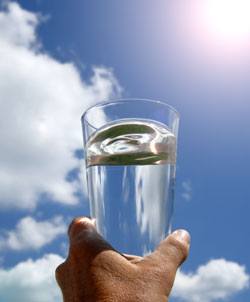
The temperature of a glass of cold water will eventually...
a)
Match the temperature of the surrounding environment.
b)
Always be colder than the surrounding environment.
c)
Become warmer than the surrounding environment.
d)
Never change temperature.
12.

Total entropy increases over time.
a)
True
b)
False
13.
Heat is measured in
a)
joules
b)
grams
c)
degrees celcius
14.
The Law of _______________ states that energy cannot be created nor destroyed only transferred
a)
Specific Heat
b)
Conservation of Energy
c)
Exothermic Reaction
d)
Potential Energy
15.
Energy in exothermic reactions are
a)
released
b)
absorbed
16.
The __________ law of thermodynamics states that entropy is always increasing.
a)
first
b)
second
c)
third
d)
zeroth
17.
Heat transfer [blank] occurs from hot to cold.
a)
always
b)
never
c)
sometimes
d)
rarely
18.
Which phase of matter has the greatest motion and least orderly arrangement?
a)
solid
b)
liquid
c)
gas
19.
What quantity of heat is required to raise the temperature of 450 grams of water from 15°C to 85°C? The specific heat capacity of water is 4.18 J/g/°C.
a)
131670 J
b)
159885 J
c)
-131670
d)
none of the above
20.
20 g of water. specific heat of water is 4.18 J/g°C. temperature changes from 25° C to 20° C, how much heat energy (Q) moves from the water to the surroundings?
a)
418 Joules
b)
209 J
c)
83 J
d)
4.18 J
21.
Specific heat of water is 4.18 J g-1 °C-1. Specific heat of wood is 1.760 J g-1 °C-1 What material needs more heat energy to raise the temperature?
a)
Water
b)
Wood
c)
Both are same
22.
In our equations, what does "ΔT" represent?
a)
mass
b)
change in temperature
c)
latent heat
d)
specific heat
Reset

