wayground logo

Free Printable Worksheets

Font size

S
M
L
XL
Worksheets

Reading STAAR Academic Vocabulary

Total questions: 90

Worksheet time: 59mins

Name
Class
Date
1.

What is the definition of influence?

a)

to have an effect on someone or something

b)

to symbolize something

c)

to describe something

d)

to characterize something

2.

What is the definition of characterize?

a)

Characterize means to describe someone or something.

b)

Characterize means to eat pizza.

c)

Characterize means to represent or stand for something else.

d)

Characterize means to have an effect on someone.
3.

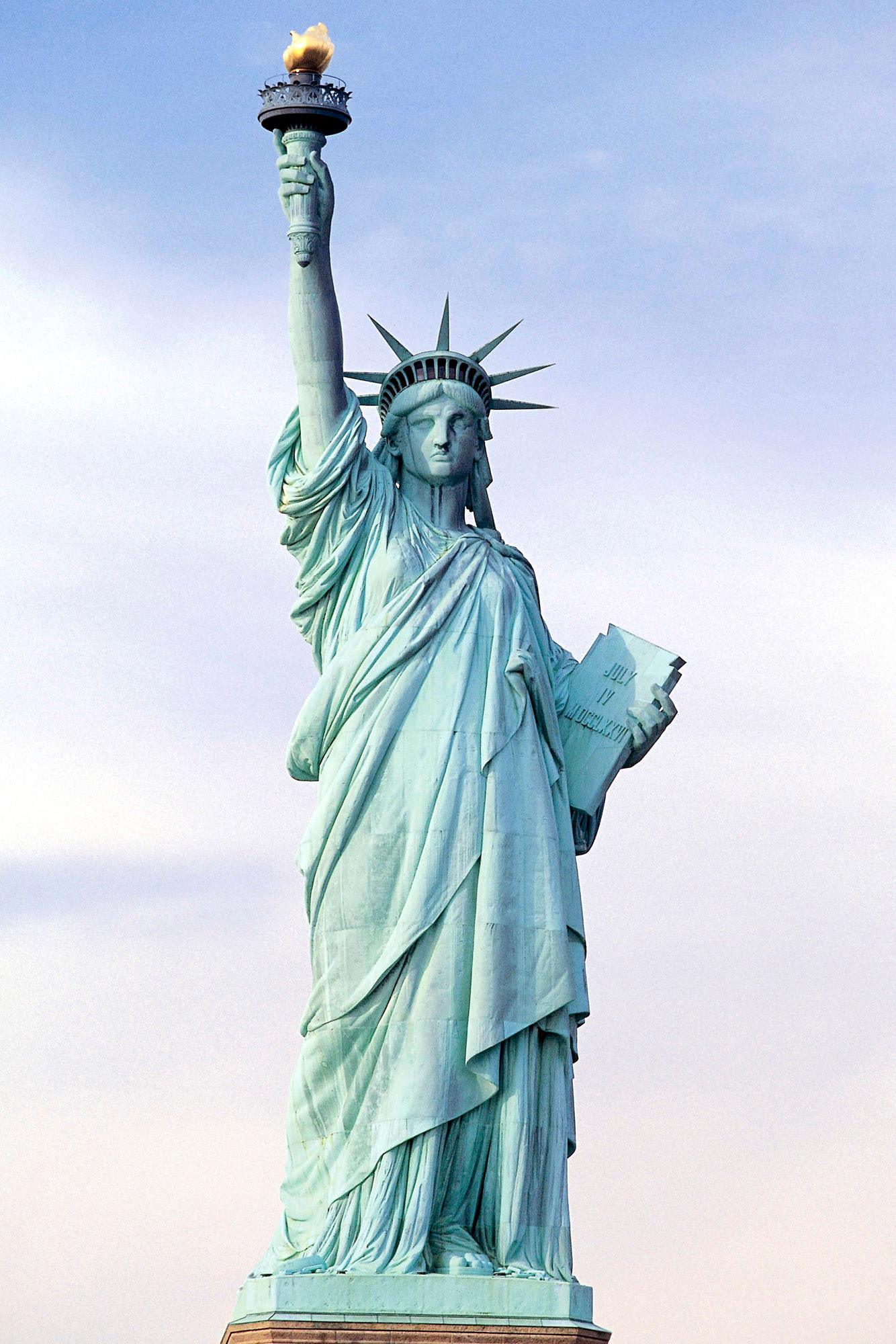
What does the Statue of Liberty do?

a)

The Statue of Liberty symbolizes new beginnings.

b)

The Statue of Liberty evaluates new beginnings.

c)

The Statue of Liberty characterizes new beginnings.

4.

Select the definition of symbolize.

a)

To describe someone or something.

b)

To represent or stand for something.

c)

To carefully judge someone or something.
5.
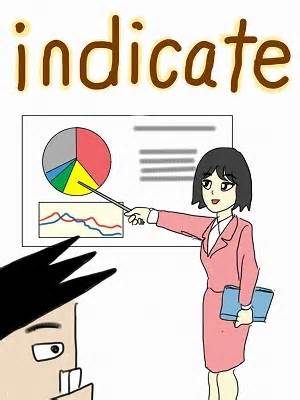
Point out or show.
a)
Motivate
b)
Evaluate
c)
Establish
d)
Indicate
6.
Examine in detail the structure of something, typically for purposes of explanation and interpretation.
a)
Influence
b)
Contribute
c)
Analyze
d)
Indicate
7.
Stating of another piece of writing in your own words is?
a)
glossary
b)
source
c)
paraphrase
d)
quote
8.
Anything that supplies information is a?
a)
works cited
b)
database
c)
reliable
d)
source
9.
Briefly retelling the main ideas of a piece of writing in your own words is?
a)
primary source
b)
relevant
c)
secondary source
d)
summarizing
10.
Information that is able to be trusted and accurate is?
a)
relevant
b)
reliable
c)
glossary
d)
source
11.
Copying words and ideas from a source and presenting them as your own is?
a)
quoting
b)
paraphrasing
c)
summarizing
d)
plagiarism
12.
If the question includes the word suggests, I know that this is a or an _____________ question.
a)
right there
b)
vocabulary
c)
inference
d)
theme
13.
What is an excerpt?
a)
a book or story
b)
a quotation
c)
an inference
d)
a piece of a larger writing
14.
What does primarily mean?
a)
mostly or most importantly
b)
first or at the beginning
c)
not very important
d)
inference or conclusion
15.
A questions that asks for supporting details or something that supports an idea is asking for...
a)
an inference
b)
evidence
c)
a selection
d)
a definition
16.
Most likely means...
a)
not really
b)
not very true
c)
at the beginning
d)
probably
17.
Non-fiction is...
a)
true and informational
b)
not real
18.
In the question, "Which sentence best  illustrates Noah's conflict?", illustrates means: 
a)
evidence
b)
names
c)
explains 
d)
infers
19.
The time and place of a story
a)
resolution
b)
climax
c)
setting
20.

If an author wanted a detail or concept to show as important they may want to put extra _________________ on it by writing it in bold text or underlining it.

a)

contribute

b)

emphasis

c)

suggest

d)

imagery

21.

When something benefits something else it is ...

a)

not good.

b)

strange.

c)

helpful.

d)

using the 5 senses.

22.

A viewpoint can represents the __________________of an author.

a)

question

b)

plot

c)

summary

d)

thinking or mindset

23.

When looking at a graded paper, an X usually _______________ a wrong answer.

a)

indicates

b)

helps

c)

contributes

d)

suggests

24.

Conversation between characters in a story is an author's use of _____________________ and will usually include quotations marks.

a)

inference

b)

dialect

c)

emphasis

d)

dialogue

25.

Sensory language is used by an author to show...

a)

what something was before it changed.

b)

a decision.

c)

what something smells like, looks like, sounds like, feels like, or how it tastes.

d)

a good result.

26.

Illustrate does not always mean to draw a picture, it could also mean to...

a)

explain with examples to help the reader understand a message or idea.

b)

show importance.

c)

make a decision based on prior knowledge.

d)

talk someone into something.

27.

To make something clear and understandable is to...

a)

suggest it.

b)

contribute it.

c)

clarify it.

d)

factor it.

28.

When a STAAR reading question asks you about what something 'suggests', it is referring to what the detail...

a)

hints at, or causes one to think.

b)

explains using examples.

c)

show is important.

d)

concludes.

29.
The enemy of the main character.
a)
Protagonist
b)
Antagonist
c)
Conflict Man vs. Man
30.
A fictional story that teaches a lesson.
a)
Nonfiction
b)
Drama
c)
Myth/Folktale
31.
An order using time.
a)
Sequence
b)
Chronological
c)
Description
32.
The paragraphs of poetry.
a)
Excerpt
b)
Stanzas
c)
Dialogue
d)
Lines
33.
A statement that can be proven true.
a)
Opinion
b)
Dialogue
c)
Excerpt
d)
Fact
34.
Hints in the text to help the reader understand a word.
a)
Synonym
b)
Context Clues
c)
Antonym
d)
Stage Directions
35.
Words that have the same meaning.
a)
Antonym
b)
Synonym
c)
Context Clues
d)
Facts
36.
The BME (PS) of a story.
a)
Summary
b)
Problem
c)
Fact
d)
Stanza
37.
The way the author organizes the text.
a)
Text Structure
b)
Text Features
c)
Exposition
d)
Stanzas
38.
Things such as headings, captions, photos, and graphics in a text.
a)
Suffix
b)
Text Features
c)
Synonym
d)
Text Structure
39.
The words that give the actors instructions on what to do in a play.
a)
Script
b)
Plot
c)
Stage Directions
d)
Props
40.
Guessing what will happen in the future.
a)
Flashback
b)
Prediction
c)
Climax
d)
Opinion
41.
A text structure that presents the reason something happens and the result of it happening.
a)
Sequence
b)
Compare/Contrast
c)
Chronological
d)
Cause/Effect
42.
The reason the author has for writing.
a)
Prediction
b)
Author's Purpose
c)
Main Idea
d)
Logical Appeal
43.
Words with the opposite meaning.
a)
Synonym
b)
Antonym
c)
Alliteration
d)
Hyperbole
44.
The narrator is a character in the story.
a)
1st Person POV
b)
2nd Person POV
c)
3rd Person POV
d)
Character
45.
Brief explanation of a picture/illustration.
a)
Description
b)
Details
c)
Main Idea
d)
Caption
46.
The narrator is not a character in the story.
a)
1st Person POV
b)
3rd person POV
c)
2nd Person POV
d)
Protagonist
47.

A reference to a famous person, place, event, or work of literature

a)

allusion

b)

analogy

c)

myth

48.

The text of a play, film, or broadcast

a)

structure

b)

dialogue

c)

script

49.

A brief statement or account of the main points of something

a)

summary

b)

allusion

c)

inference

50.

A point-by-point comparison between two things that are alike in some respect

a)

analogy

b)

theme

c)

allusion

51.

Language that communicates meanings beyond the literal meanings of words

a)

literary elements

b)

elements of a story

c)

figurative language

52.

Not influenced by personal feelings or opinions in considering and representing facts

a)

inference

b)

objective

c)

summary

53.
What compares 2 unlike things without using like or as?
a)
alliteration
b)
personification
c)
metaphor
d)
simile
54.
What repeats the same sounds at the beginning of each word?
a)
alliteration
b)
personification
c)
metaphor
d)
simile
55.
What compares 2 unlike things using like or as?
a)
alliteration
b)
personification
c)
metaphor
d)
simile
56.
What gives non-human things human characterstics?
a)
alliteration
b)
personification
c)
metaphor
d)
simile
57.
What tells the moral or the lesson of the story?
a)
main idea
b)
point of view
c)
imagery
d)
theme
58.
What is the position in which the story is told from?
a)
1st person
b)
point of view
c)
3rd person
d)
7th person
59.
What uses words that appeal to the senses?
a)
imagery
b)
figurative language
c)
tone
d)
pictures
60.
What is the general attitude of the poem?
a)
mood
b)
idea
c)
theme
d)
tone
61.
What means the importance of?
a)
significance
b)
infer
c)
contribute
d)
emphasize
62.
What text structure uses these key words?
problem, issue, cause, since, consequently, therefore, as a result
a)
problem/solution
b)
cause/effect
c)
compare/contrast
d)
sequence/chronological
63.
What text structure uses these key words?
similar, alike, same, both, just like, different, unlike, in contrast, on the other hand
a)
problem/solution
b)
cause/effect
c)
compare/contrast
d)
sequence/chronological
64.
What text structure uses these key words?
before, in the beginning, to start, finally, during, in the middle, after
a)
problem/solution
b)
cause/effect
c)
compare/contrast
d)
sequence/chronological
65.
Expresses means to
a)
squeeze
b)
go very fast
c)
communicate
d)
listen
66.
Which of the following is NOT another word or synonym for theme?
a)
main idea
b)
moral 
c)
lesson
d)
message
67.
Sensory language used by the author helps the reader to see or visualize what they are reading. Choose an example of sensory language below.
a)
The walls shook and vibrated like the tail of a rattle snake. 
b)
It was extremely windy outside.
c)
The walls of the house shook.
d)
The wind blew the trees.
68.
Annotating is a type of 
a)
notetaking
b)
a multiple choice test
c)
bad habit for college
d)
none of these
69.

To explain something to create a mental image in the reader’s mind - especially focusing on the five senses.

a)

analyze

b)

infer

c)

summarize

d)

describe

70.

To make something clear by giving reasons

a)

infer

b)

persuade

c)

cause

d)

explain

71.
To convince someone of your idea(s) on something through logic or reasoning
a)
infer
b)
analyze
c)
persuade
d)
evidence
72.
The reason for something; the trigger
a)
infer
b)
evidence
c)
cause
d)
effect
73.
What happened as a result of something else; the result or consequence
a)
effect
b)
cause
c)
infer
d)
conclude
74.
To go into or provide more details about something
a)
analyze
b)
summarize
c)
evaluate
d)
elaborate
75.
A plan or way to tackle a problem or reach a goal
a)
elaborate
b)
cause
c)
strategy
d)
support
76.
help to cause or bring about
a)
abrupt
b)
contribute
c)
excerpt
d)
significance
77.
to finish; to bring something to an end; to decide after careful thought
a)
phrase
b)
develop
c)
excerpt
d)
conclude
78.
Influencing strongly
a)
excerpt
b)
phrase
c)
reveal
d)
impact
79.
Using words that are associated with an area/region.
a)
Root Words
b)
Prefix
c)
Dialect
d)
Suffix
80.
Which word means the same as convey?
a)
communicate
b)
steal
c)
contact
d)
free
81.

onomatopoeia

a)

This salad is sensational.

b)

My heart isn't in it.

c)

I haven't seen him in years.

d)

Brrr! It's cold.

82.

First-person point of view

a)

You open your eyes and stretch.

b)

He yawned and sat up in bed.

c)

"Don't be late," his mom reminded.

d)

I cannot believe the weekend's over.

83.

What is fully and clearly expressed or demonstrated; leaving nothing merely implied?

a)

Delineate

b)

Infer

c)

Explicit

d)

Context

84.

What is a movement, passage, or change from one position, state, stage, subject, concept, etc., to another?

a)

Evaluation

b)

Transition

c)

Analogy

d)

Deconstruction

85.

To form by combining parts or elements; to bring together information from multiple source is called what?

a)

Analyze

b)

Infer

c)

Synthesize

d)

Evaluate

86.

Stereotyping-

a)

Persuades the audience to support the cause or buy their product due to the positive or negative results that could/will take place.

b)

Unfairly suggests that all members of the group are the same.

c)

A kind of extended metaphor or long simile in which an explicit comparison is made between two things (events, ideas, people, etc.).

d)

Is the power or right to give orders, make decisions, and enforce obedience.

87.

Which statement is an example of stereotyping?

a)

People who speak french are usually from France.

b)

All teachers get summer vacations.

c)

All pit-bull dogs are aggressive.

d)

Math is the most difficult subject to learn in middle school.

88.

The person who writes the play is the...

a)

director

b)

stage

c)

playwright

89.

Implicit is:

a)

When the narrator is in first person

b)

When the answer isn't in the text at all

c)

When the answer is hidden in the text

d)

When the answer is obvious in the text

90.

Explicit is:

a)

When the answer is obvious in the text

b)

When the answer isn't in the text at all

c)

When the answer is implied in the text

d)

When the narrator is in first person