Worksheets
Georgia Fifth Grade Science
Total questions: 153
Worksheet time: 2hrs 13mins
How do tectonic plates move?
They roll.
They float.
They bounce.
They jump.
What piece of scientific equipment would you use to see human cells?
telescope
microscope
microwave
computer
Which of the following objects could NOT be picked up with an electromagnet?
staples
aluminum cans
rubber bands
keys
What type of disease can you get from fungi?
measles
chicken pox
food poisoning
athlete's foot
A destructive process
builds up landforms
breaks down landforms
makes volcanoes
moves tectonic plates
Juan's dog, Luna, was hit by a car. Fortunately, she lived and is healthy. But she is now missing a leg. Having only three legs is a(n)
inherited trait.
learned behavior.
instinct.
acquired trait.
What are two ways that bacteria help humans?
helping digest food and eating dead skin
helping digest food and making hair shiny
eating dead skin and making hair shiny
eating dead skin and stopping tooth decay
When water freezes, its molecules
move closer together
grow larger
shrink
move apart
The giant sequoia tree is one of the world's tallest trees, with average heights of 50-95 meters. What allows these trees to grow so tall?
leaves
spine
vascular tissue
non-vascular tissue
Which of the following would NOT erode soil?
a rainstorm
a river
a tornado
grass
What is the BEST description of static electricity?
surface charge that can't move
surface charge that can move
current in a wire
an electrical surface
The ability to play chess is BEST described as
genetic trait
learned behavior
DNA behavior
result of protein production
A liquid sample is given to Amy in lab. Before the lab, it was clear and bubble. After the lab, it was clear and not bubbly. Based only on this information, what is a correct conclusion?
The liquid sample has not changed.
The liquid sample has chemically changed.
The amount of gas mixed into the liquid has decreased.
The amount of solid mixed into the liquid has decreased.
Providence Canyon is located in Stewart County, GA. This canyon formed partially by natural processes. But a lot of the erosion that formed the canyon was not natural. It was caused by poor farming practices in the 1800s. What conclusion can you draw from this information?
All canyons are formed by poor farming practices.
Erosion can be natural or it can be caused by humans.
Erosion usually doesn't form canyons like Providence Canyon.
Without farmers, there would be no Providence Canyon.
Which of the following materials is the MOST electrically conducting?
wood
copper
water
plastic wrap


These may all be classified as:


What kind of plants have the ability to grow large and tall and also lose their leaves in the fall?

Juan and Edward are sorting plants into groups. They have two sets of groups labeled: vascular and non-vascular and flowering and non-flowering. They must place the moss plant into one of the groups. Juan wants to sort the moss into non vascular, but Edward says it is non-flowering. Who is correct?
Edward
Juan
Both
Neither
Plants that lose their leaves in the cooler seasons are
coniferous
deciduous
non-vascular
vascular
Deposition of sediments can change the depth of a lake over time. A student wants to make a model
that shows how this process takes place.
Which model would provide data about changes in the depth of a lake caused by deposition?
Fill a beaker with water. Slowly allow the water to evaporate from the beaker. Measure the change in
the depth of the water.
Fill a beaker with water. Slowly drop sand, gravel, and dead plant material into the beaker. Measure
the change in the depth of the water.
Fill a plastic box with water. Put a hose in the water on one end of the box and turn the water on to a
slow flow. Measure the depth of the water when the box is full.
Fill a plastic box with sand, gravel, and dead plant material. Put a hose in the middle of the box and
turn the water on to a slow flow. Measure the depth of the water when the box is full.

The student’s claim is correct; the evidence in the picture shows that both valleys were formed by the
constructive force of deposition because flowing water carries large rocks from far away and drops
them along a river, making the banks taller.
The student’s claim is correct; the evidence in the picture shows that both valleys were formed by the
destructive forces of weathering and erosion because flowing water breaks down rock and carries the
small pieces downstream.
The student’s claim is not correct; the evidence in the picture shows that valley 1 was formed by the
destructive forces of weathering and erosion because flowing water breaks down rock and carries the
small pieces downstream, but valley 2 was formed by the constructive force of deposition because
flowing water carries large rocks from far away and drops them along a river, making the banks taller.
The student’s claim is not correct; the evidence in the picture shows that valley 1 was formed by
the constructive force of deposition because flowing water carries large rocks from far away and
drops them along a river, making the banks taller, but valley 2 was formed by the destructive forces
of weathering and erosion because flowing water breaks down rock and carries the small pieces
downstream.

The changes in the Azure Window were cause by the _____ process of _____.
destructive process of erosion
destructive process of deposition
constructive process of erosion
constructive process of deposition

The student’s claim is correct because water fills small cracks in rocks, freezes, and expands, making the cracks larger over time.
The student’s claim is correct because the rock was carried from the top of the volcano to its base by a glacier, creating many cracks over time.
The student’s claim is not correct because the rock was picked up by moving water and rolled against
other rocks, smoothing its surface and causing cracks in a short period of time.
The student’s claim is not correct because large cracks in rocks are caused when lava from a volcano
covers the rock so its temperature rises and falls in a short period of time, causing it to break.

How fast are the cliffs eroding?
How many people live near cliffs?
How old are rock layers at the bottom of the cliff?
How can people stop the erosion of cliffs near the coast?

Based on the picture, which steps would produce the BEST model of how the Himalayas formed over
time?
step 1: Label one cardboard box as the Eurasian Plate.
step 2: Label another cardboard box as the Indian Plate.
step 3: Slowly push both plates toward each other.
step 4: Observe and record how the sizes of both plates change when the edges push
against each other.
step 1: Use light-colored clay to make the shape of the Eurasian Plate.
step 2: Use dark-colored clay to make the shape of the Indian Plate.
step 3: Slowly push the dark-colored plate toward the light-colored plate.
step 4: Observe and record how the shapes of both plates change when the edges push
against each other.
step 1: Use light-colored clay to make the shape of the Eurasian Plate.
step 2: Use dark-colored clay to make the shape of the Indian Plate.
step 3: Slowly push the light-colored plate toward the dark-colored plate.
step 4: Observe and record how the shape of the Eurasian Plate changes when it
touches the edge of the Indian Plate.
A student is studying the formation of the Himalayas. The student finds a picture and learns that the mountain range formed when the Indian Plate collided with the Eurasian Plate. The student uses a picture to design a model that will show classmates how the Himalayas formed.
step 1: Use light-colored clay to make the shape of the Eurasian Plate.
step 2: Use dark-colored clay to make the shape of the Indian Plate.
step 3: Slowly push the dark-colored plate toward the light-colored plate.
step 4: Observe and record how the shapes of both plates change when the edges push against each other.
Which data could the student collect using the BEST model from the steps?
the changing distance between the two plates
the time it takes for the two plates to collide
the mass of the materials used to make the two plates
the changing height of the edge where the two plates collide
How is the following part of a river formed?
Part of the River: Channel
Process: ________ Process Type: ______
Process: erosion Process Type: destructive
Process: erosion Process Type: constructive
Process: deposition Process Type: destructive
Process: deposition Process Type: constructive
How is the following part of a river formed?
Part of the River: Bank
Process: ________ Process Type: ______
Process: erosion Process Type: destructive
Process: erosion Process Type: constructive
Process: deposition Process Type: destructive
Process: deposition Process Type: constructive
Earthquakes and volcanoes can both happen underwater. When earthquakes happen underwater, they can
cause________.
Earthquakes
Volcanoes
Tsunamis
Landslides
A student wants to design a complete, simple circuit for a class project. The student has more
materials available than are needed for the project.
What does a complete, simple circuit require to work?
wire and a switch
wire and a light bulb
wire, a battery, and a switch
wire, a battery, and a light bulb
What is Static Electricity?
is the buildup of an electrical charge in or on the surface of an object
the flow of an electric charge through a conductor
are any type of object through which an electric current can flow
Lightning is
circuit
discharge of static electricity
wire
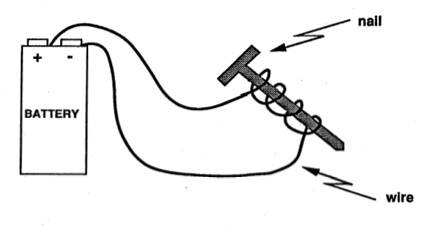
core into a temporary magnet
Electricity and magnetism are connected to each other. Electricity can produce magnetism. When an
electric current flows through a wire, the current creates a very small magnetic field.
True
False
Conductors are any type of object through which an electric current can flow
True
False
Insulators are any type of object through
which an electric current cannot flow. Glass, plastic, and rubber are very common insulating materials. Insulators are used to protect people from electric currents.
True
False
The student uses only three of the materials available to build a complete circuit that conducts
electricity. Which THREE are necessary?
battery to provide energy to the circuit
light bulb to show that the circuit conducts electricity
wire to connect parts of the circuit and conduct electricity
switch to conduct electricity in the circuit
compass to show that the circuit conducts electricity


step 5: Connect a test material to the open ends of wire 1 and wire 3.
step 6: Make observations, and repeat step 5 with a different test material.
conclusion: If the bulb lights up, the material is a conductor. If the bulb does not light up, the material
is an insulator.
step 5: Connect a test material to the open ends of wire 1 and wire 3.
step 6: Make observations, and repeat step 5 with a different test material.
conclusion: If the bulb lights up, the material is an insulator. If the bulb does not light up, the material
is a conductor.
step 5: Connect the open ends of wire 1 and wire 3 to each other to complete the circuit.
step 6: Touch a test material to the completed circuit, and record observations.
conclusion: If the bulb lights up, the material is an insulator. If the bulb does not light up, the material
is a conductor.
step 5: Connect the open ends of wire 1 and wire 3 to each other to complete the circuit.
step 6: Touch a test material to the completed circuit, and record observations.
conclusion: If the bulb lights up, the material is a conductor. If the bulb does not light up, the material
is an insulator.

Magnet 1 should be used to pick up many small magnetic objects at once because the temporary magnet can pick up as many objects as the permanent magnet can.
Magnet 1 should be used to pick up magnetic objects in one location and drop them off in another location because temporary magnets can be turned on and off.
Magnet 1 can be used in all the ways magnet 2 is used because temporary magnets can be made stronger or weaker and permanent magnets cannot.
Magnet 2 should be used to pick up magnetic objects in places where there is no power supply because permanent magnets do not run out of energy.
Magnet 2 should be used to pick up large magnetic objects because permanent magnets are stronger than temporary magnets.

How will the amount of thumbtacks picked up compared to plastic wrap change with each material?
more
fewer
no change
A student is investigating chemical changes by using different materials.
Which investigation would provide evidence of a chemical change and why?
Melting a solid with fire would provide evidence of a chemical change because the solid would change
shape.
Cutting cardboard into many smaller pieces would provide evidence of a chemical change because the
pieces cannot be put back together.
Placing a solid into hot water and stirring while the solid dissolves would provide evidence of a
chemical change because the dissolved material is lost.
Combining two liquids that give off heat and gas would provide evidence of a chemical change because
the particles react to make a new material with different properties.
Which investigation would provide evidence of a chemical change?
Spray perfume into the air, and when the air and perfume mix, observe the change in odor that
happens as they mix.
Put an antacid tablet in water, and when the antacid and water mix, observe the bubbles that form as
a new substance is created.
Heat water in a pan on a stove, and observe the steam that forms as the state of matter of the water
changes
Blow air through a wand filled with soap solution, and observe the bubbles that form as the air
becomes trapped.
Students are investigating chemical changes that occur in different materials.
Which TWO investigations would provide evidence of a chemical change?
. Placing a liquid in a freezer until the liquid becomes a solid would provide evidence of a chemical
change because the state of matter changes.
Using a saw to cut a solid into two different pieces would provide evidence of a chemical change
because the pieces cannot be put back together.
Using a hot plate to heat a solid until it changes color and releases an odor would provide evidence of
a chemical change because the particles cannot be changed back.
Placing two different liquids together in a beaker and observing that a solid forms when they mix would
provide evidence of a chemical change because a new material is formed.
Placing a mixture containing a solid and a liquid on a windowsill and letting the liquid evaporate would
provide evidence of a chemical change because the evaporated material is lost.
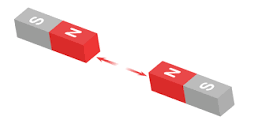
Which choice describes the behavior of electric charge?
Like charges attract. Unlike repel.
Like charges repel. Unlike charges attract.
Like charges attract. Unlike charges attract.
Like charges repel. Unlike charges repel.
Which of these is caused by static electricity?
A Magnet attracts a paper clip.
Glue holds two peaches of paper together.
Socks taken from a clothes dryer stick together.
Ice sticks to a car's windshield.
In order for a circuit to work it must be...
open
closed
round
square
Mary has a light bulb and several pieces of copper wire. What else does Mary need to be able to convert electrical energy to light energy?
battery
switch
insulator
buzzer


Stone Mountain in Georgia is a granite dome that formed deep underground. Over time, uplift and erosion exposed the granite. What natural activity is MOST responsible for breaking down the mountain today?
faulting
weathering
stream erosion
None of these


In the picture above, how is the jetty protecting the beach?
It prevents the current from carrying away sand
It is too high for the waves to rise above it
It keeps sand from building up on the beach
It's not protecting the beach at all


What was constructed in Rome, Georgia in 1886, the year after the great flood to help prevent Rome from ever flooding again?
the clock tower was built as a safe place
the levee
a foot bridge
a new house
Which group has the greatest number of animal species?
invertebrates
mammals
protists
vertebrates
Largest group for classifying living things.
species
family
kingdom
class
What is the smallest group for classifying living things?
kingdom
class
order
species
Organizing things into groups based on how the things are alike is called
vascular
xylem
classification
phloem
A flowering plant that has seeds protected by fruit.
phylum
angiosperm
gymnosperm
xylem
A material that supports a plant and conducts nutrients
nonvascular
species
kingdom
vascular
Within a kingdom, what is the largest grouping of organisms?
genus
phylum
order
species
What is the main difference between the members of the plant kingdom and members of the animal kingdom?
Animals have many cells; plants have only one cell
Plants have stiff tubes; animals have backbones
Plants make their own food; animals eat other living things
Animal cells have no nucleus; plant cells have nucleus
Which statement about vascular plants is NOT true?
Vascular plants can grow to be quite large.
Vascular plants have tissues that carry water and food.
Vascular plants are much smaller than nonvascular plants.
Vascular plants absorb water and nutrients through root hairs
Which is a characteristic of reptiles?
.
Reptiles have slimy skin.
Reptiles use lungs to breathe.
Reptiles are invertebrates.
Reptiles maintain a constant body temperature
As plants grow, they take nutrients from the soil. How are nutrients in the soil naturally replaced?
falling rain
decomposing plants
adding fertilizer
feeding animal
Which animal below would be considered a vertebrate?
fish
clam
sponge
octopus
Look at the information below and determine how the animals are grouped?
Group A: whale and shark Group B. hawk and eagle
where they live
how they breathe
if they have tails or not
if they are carnivores or not
Fish, amphibians, reptiles, birds, and mammals all belong to which group?
vertebrate
invertebrate
classification
vertebrate and invertebrate
Which of the following is NOT a shape of bacteria?
rods
squares
spirals
spheres
Which statement is NOT true?
Microorganisms are too small to see without a microscope.
Bacteria are made up of multiple cells.
Some fungi can rot wood and spoil food.
Microorganisms cause dead things to decay.
19. Which statement is true of both single-celled and a multi-celled organism?
Each cell is able to carry out its own life functions.
Each cell is covered with epithelial tissue.
Cells are organized into tissues that perform a specific function.
Different kinds of tissues form organs.