
 Worksheets
Relative Age Dating
Total questions: 25
Worksheet time: 25mins

Which layer is OLDER? Layer M or Intrusion P?
Layer M
Intrusion P

Which layer is OLDER? Layer E or Fault H?
Layer E
Fault H

Which layer is OLDER? Layer E or Intrusion A?
Layer E
Intrusion A
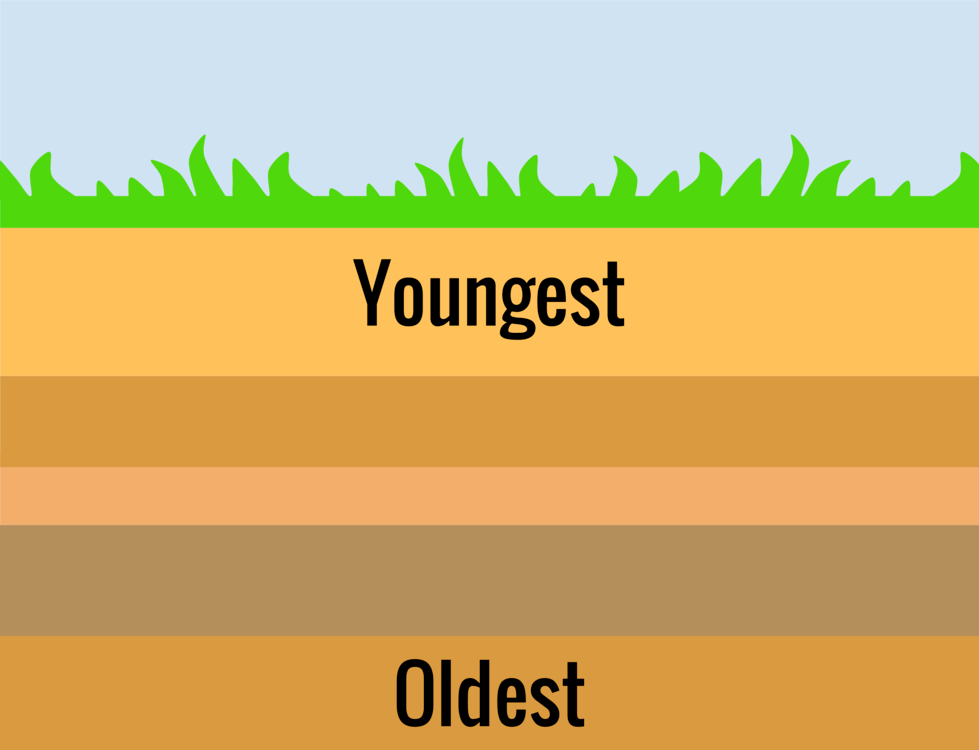
What geologic principle(or law) is best displayed here?
Superposition
Original horizontality
Cross-cutting relationships
Inclusions
How can we use the law of super position to determine the relative age of a fossil?
fossils that are found in lower sedimentary rock layers are older than fossils that are found in layers that are above those layers
the law of superposition can not be used for determining the age of fossils
fossils that are found in layers of sedimentary rocks are usually older than the rock layers they are found in
fossils that are found in upper layers of sedimentary rocks are the oldest of all fossils
An estimated age based on rocks and fossils found above and below is:
Neither of these
Both
absolute age
relative age
A sedimentary layer of sandstone contains inclusions of granite. Which rock is older, the sandstone or the granite
the sandstone
the granite
both are the same age
it's impossible to know
Click the letter that is the youngest layer or event?
What is the relative age of an igneous rock intrusion between domed layers of sedimentary rock?
It is older than the sedimentary rock.
It is younger than the sedimentary rock.
It is the same age as the sedimentary rock.
Click the letter that is the oldest layer or event?

What geologic principle(or law) is best displayed here?
Superposition
Original horizontality
Cross-cutting relationships
Unconformities
Used to determine whether an object is older or younger than other objects
Superposition
Relative Dating
Fossil
Unconformity

Analyze the seashell found in the white layer. Which statement is true of the rock layer that contains this fossil?
It could also contain a fossil from the bottom layer.
It is older than the layers below it.
It is younger than the layers above it.
It is older than the layers above it.
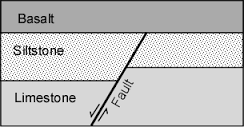
What are the relative ages of the features in order from oldest to youngest?
Limestone, Basalt, Fault, Siltstone
Siltstone, Fault, Basalt, Limestone
Limestone, Fault, Basalt, Siltstone
Limestone, Siltstone, Fault, Basalt
The Law of Superposition helps scientists to determine what?
The absolute age of rock layers
The age of fossils
The relative age of rock layers
the super powers of rocks
Relative dating determines the
precise age of fossils
age of rock layers and fossils compared to others
climate fossils survived in
movement of continents

What is the correct order of the rock layers from oldest to youngest?
F, E, C, B, A, D
F, E, D, C, B, A
A, B, C, D, E, F
D, F, E, C, B, A

The fault is older than layer B.
TRUE
FALSE

Layer B on side #1 (left) is a match to which layer on side #2 (right)?
z
y
w
there is no match
Traces or remains of organisms that lived long ago
Fossil
Unconformity
Superposition
Column
What principle states that in undisturbed layers of rock, the oldest layers are on the bottom and the youngest are on top?
Law of Superposition
Principle of Original Horizontality
Principle of Cross-Cutting Relationships
Principle of Faunal Succession
Which of the following is a method used to determine the relative age of rock layers?
Radiometric Dating
Carbon Dating
Stratigraphy
Thermoluminescence
In a sequence of sedimentary rock layers, if a fault cuts through the layers, what can be inferred about the relative age of the fault?
The fault is older than the rock layers
The fault is younger than the rock layers
The fault is the same age as the rock layers
The age of the fault cannot be determined
Which of the following best describes the concept of relative age dating?
Determining the exact age of a rock or fossil
Comparing the age of one rock or fossil to another
Using radioactive isotopes to date rocks
Measuring the decay of carbon-14 in fossils
What is the significance of index fossils in relative age dating?
They provide the exact age of the rock layer
They indicate the environment in which the rock was formed
They help to correlate rock layers across large distances
They are used to date rocks using radiometric methods

