
 Worksheets
Practice with Blood Types and Punnett Squares
Total questions: 15
Worksheet time: 15mins
___________ is shown by the AB blood type.
Codominance
Punnett squares
Complete dominance
Incomplete dominance
Which allele is recessive in blood types?
i
A
B

What genotype would go in box 2?
BB
Bb
bb
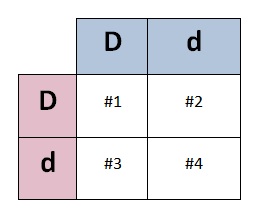
What is the possibility of this offspring having the dominant trait?
50%
75%
25%
0%
What genotype would go in box 1?
BB
Bb
bb
Which of these Punnett squares represents a cross between a homozygous dominant parent and a heterozygous parent?


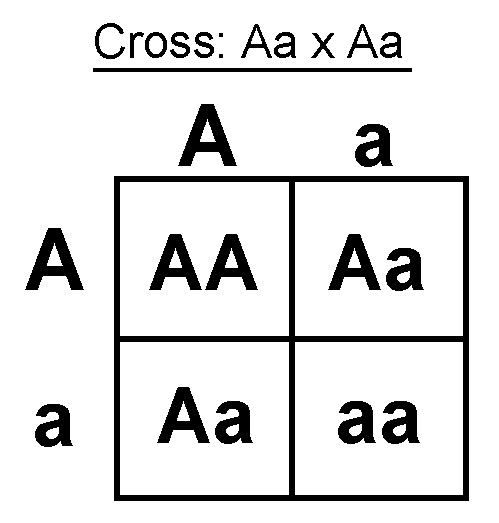
What is the genotypic ratio of the offspring?
3:1
1:3
1:2:1
2:2

What are the possible genotypes for this cross?
TT = 25% Tt= 50% tt=25%
all tall
TT= 75% tt = 25%
Tt = 100%

An offspring will receive how many alleles from each parent to determine a specific trait?
one
two
three
five
What is the probability of a child having type O blood if one parent has genotype AO and the other has genotype BO?
0%
25%
50%
75%
Which of the following blood types is considered the universal donor?
Type A
Type B
Type AB
Type O
In a Punnett square, what does each box represent?
A possible genotype of offspring
A possible phenotype of offspring
A possible genotype of parents
A possible phenotype of parents
If a person with blood type AB marries a person with blood type O, what are the possible blood types of their children?
A and B
A, B, and O
A, B, AB, and O
AB and O
Which of the following is an example of codominance?
A person with type AB blood
A person with type O blood
A person with type A blood
A person with type B blood
What is the main purpose of using a Punnett square in genetics?
To determine the exact genetic makeup of an individual
To predict the probability of certain traits in offspring
To identify mutations in genes
To map the entire genome of an organism

