
 Worksheets
STAAR Released Questions
Total questions: 27
Worksheet time: 27mins

Cutting the wire at which numbered position would allow two of the lightbulbs to remain lit?
Position 1
Position 2
Position 3
Position 4

Which circuit shown will produce light when the switch is closed?
A
B
C
D

What object can be used at Position K for the buzzer to sound when Switch K is closed?
A power source
An insulated wire
Another bulb
Another switch

Which diagram shows how the student should change the circuit?


What is the process by which plants release water vapor into the air through their leaves?
Condensation
Transpiration
Evaporation
Precipitation
What is the primary function of the chloroplasts in plant cells?
To break down sugar molecules to release energy
To store water and nutrients
To capture light energy and convert it into chemical energy
To control the entry and exit of substances in and out of the cell

With the switches in these positions, which lights are on?
All the lights
Lights 1 and 2 only
Lights 3 and 4 only
None of the lights

Which two switches can be open and still allow all of the parts to work?
Switches 1 and 3
Switches 1 and 4
Switches 2 and 3
Switches 3 and 4

Which LEDs produce light when the switch is in the position shown?
LEDs 1, 3 and 4 only
LEDs 1, 2, 3 and 4
LEDs 3 and 4 only
LEDs 1, 3, 4, and 5

Which procedure would most likely allow the bulbs to light?
Open the switch and then connect the two wires that are attached to the wood block
Switch the positions of the two wires that are connected to the battery and then open the switch
Move the switch closer in the circuit to the battery
Connect the two wires that are attached to the wood block

When the student connects the wires as shown, which of the bells will ring?
Bell 1 only
Bells 1 and 4 only
Bells 3 and 4 only
Bells 1, 2, 3, and 4
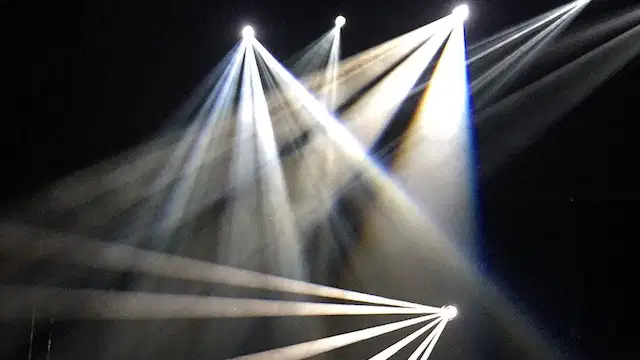
What does the picture demonstrate about light?
Light travels in straight lines.
Light cannot reflect from more than one surface.
Light can curve through objects.
Light can curve around objects.
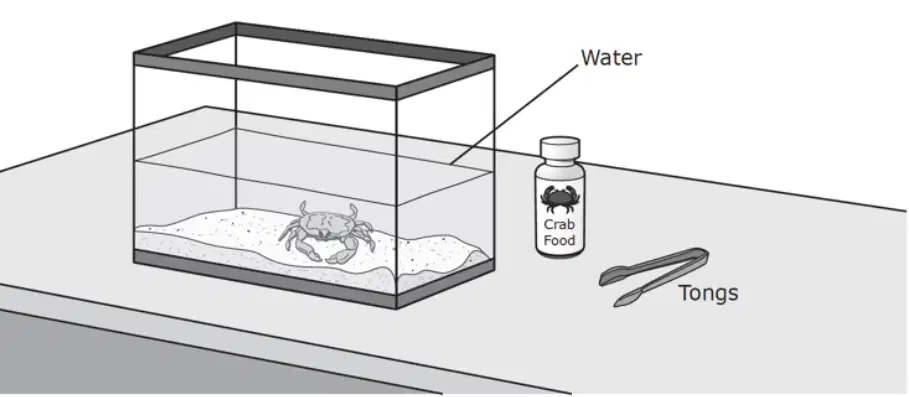
Some students are feeding a crab in an aquarium. They use tongs to place the food directly in front of the crab. The students look through the side of the aquarium. They notice that the image of the tongs appears to break a the tongs enter the water. Which property of light are the students observing in this situation?
Light can be refracted and separated into different colors as it moves from air to a different medium.
Light is refracted as it moves from one medium to another medium.
Light travels in a straight line and can be reflected off the surface of the water.
Light is absorbed by water and reflected off glass.
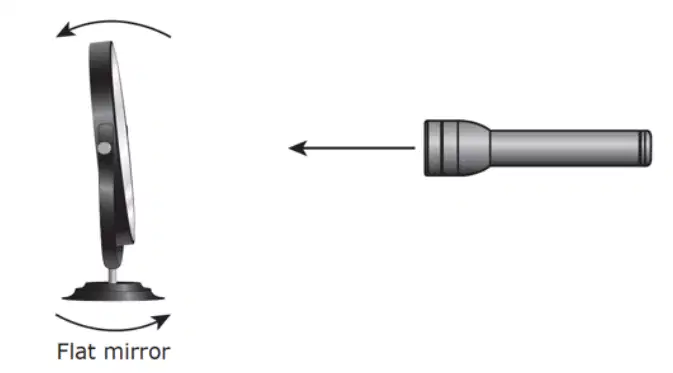
A student conducts an investigation by shining a flashlight toward a flat mirror. The student changes the angle of the mirror and observes the path of the reflected light.
As the mirror changes direction, the light reaching the mirror cab reach the ceiling because the light -
travels in straight lines and reflects from the surface of the mirror.
refracts in the glass of the mirror and is spread out all over the room.
enters the mirror and changes direction when it is refracted by the back of the mirror.
travels through air and does not change its direction in air.
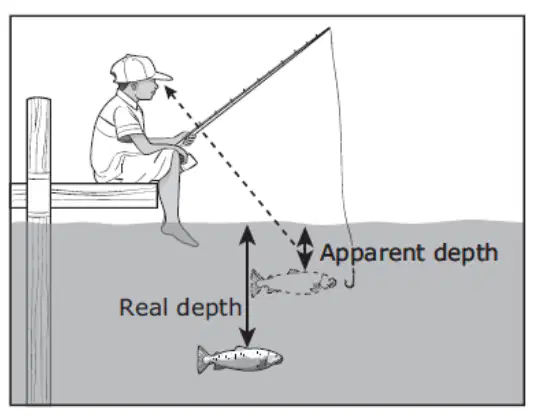
The diagram below shows a fish being viewed from above the water.
The fish appears to be closer to the surface than it really is. What causes this difference?
Light is reflected.
Light is refracted.
Light is focused.
Light is blocked.
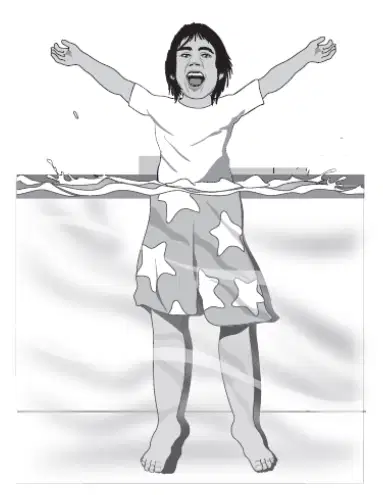
The picture shows a child standing in a swimming pool. Why does the lower part of the child appear so much different in size from the upper part?
The light rays that travel through water and then into air are refracted.
The light rays that travel through water and then into air are enlarged.
The light rays that travel through air and then into water are reflected.
The light rays that travel through air and then into water are reduced.
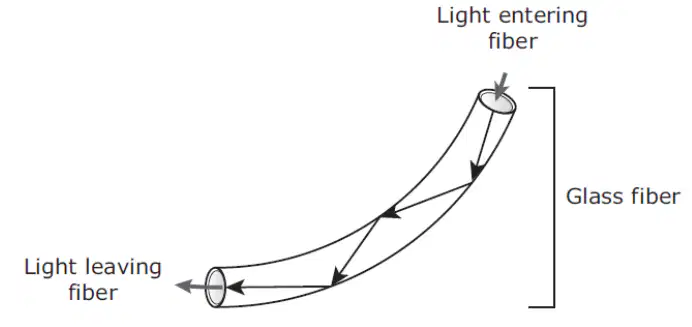
The model shows a special glass fiber that is thinner than some metal wires. When light enters one ends of the fiber, it moves through the fiber as shown. After the light leaves the fiber, it travels -
in a straight line.
back into the fiber.
around the fiber.
in a curve.

Scientists use telescopes to make distant objects appear closer. Some parts of a telescope are shown below.
Which of the following best describes how the objective lens of this telescope helps a scientist observe the moon?
The objective lens produces light
The objective lens blocks light
The objective lens reflects light
The objective lens refracts light

The picture shows an area of Yosemite National Park. Which statement about light is supported by this picture?
Light travels in straight lines until it enters a different material like water in a lake.
Light can refract in air and in clear water.
The water in the lake is blue because light forms an image.
Light is reflected off the smooth surface of the lake.
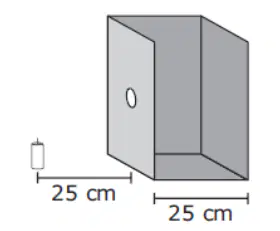
A teacher takes the top and side off a box. She cuts a hole in another side and puts a candle outside the box, as show below.
When the teacher lights the candle in a dark room, some of the candlelight shines through the hole. Which diagram best shows how the light appears on the opposite wall of the box?


When light travels through air into a prism, it bends and separates into many colors. In which other situation does light bend?
When light moves through air into water
When light hits a wall
When light passes through outer space
When light hits a mirror
What is the process by which plants release water vapor into the air through their leaves?
Condensation
Transpiration
Evaporation
Precipitation
What is the primary function of the chloroplasts in plant cells?
To break down sugar molecules to release energy
To store water and nutrients
To capture light energy and convert it into chemical energy
To control the entry and exit of substances in and out of the cell
Which of the following best describes the role of mitochondria in animal cells?
To synthesize proteins
To generate energy in the form of ATP
To store genetic information
To facilitate cell division
What is the chemical formula for table salt?
NaCl
KCl
CaCO3
H2O
Which of the following is an example of a chemical change?
Melting of ice
Rusting of iron
Boiling of water
Breaking of glass
What is the main gas responsible for the greenhouse effect on Earth?
Oxygen
Nitrogen
Carbon Dioxide
Hydrogen

