
NEW
Font size
 Worksheets
Scientific Revolution
Total questions: 25
Worksheet time: 25mins
A period from the 1500s to the 1700s in which many scientific advances changed people's traditional beliefs.
The Scientific Revolution
The digital Revolution
The French Revolution
The Beatles Revolution

According to Copernicus, the sun
Revolved around the earth
Was the center of the Universe
Was the biggest star
Had many moons
The Scientific Revolution challenged many medieval ideas about science. All of the following were astronomers during the Scientific Revolution except __.
Nicolaus Copernicus
Ptolemy
Galileo Galilei
Johannes Kepler

_____________________ was an Italian astronomer who developed the telescope, which then confirmed Copernicus’ Heliocentric Theory
Isaac Newton
Galileo Galilei
Adam Smith
Dennis Diderot
How did the telescope contribute to the Scientific Revolution?
It proved the Earth was flat.
It allowed for the detailed study of the human body.
It enabled astronomers to make precise observations of celestial bodies.
It was used to measure the speed of light.
Which of the following was a result of the Scientific Revolution?
A decrease in interest in the natural world.
The establishment of the geocentric model as scientifically valid.
The development of the scientific method.
The banning of telescopes.
How did the Scientific Revolution impact society in Europe?
It led to a decline in scientific knowledge.
It reinforced the authority of the church over scientific matters.
It promoted the spread of new ideas and innovations.
It had no significant impact on society.
What does this suggest about the nature of scientific knowledge?
Scientific knowledge should not be considered valid because it changes over time.
Technology has improved enough that scientific knowledge can stop changing.
New discoveries and evidence are more important than repeatable results.
Scientific knowledge changes over time based on evidence.
Galileo Galilei was punished by the church for trying to teach that the earth revolved around the sun. How was he punished?
he was put to death
he was put on house arrest for the rest of his life
he was imprisoned for 10 years
he was beaten
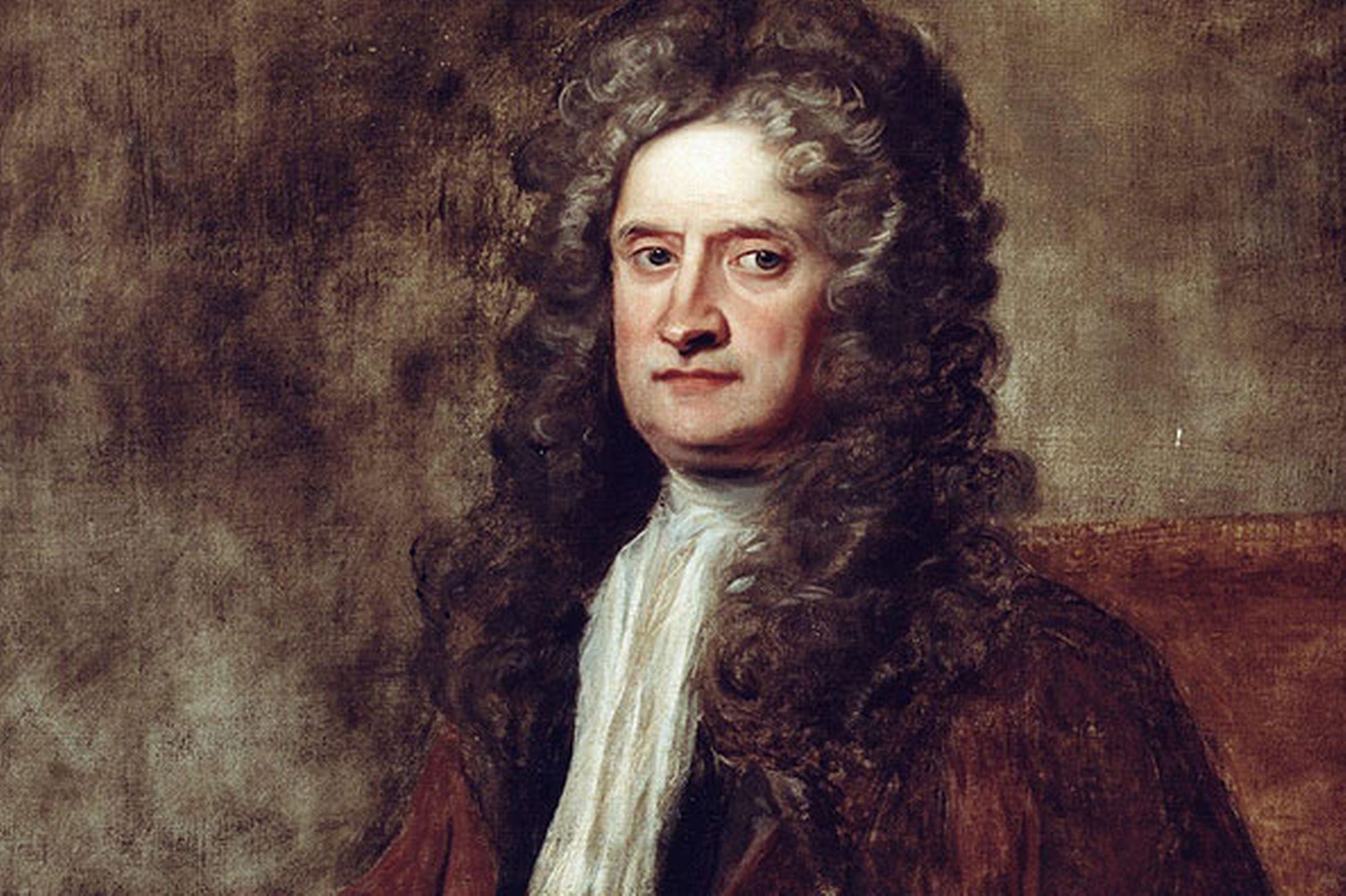
Which of the following was developed by Isaac Newton?
the heliocentric theory
the scientific method
the theory of scientifc rationalism
the theory of universal gravitation
The idea that the earth is the center of the universe is the ___________ theory.
geocentric
heliocentric
earthcentric
world's worst
What did Kepler add to Copernicus’ heliocentric theory?
That Jupiter had four moons
That the planets revolved around the earth
That the sun was the biggest star
That the planets move in eliptical (oval shaped) orbits around the sun
During the scientific revolution people started using experiments to test theories rather than just believing the ___________
King
Family
Church
Sir Salami

What type of math was Newton known for developing?
Geometry
Trigonomety
Calculus
Addition
What did Galileo Improve?
The astrolabe
the stars
The Telescope
cat food.
The Scientific Revolution was a shift from
Magic to traditional ideas
Traditional ideas to Middle Age ideas
Magic to Science
Which scientist developed laws of motion?
Ptolemy
Copernicus
Galileo
Newton
Scientist began using _____________ and _______________ instead of placing their beliefs in faith.
History and faith
Math and Science
Math and History
experiments and logic
What was the major shift in thinking between 1500 and 1700, in which modern science emerged as a new way of gaining knowledge about the natural world?
Reformation
Industrial Revolution
Scientific Revolution
Enlightenment
Who proposed the heliocentric theory, which stated that Earth and the other planets travel in orbits around the sun?
Johannes Kepler
Isaac Newton
Nicolaus Copernicus
Galileo Galilei
What did Johannes Kepler discover about the orbits of the planets, which expanded on Copernicus's theory?
They are perfect circles
They are ellipses
They are hyperbolas
They are parabolas
What was a key feature of the Scientific Revolution in terms of methodology?
Emphasis on religious doctrine
Reliance on traditional beliefs
Use of empirical evidence and experimentation
Focus on philosophical debates
Which invention during the Scientific Revolution allowed for the detailed study of celestial bodies?
Microscope
Telescope
Barometer
Thermometer
Who is known for formulating the laws of planetary motion during the Scientific Revolution?
Isaac Newton
Galileo Galilei
Johannes Kepler
Nicolaus Copernicus
What was the impact of the Scientific Revolution on the view of the universe?
It reinforced the geocentric model
It introduced the heliocentric model
It supported the flat Earth theory
It denied the existence of other planets

