
 Worksheets
S7L5
Total questions: 25
Worksheet time: 25mins

Which of the planet listed has a length of rotation closets to the length of one rotation of the Earth?
A
B
C
D
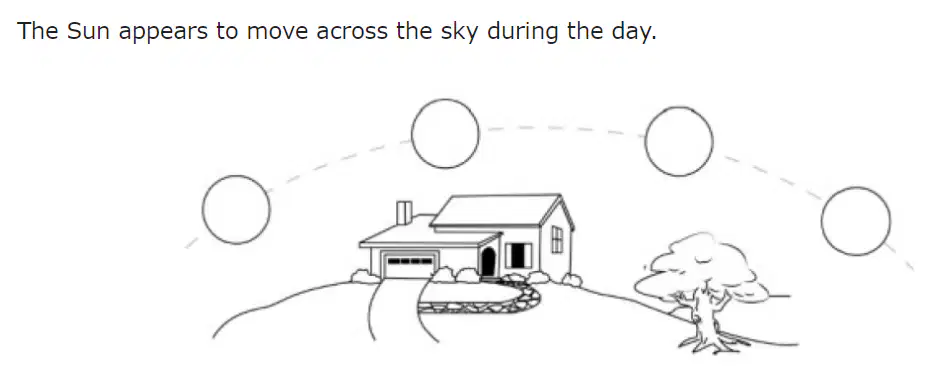
Which model below presents the most accurate explanation for the apparent movement of the Sun across the sky as shown?


At which of these points is it midnight?
Top
Left
Right
Bottom
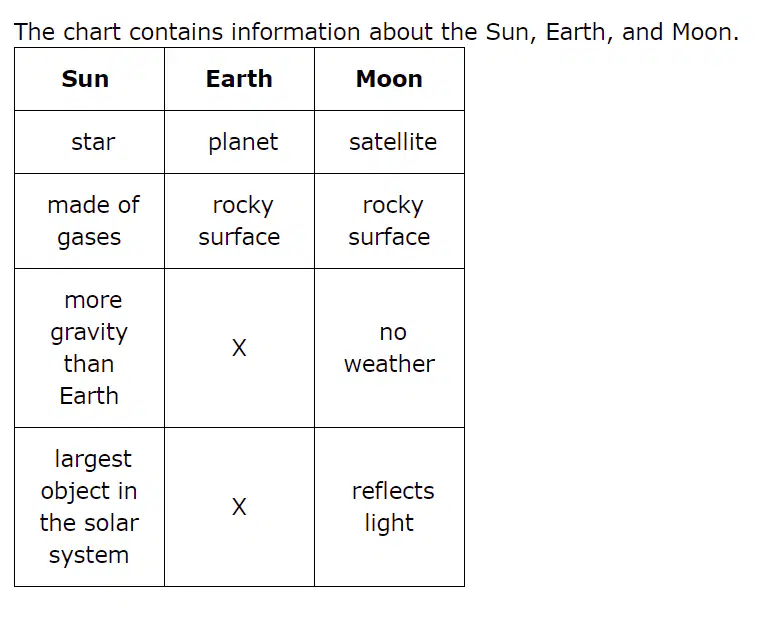
Earth has no weather
True
False
List the steps of the scientific method
Conduct experiment
Form a hypothesis
Draw conclusions
Communicate results
Ask a question
Analyze results
Earth is tilted on its axis
True
False
Earth has four distinct seasons
True
False
Earth has less gravity than the moon
True
False
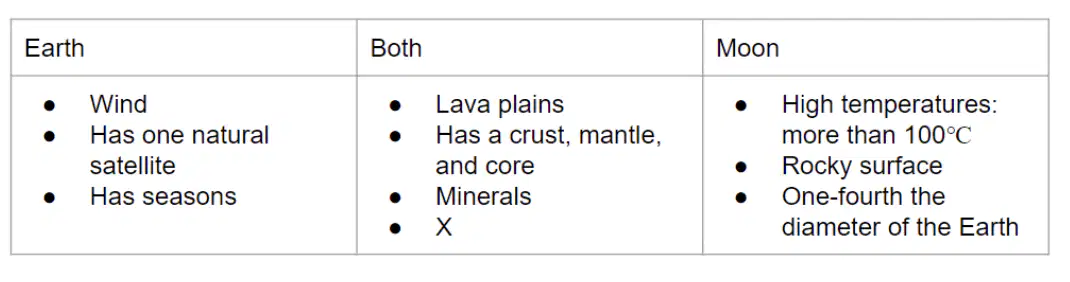
Which characteristic would best replace the X in the physical characteristics in the Earth and Moon chart?
One revolution is 27.3 days
Consists of about 70% hydrogen
Has Craters
Experiences high and low tides
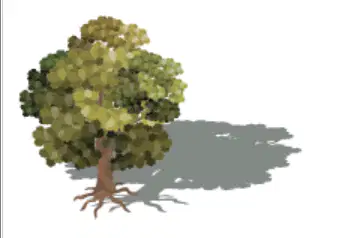
Shadows can help us determine the time of day. Select the correct Time of Day.
8:00 AM
2:00 PM
11:00 AM
6:00 PM
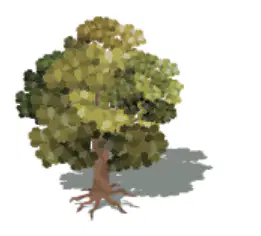
Shadows can help us determine the time of day. Select the correct Time of Day.
8:00 AM
2:00 PM
11:00 AM
6:00 PM

Shadows can help us determine the time of day. Select the correct Time of Day.
8:00 AM
2:00 PM
11:00 AM
6:00 PM
The Earth rotates on the its axis once every ________
day and night
east
24 hours
shadows
west
The Earth experiences _________ every 24 hours.
day and night
east
24 hours
shadows
west
Which of the following statements is NOT true for either the refracting telescope or the reflecting telescope?
In a refracting telescope the entering light first passes through a convex lens before receiving but eh eyepiece.
In a reflecting telescope the entering light passes through a layer of oil in the a telescope tube.
In a refracting telescope, the image viewed in the eyepiece is upside down because of the bending of the light.
In a reflecting telescope the entering light is reflected by a concave mirror to the eyepiece.
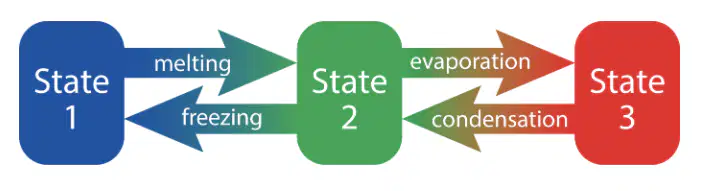
All the arrows indicate
reaction changes
chemical change
physical changes
irreversible changes
The Sun's rays make long _________.
day and night
east
24 hours
shadows
west

This is an inherited trait that makes an individual different from other members of its species.
Variation
Mutation
Punctuated Equilibrium
Embryology

How can farmers best use selective breeding to increase apple production?
By limiting the number of trees growing so they can have more space.
By choosing trees that are the largest in size.
By increasing the amount of water and fertilizer the trees receive.
By choosing trees that consistently have the most apples.

Selective breeding is where _____________ decides which traits should be passed on.
nature
a human
traits
evolution
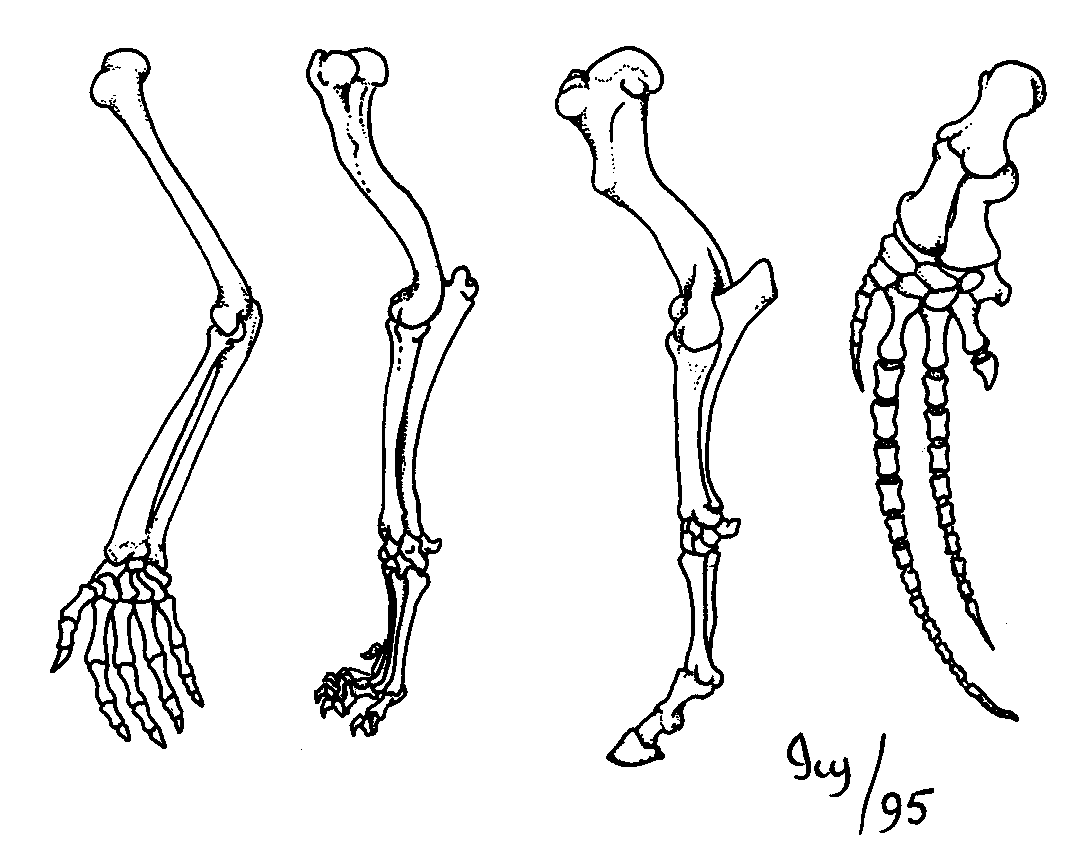
Structures with the same parts have different functions; suggests that organisms share a common ancestry
vestigial structures
homologous structures
adaptive radiation
fossil
Which of the following is a characteristic of living organisms?
Growth and development
Inability to reproduce
Lack of response to stimuli
Absence of cellular structure
What is the primary function of the mitochondria in cells?
Photosynthesis
Protein synthesis
Energy production
DNA replication
In an experiment, what is the variable that is changed or controlled to test its effects on the dependent variable?
Independent variable
Dependent variable
Controlled variable
Extraneous variable
Which process is responsible for the movement of water from the roots to the leaves in plants?
Transpiration
Photosynthesis
Respiration
Germination

