
 Worksheets
Earth's Patterns
Total questions: 25
Worksheet time: 25mins
What causes the angle of the sun’s rays to change
during the year on Earth?
the tilt of Earth’s axis
the sun’s slow rotation
Earth’s distance from the sun
Earth’s rotation
If you live in the Southern Hemisphere, during
which month does autumn(fall) occur?
March
June
December
September
Season’s are caused by Earth’s
orbit and distance from the moon
orbit and distance from the sun
tilted axis and size
orbit and tilted axis
Day and night are caused by Earth’s
revolution
rotation
shape
equator

A
B
C
D

Student 1 only
Students 2 and 4 only
Student 2 only
Students 1 and 3 only

A student observes the shadows created by a flagpole to collect data on the movement of the sun. The student sketches observations three times throughout the day.
Which direction is the student facing when sketching the observations shown above?
East
North
South
West

A student observed the Sun throughout the day over the neighbor’s house. The change the student observed is caused by -
orbit of Earth around the Sun
rotation of Earth on its axis
orbit of the Sun through space
reflection of the Sun off the Moon
Earth's revolution takes
1 day
12 hours
about 365 days
27 days
Earth rotates once on its axis every
24 hours
year
hour
27 days

The large pieces of the Earth's crust are called:
Tectonic plates
Land ridges
Continental chunks
none of the above

This is the type of boundary that occurs when tectonic plates move apart.
convergent
divergent
transform
none of the above

This rock started as molten magma. What type of rock is this?
Sedimentary
Igneous
Metamorphic

The process when rocks break into smaller pieces due to exposure to natural elements is called
erosion
weathering
sediments
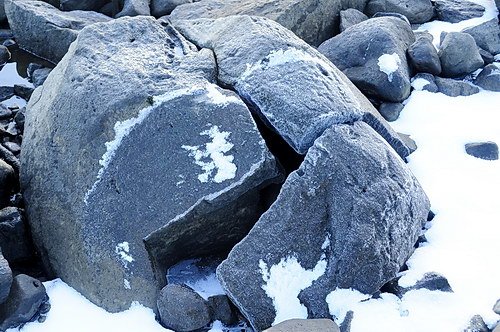
How does freezing water cause the weathering of rocks? The freezing water—
keeps the rocks in place.
makes the rocks last longer.
expands cracks and breaks rocks.
causes rocks to fall in landslides.
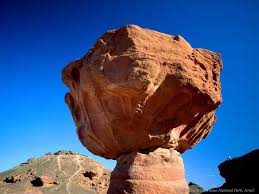
The process that breaks down rocks and other materials on Earth's surface is called
Weathering
Erosion
Deposition
Decomposition

A cliff formed near the ocean. Which statement best describes how this cliff formed?
Warm air melted the rock.
Sun rays evaporated the rock.
Ocean waves washed away rock.
Plant roots pushed away the rock.

What is the process that picks up and moves weathered rocks?
Deposition
Landslide
Weathering
Erosion
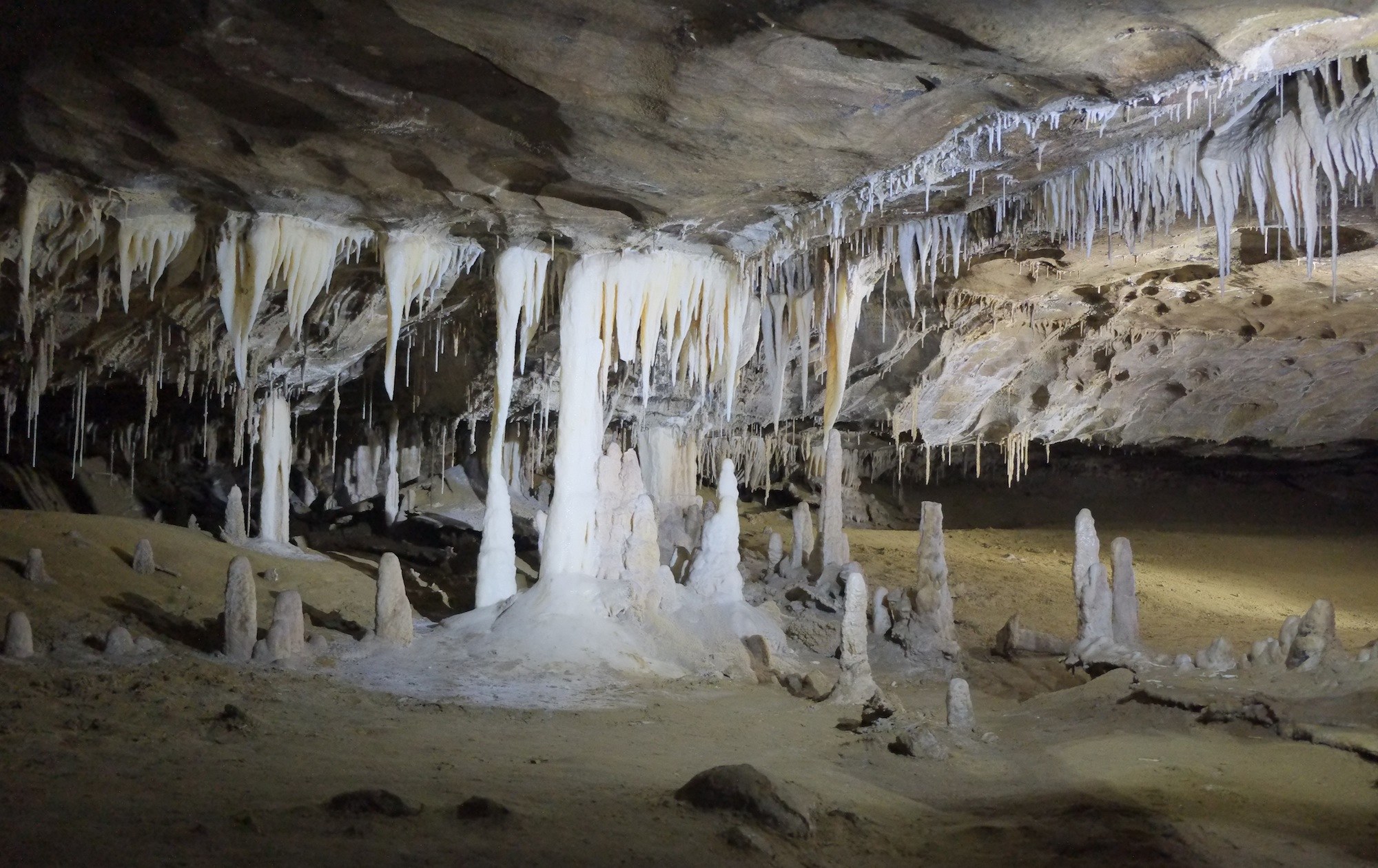
Deposition changes the Earth’s surface because bits of broken rock and soil _____.
stop rivers from flowing.
make rich farmlands.
are dropped in new places.
move very slowly.
What is the primary reason for the occurrence of seasons on Earth?
The distance of Earth from the Sun
The tilt of Earth's axis
The speed of Earth's rotation
The shape of Earth's orbit
Which phenomenon is responsible for the changing length of daylight throughout the year?
Earth's rotation
Earth's revolution
The tilt of Earth's axis
The gravitational pull of the Moon
During which month does the Northern Hemisphere experience the longest day of the year?
March
June
September
December
What is the main cause of the phases of the Moon as observed from Earth?
Earth's rotation
Earth's revolution
The Moon's orbit around Earth
The Sun's orbit around Earth
Which layer of Earth is responsible for the creation of its magnetic field?
Crust
Mantle
Outer core
Inner core
What is the primary reason for the occurrence of tides on Earth?
The gravitational pull of the Sun
The gravitational pull of the Moon
Earth's rotation
Earth's revolution

