
 Worksheets
Quizziz_lesson 36: fazendo as malas
Total questions: 24
Worksheet time: 42mins

When talking about how the weather will be in the future, we use the verbs (tick all possible answers):
ser
estar
ter
fazer
Match the weather conditions:

vai estar chovendo

vai estar nevando

vai estar fresco

vai estar nublado
Match the weather conditions:

vai estar/fazer sol

vai estar/fazer calor

vai estar/fazer frio
Match the “roupas (clothes) de outono"

a blusa de manga longa

a calça jeans

o moletom

o tênis

as meias
Match the “roupas (clothes) de inverno"

o casaco

o gorro/a touca

o cachecol

a bota

a meia-calça
Match the “roupas (clothes) de primavera"

o vestido

a saia

as sandálias

a camisa

o shorts
Match the “roupas (clothes) de verão"

o biquíni

a bermuda

os óculos de sol

o chinelo

a camiseta
When we want to express things we need in Portuguese, we use the verb "precisar" (to need). When talking about needing something, this verb is followed by “de”. How do we conjugate this verb in the present?
Match the things we take to the beach:

a toalha

o protetor solar

a bolsa
Match the things we take to the beach:

a prancha de surf

o guarda-sol

a bola

o chapéu
PRA QUE? Match the objects to their purpose:
pra se secar
pra proteger a pele
pra levar coisas
PRA QUE? Match the objects to their purpose:
pra surfar
pra fazer sombra
pra jogar
pra cobrir a cabeça

Which Portuguese word used to ask informally where something or someone is?
(a)

Reorder the sentence:
Cadê
o
protetor
solar?

Reorder the sentence:
Cadê
a
bola?

Reorder the sentence:
Cadê
a
minha
bolsa?
Reorder the sentence:
Cadê
o
meu
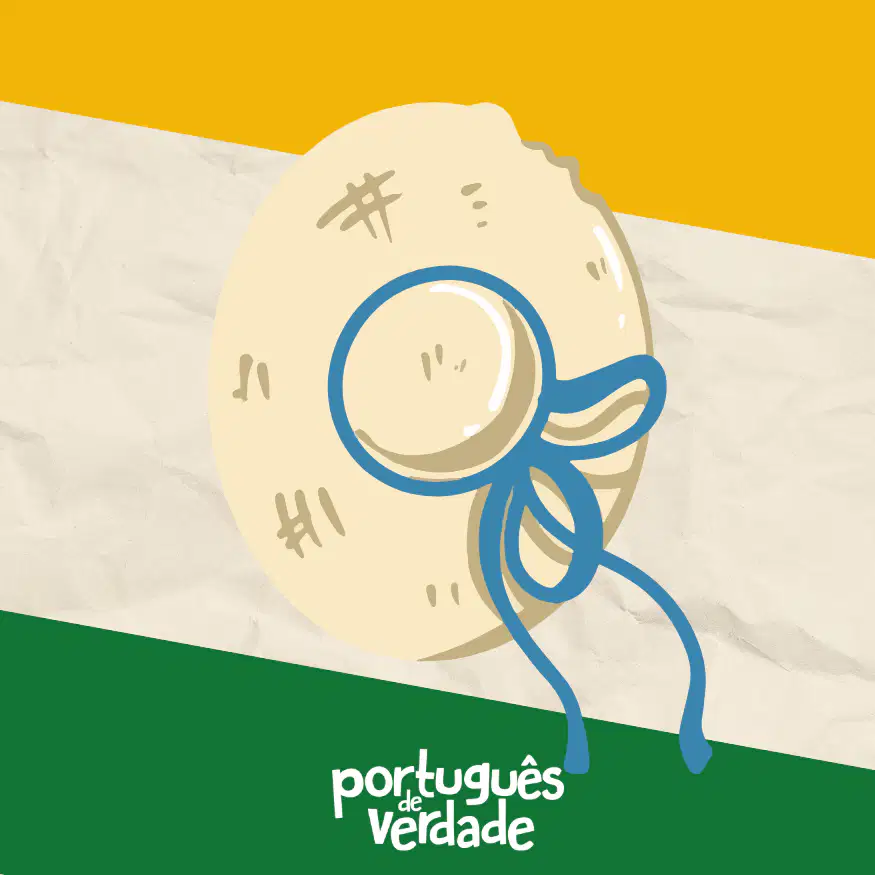
chapéu?

In Portuguese, the presente do subjuntivo is used to conjugate the second verb in a sentence when we express desires or hopes, giving advice or expressing necessity and when talking about doubts or uncertainty. What sentences do we use in Portuguese for each case? Match the sentences with what they express.
desires or hopes
espero que
giving advice or expressing necessity
preciso que
doubts or uncertainty
duvido que
How do we conjugate verbs ending in -AR in the presente do subjuntivo?
How do we conjugate verbs ending in -ER in the presente do subjuntivo?
How do we conjugate verbs ending in -IR in the presente do subjuntivo?
Match each Portuguese verb with its correct meaning in English:
Ajudar
To help someone with something.
Pegar
To take or grab something.
Levar
To take or bring something or someone
Colocar
To put or place something somewhere.
Confirmar
To check if something is correct.
Conjugate the following verbs in the presente do subjuntivo:
Glossary
arrumar as coisas: o get things ready
sair cedo amanhã: leave early tomorrow
O que falta?: What’s missing?
vendo: seeing
achei!: I've found it!
vou tentar!: I'm going to try it!
o que mais?: what else?
para jogarmos na areia: to play on the sand
feito!: done!
queimar a cabeça: burn my head
o horário do ônibus: the bus time
um minutinho: just a minute
Fill the blanks:
Lucas precisa que João (a) (ajudar) a arrumar as coisas.
Fill the blanks:
João quer que Lucas (a) (confirmar) o horário do ônibus.
Fill the blanks:
Lucas precisa que João (a) (levar) a bola para jogar na areia.
Fill the blanks:
Lucas precisa que João (a) (pegar) sua prancha de surf.
TRUE OR FALSE: Lucas and João are leaving in the afternoon.
VERDADEIRO
FALSO
TRUE OR FALSE: Lucas asks João to confirm the time of the bus.
VERDADEIRO
FALSO
TRUE OR FALSE: João’s hat is in the garage.
VERDADEIRO
FALSO
TRUE OR FALSE: They are bringing a surfboard and a ball for the trip.
VERDADEIRO
FALSO
Where does João find the surfboard?
na sala
na garagem
no quarto
na cozinha
Why does João need his hat?
Porque vai estar frio
Porque ele gosta de chapéus
Porque vai fazer sol

