
NEW
Font size
 Worksheets
Identifying Muscles
Total questions: 15
Worksheet time: 15mins
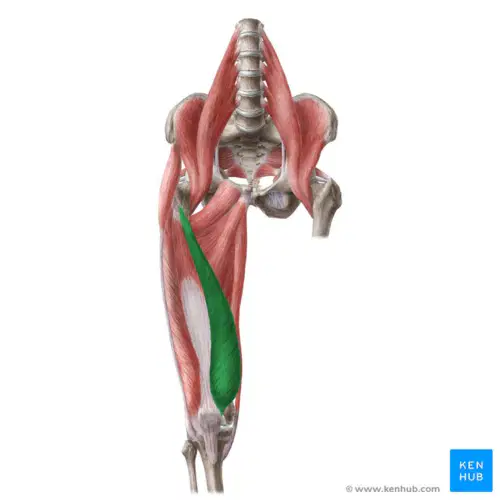
What muscle?
rectus femoris
vastus lateralis
vastus medialis
adductor longus
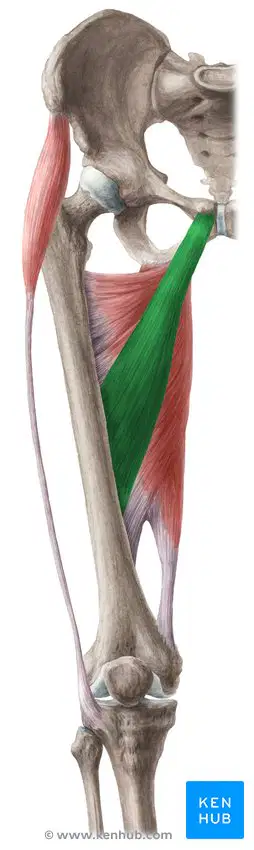
What muscle?
rectus femoris
vastus lateralis
vastus medialis
adductor longus
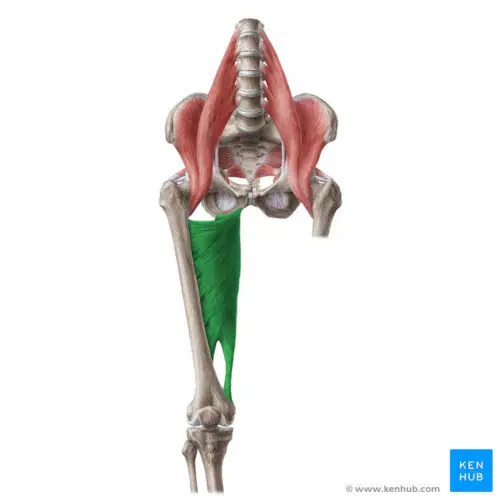
What muscle?
biceps femoris
semitendinosus
semimembranosus
adductor magnus

What muscle?
biceps femoris
semitendinosus
semimembranosus
adductor magnus
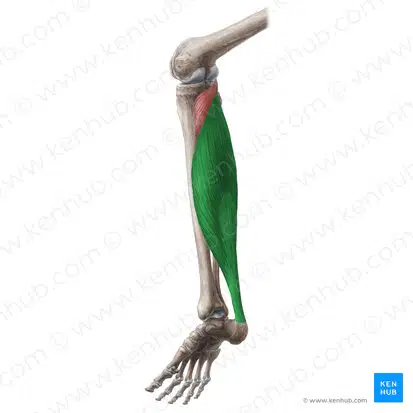
What muscle?
soleus
gastrocnemius
tibialis anterior
fibularis longus

What are the 3 types of muscles?
Skeletal, muscular, ligament
Skeletal, smooth, cardiac
Smooth, Cellular, Cerebrum
Cardiac, smooth, brain stem

Smooth muscle and cardiac muscle are considered _____ muscles because we can’t control them consciously.
Immovable
Involuntary
Skeletal
none of the above
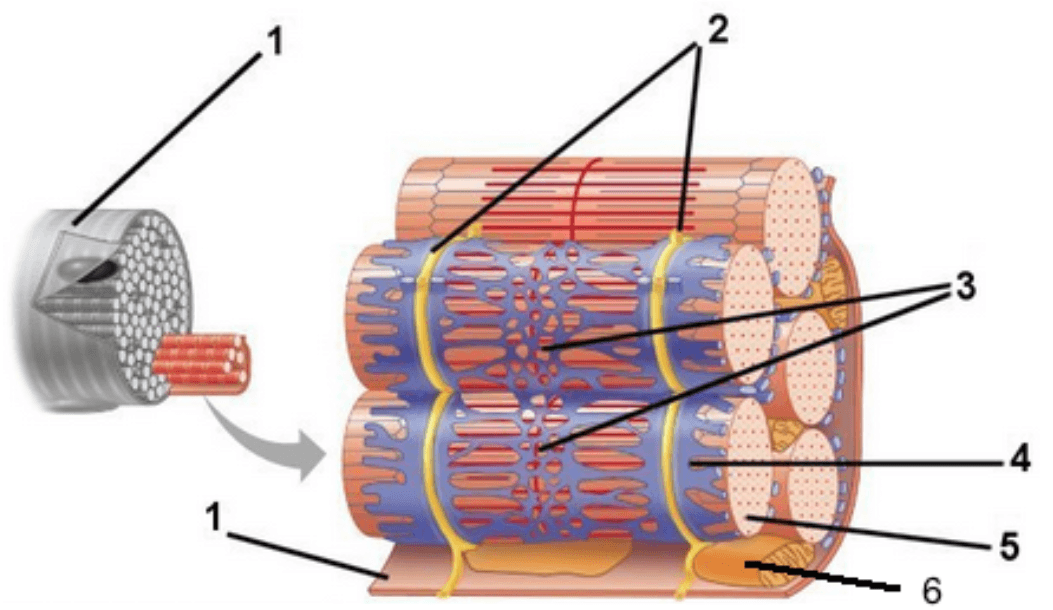
What is shown in the colored part of this diagram?
a whole muscle
five muscle fibers
five muscle fascicles
five myofibrils
Found in the walls of hollow organs; also called visceral
smooth
cardiac
skeletal
all
Use to move materials through contractions
smooth
cardiac
skeletal
all

Skeletal muscles always work _____.
in groups
in pairs
singly
none of the above
What is labeled "4" (the blue/purple part) in the diagram?
sarcolemma
sarcoplasmic reticulum
transverse tubules
myofibril
Which type of muscle is primarily responsible for voluntary movements in the human body?
Smooth muscle
Cardiac muscle
Skeletal muscle
Visceral muscle
What is the main function of cardiac muscles?
To move bones
To pump blood
To aid digestion
To support posture
Which muscle type is characterized by striations and is found in the heart?
Smooth muscle
Cardiac muscle
Skeletal muscle
Visceral muscle

