
NEW
Font size
 Worksheets
AP Bio Transcription and Translation
Total questions: 15
Worksheet time: 15mins
Which enzyme is responsible for adding nucleotides?
Topoisomerase
DNA Polymerase
Ligase
Primase
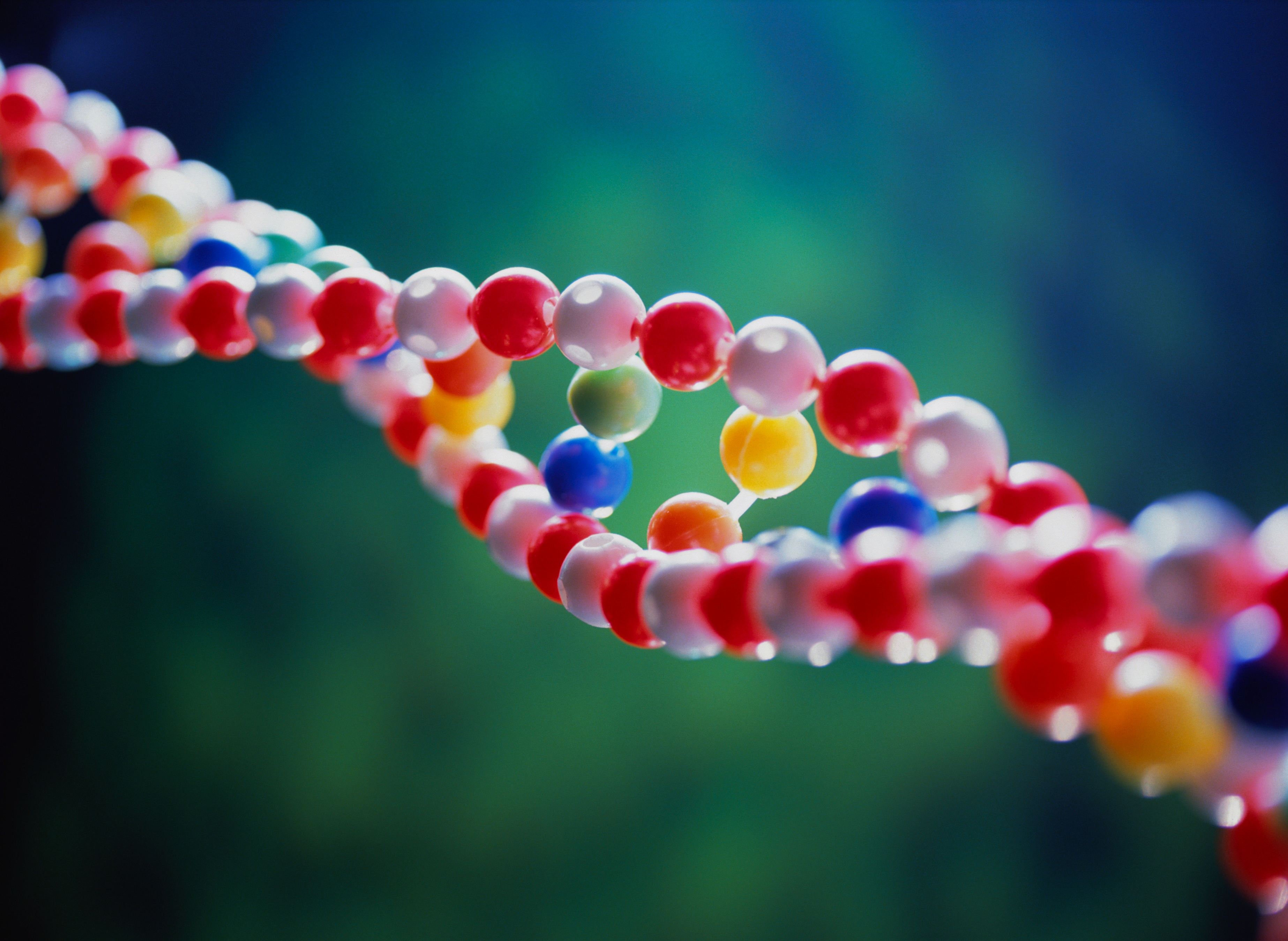
Why is DNA important?
it is very small and very complicated
it's in everything
it serves as the blueprint for traits of all living things
because we eat it every day for energy

Given the locally unwound double strand in Figure 14.3, in which direction does the RNA polymerase move?
5' → 3' along the double-stranded DNA
3' → 5' along the complementary strand
5' → 3' along the template strand
5' → 3' along the complementary strand
3' → 5' along the template strand
Transcription in eukaryotes requires which of the following in addition to RNA polymerase?
aminoacyl-tRNA synthetase
ribosomes and tRNA
the protein product of the promoter
start and stop codons
several transcription factors
Which of the following best describes the significance of the TATA box in eukaryotic promoters?
It signals the end of the nucleotide sequence of the gene.
It is the recognition site for a specific transcription factor.
It is the recognition site for ribosomal binding.
It sets the reading frame of the mRNA.
A eukaryotic transcription unit that is 8,000 nucleotides long may use 1,200 nucleotides to make a protein consisting of approximately 400 amino acids. This is best explained by the fact
there is redundancy in the genetic code.
there are termination exons near the beginning of mRNA.
many nucleotides are needed to code for each amino acid.
many noncoding stretches of nucleotides are present in eukaryotic DNA.
Which of the following DNA mutations is likely to have the most negative effect on the protein it specifies?
a codon substitution
a base-pair deletion
a codon deletion
a substitution in the last base of a codon
The nontemplate strand of a portion of a gene reads
5′ ACT GGT TCA. What will be the sequence of the resulting transcript for this portion?
5′ UGA CCA AGU
5′ ACU GGU UCA
5′ UGA ACC AGU
5′ ACU UGG UCA

In the transcription event of the DNA in Figure 14.3, where would the promoter be located?
to the right of the sense strand
at the 3' end of the newly made RNA
to the right of the template strand
to the left of the sense strand
to the left of the template strand
Which of the following does not occur in prokaryotic gene expression, but does occur in eukaryotic gene expression?
A poly-A tail is added to the 3' end of an mRNA and a cap is added to the 5' end.
Transcription can begin as soon as translation has begun even a little.
RNA polymerase requires a primer to elongate the molecule.
RNA polymerase binds to the promoter.
mRNA, tRNA, and rRNA are transcribed.
RNA polymerase moves in which direction along the DNA?
5' to 3' along the double-stranded DNA
3' to 5' along the template strand
3' to 5' along the nontemplate strand
5' to 3' along the template strand
5' to 3' along whichever strand it's on
Which of the following statements correctly describes alternative RNA splicing?
It increases the rate of transcription.
It is a mechanism that can increase the rate of transcription.
It can allow the production of proteins of different sizes and functions from a single mRNA.
It allows the production of similar proteins from different RNAs.
Which enzyme is responsible for synthesizing RNA during transcription?
A) DNA Polymerase
B) RNA Polymerase
C) Ligase
D) Helicase
During translation, the sequence of nucleotides in mRNA is read in sets of three nucleotides. What are these sets called?
A) Anticodons
B) Codons
C) Triplets
D) Nucleotides
In eukaryotic cells, where does transcription occur?
A) Cytoplasm
B) Ribosome
C) Nucleus
D) Endoplasmic Reticulum

