
 Worksheets
ARTS 5&6 Summative Test 4
Total questions: 95
Worksheet time: 48mins
What is the main purpose of product packaging?
To enhance the aesthetic appeal of the product.
To increase the product's weight for shipping.
To protect the product and provide information to consumers.
To serve as a promotional tool for the brand.
Which elements are combined in packaging design?
Imagery, colors, sounds, materials, typography
Materials, colors, typography, imagery, structural design
Materials, shapes, sizes, patterns, textures
Shapes, patterns, textures, fonts, colors
Why is it important to consider buyers when designing packaging?
To reduce production costs regardless of buyer preferences.
To ensure packaging is the same for all products, ignoring buyer demographics.
It is important to consider buyers when designing packaging to ensure it meets their needs and influences their purchasing decisions.
To create packaging that is visually appealing but not functional.
What can the choice of packaging material affect?
Nutritional value
Color variety
Flavor enhancement
Product protection, shelf life, environmental impact, cost, and consumer perception.
How do quality materials influence a product's appearance?
Quality materials only affect the durability, not the appearance.
Quality materials improve a product's appearance by enhancing texture, color, and overall visual appeal.
Quality materials have no effect on a product's appearance.
Using cheap materials can enhance a product's visual appeal.
What were some of the earliest materials used for packaging?
Ceramics, stone, rubber
Plastic, glass, metal
Leaves, animal skins, wood
Paper, cardboard, fabric
Which natural materials were used to create baskets?
Grasses, reeds, willow, rattan, and bark.
Cotton and silk
Plastic and metal
Concrete and glass
What type of wood was commonly used for packaging?
Cedar and fir
Bamboo and rattan
Plywood and particleboard
Oak and maple
How was clay used in ancient packaging?
Clay was used as a writing medium for ancient texts.
Clay was mainly utilized for creating decorative art pieces.
Clay was primarily used for making pottery and sculptures.
Clay was used to create durable containers for storing and transporting goods.
What animal skin was often used for packaging liquids?
Pig skin
Cow skin
Sheep skin
Goat skin
Why is metal considered one of the oldest packaging materials?
Glass has been used longer than metal for packaging.
Plastic is older than metal for packaging.
Metal is considered one of the oldest packaging materials because it has been used for thousands of years due to its durability and protective qualities.
Metal is a recent invention for packaging.
What is one advantage of using luxurious packaging materials?
Enhances perceived value of the product.
Increases the weight of the product.
Reduces production costs significantly.
Makes the product easier to transport.
How can cheap materials impact a product's appeal?
Using cheap materials can attract more customers due to lower prices.
Cheap materials can enhance a product's appeal by making it more affordable.
Cheap materials have no effect on a product's overall appeal.
Cheap materials can negatively impact a product's appeal by reducing perceived quality and durability.
What role does imagery play in packaging design?
Imagery plays a crucial role in attracting consumers, conveying brand identity, and communicating product benefits.
Imagery is primarily used for legal information on packaging.
Imagery has no impact on consumer behavior.
Imagery is only important for food packaging.
Why is color important in product packaging?
Color is irrelevant in digital product packaging.
Color is important in product packaging because it attracts attention, conveys brand identity, and influences consumer emotions and purchasing decisions.
Color is only important for aesthetic purposes.
Color has no impact on consumer behavior.
It is the visual and creative representation of a product.
Graphic design
Typography
Product
Package Design
It is one of the oldest materials used for packaging, which was primarily used for weapons, armor, and vessels.
Metal
It began in Ancient Egypt between 3300 to 1200 BC. It provides a great barrier against outside elements and does not affect the flavor, aroma, or composition of its contents.
Clay
It is a thin material made from pressed fibers of wood pulp or grass.
Who invented plastic in 1838?
A product should also stand out from the other similar products on the shelves.
Purpose
Originality
Target Audience
Quality
Good packaging can be used many times, versatile, and recyclable. It should be made up of sustainable and environment-friendly materials.
Purpose
Originality
Quality
Quantity
When we develop our brand, design elements such as color, font, and material become trademarks associated with our brand.
Originality
Target Audience
Purpose
Brand Personality
It influences the mood and behavior of people when they see the product.
Color
Typography
Picture
Packaging
What color exudes authority, sophistication, elegance, and luxury?
A color that evokes trust, reliability, and confidence.
Which is not one of the uses of Packaging?
This is often done to make sure competitors do not use the same colors for their products.
It represents action, energy, desire, excitement, intensity, and passion.
Answer true or false. Packaging doesn’t connects and communicates with consumers. You need to know your target audience and persons with different personalities.
true
false
The art of creating three-dimensional objects by carving stone or wood, and casting metal or plaster.
Early Filipinos created wood carvings and ethnic sculptures called ______.
T'nalak
Bathala
Bulul
Anitos
Who created the Bonifacio Monument and the UP Oblation?
Napoleon Abueva
It does not resemble any known or existing object or person. It is also known as abstract sculpture.
Representational Sculpture
Non-representational Sculpture
An example of this sculpting is the Bonifacio monument which resembles a person.
Representational Sculpture
Non-representational Sculpture
A kind of sculpture that stands alone and is not attached to a background or wall.
It involves attaching and raising the sculpted object to a solid background of the same material.
A kind of sculpting that uses materials that can be added such as wax and clay.
This kind of sculpting involves removing material from a block to create a desired form.
What are the materials commonly used in traditional sculptures?
Today's sculpture uses out-of-the-box materials like dried wood, plasticware, and household items.
True
False
He is the "Father of Modern Philippine Sculpture." He was awarded the National Artist for Sculpture in 1976.
Napoleon Abueva
Which material is commonly used in making sculptures?
Metal
Plastic
Fabric
Glass
What is the most common process of sculpture?
Cooking
Sewing
Carving
Painting
What is the procedure of cutting a solid material to form something in sculpture called?
Molding
Sculpting
Carving
Weaving
Which of the following is NOT a material used in making sculptures?
Ceramics
Stone
Glass
Wood
Which material is most commonly used for additive sculpture?
wood
metal
clay
glass
What does using clay in additive sculpture provide to artists?
no chance to rework the sculpture
more freedom
no opportunity
limeted freedom
What is the main characteristic of additive sculpture?
Two-dimensional artwork
Created by removing parts
Created by adding separate parts
Created using only one material
During the Spanish colonization, what was the subject of most sculptures in the Philippines?
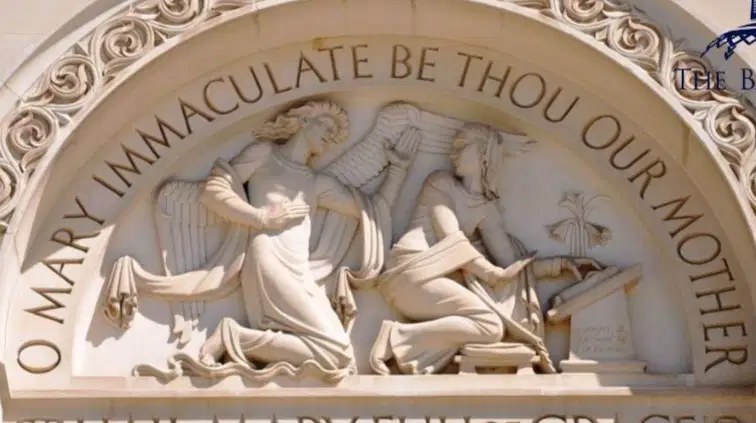
What style of sculpture is shown in the picture?
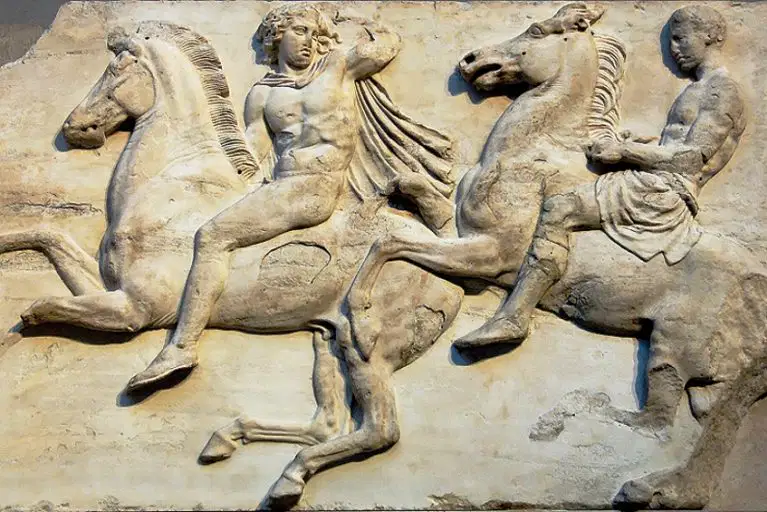
What style of sculpture is shown?
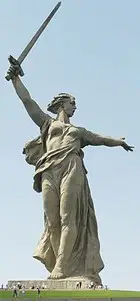
What kind of sculpture is shown?
Additive or Subtractive Sculpture
Freestanding sculpture
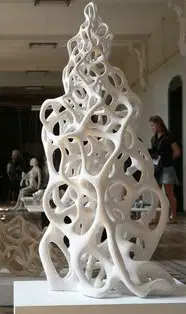
What style of sculpture is shown?
Objective Sculpture

Who sculpted the statue of David?
Leonardo da Vinci
Michaelangelo
Donatello
Auguste Rodin
It is an illusion achieved through drawing techniques.
Simulated Visual Texture
Texture
Invented visual texture
This surface effect comes from an artist's imagination.
Invented visual texture
Simulated visual texture
Visual Texture
Tactile Texture
This three-dimensional artwork is made by putting found objects together on an illustration board.
A type of printing where a design is drawn on a plate or matrix.
Relief Printing
In this type of printmaking, the design is drawn on the plate or matrix using a greasy material like a crayon.
Intaglio printing
In printmaking, this material is used to draw or engrave the design on the matrix.
Brayer or roller
Acid-resistant chemicals
Burin
Plate or matrix
This is a collage of different materials glued on a surface to create a printmaking plate or matrix.
Collograph
In Italian word that means “to engrave”.
(a)
He is known for using bold, colorful strokes in his paintings.
Mishael Jacob Pueblos
Kermit Tesoro
Raul Piedra
Jose Tanig Jaya
He used shoes to create textured artworks.
Mishael Jacob Pueblos
Kermit Tesoro
Raul Piedra
Jose Tanig Jaya
The process of transferring an image from one surface to another.
Intaglio Printing
Printmaking
Relief Printing
Stencil printing
It was marked as the Golden Age of Philippine printmaking or engraving.
Modern period
18th century
19th century
20th century
A printing press used to transfer the image to the printing paper or fabric.
Plate or matrix
Burin
Acid-resistant chemicals
Brayer or roller
Period of decline in religious engravings.
Modern period
18th century
19th century
20th century
After this period printmaking come back to the Philippine art scene.
World War II
World War 1
19th century
20th century
Another name for tactile texture is.
Which type of texture is smooth to touch?
Sandpaper
Silk
Velvet
Brick
He is known for his textured abstract paintings since the 1970s.
Mishael Jacob Pueblos
Kermit Tesoro
Raul Piedra
Jose Tanig Jaya
It is any dark room with a small hole on the outside.
Who introduced film labs where films were developed.
Kodak
Sony
Joseph Nicéphore Niépce
George Eastman
It is an art form that communicates through pictures. It is another tool for us to express our creativity.
Photography
Painting
Sculpture
Printmaking
An early photographic process that uses light-sensitive materials to create images.
Heliography
A camera in the 1830s where people had to stay still for as long as 20 minutes for their images to be taken.
Film Camera
Heliograph
It was introduced in 1959. It printed the images instantaneously without the use of film.
Polaroid camera
Instant printer
With this camera, photographers can now take hundreds of images and store them in a memory card.
Polaroid
Digital Camera
Daguerreotype
Film Camera
What was the company that produced the first commercially colored film?
Sony
Kodak
_____is a principle of art in which part of the work stands out, to draw the viewer's eye there first.
pattern
emphasis
balance
contrast
A placement where the subject is where the horizontal and vertical divisions meet.
Dynamic Symmetry
Principle of Thirds
Balance
Harmony
It is the subject of the photograph. This is where the viewers will focus on.
Point of interest
Emphasis
Subject placement
Rule of thirds
He was the first to capture a photograph wherein he had to expose the image using tar and bitumen to the sun for at least 8 hours.
Sony
Joseph Nicéphore Niépce
George Eastman
Kodak
It is the arrangement of the elements or objects in a photograph.
Point of interest
Subject Placement
Rule of thirds
Photographic composition
A photography career wherein he/she uses photographs to tell stories about events and issues.
Photographer
Journalist
Photojournalist
Broadcaster
The position of the point of interest in the basics of photography.
Subject Placement
Point of interest
Photographic composition
Dynamic Symmetry
Which is NOT an element of photographic composition?
Dynamic Symmetry
Balance
Camera Angle
Layout
When did colored photographs were developed in the?
1840s
1850s
1860s
1870s
A grid system of vertical, horizontal, and diagonal lines is used to divide the frame of the photograph.
Rule of thirds
Balance
Dynamic Symmetry
Movement
It allowed artists to trace and replicate the objects, places, and persons they wanted to draw or paint.
Polaroid
Heliography
Daguerreotype
Camera Obscura
This technique in photography involves capturing images with a long exposure time to create a sense of motion.
Portrait Photography
Macro Photography
Long Exposure Photography
Documentary Photography
Which of the following is a common method used to create depth in a photograph?
Applying a vignette effect
Using monochrome colors
Overexposing the image
Using a wide-angle lens
This harmony combines two colors opposite each other on the color wheel.
Analogous color harmony
Complementary color harmony
Monochromatic color harmony
Triadic color harmony

