
 Worksheets
THIRD PERIODICAL TEST IN MAPEH 7
Total questions: 30
Worksheet time: 15mins
Who composed the melody of "Lupang Hinirang"?
Andres Bonifacio
Julian Felipe
Jose Palma
Antonio Luna
Which leader played a significant role in promoting Indonesian performing arts as a symbol of nationalism?
Sukarno
Suharto
Jose Rizal
Manuel Quezon
What type of music is associated with the post-war nationalist movement in Indonesia?
Kundiman
Rondalla
Gamelan
Rock and roll
Which of the following is NOT a traditional dance of the Philippines that preserves Filipino heritage?
Tinikling
Singkil
Cariñosa
Polka
Which event marked the beginning of post-war nationalism in the Philippines?
The Philippine Revolution
Japanese Occupation
Granting of independence by the United States in 1946
The establishment of the Bayanihan Dance Troupe
In Indonesia, what traditional art form was used as a symbol of resistance and unity during the post-war period?
Kundiman songs
Wayang kulit (shadow puppetry)
Peking opera
Western classical ballet
Which musical element gives "Lupang Hinirang" its march-like and patriotic feel?
Its fast tempo and syncopated rhythm
Its slow, melancholic melody
Its irregular time signature
Its lack of dynamics and harmony
What is the original title of the melody used for "Lupang Hinirang"?
Bayang Magiliw
Marcha Nacional Filipina
Himno Nacional
Filipinas Kong Mahal
In what way does "Nokor Reach" reinforce Cambodian nationalism?
It calls for the return of colonial rule
It is performed only in royal ceremonies
It reminds Cambodians of their sovereignty and cultural heritage
It promotes the use of foreign languages in Cambodia
Which of the following best describes the role of Indonesia Raya during the Japanese occupation (1942-1945)?
It was officially recognized by the Japanese authorities.
It was secretly sung as a symbol of resistance.
It was replaced by a Japanese patriotic song.
It was rewritten to include Japanese influences.
Which of the following best describes the melody of "Nokor Reach"?
Smooth, flowing lines with a regal and solemn feel
Expresses both reverence and national pride
A mix of traditional Cambodian instruments and Western orchestration
Features rich, layered harmonies that give it a grand and ceremonial sound
Which of the following best describes the melody of Indonesia Raya?
Simple and repetitive
Stepwise and lyrical
Bold and majestic
Minor and melancholic
Which of the following best describes the impact of post-war nationalism on performing arts in Philippines, Indonesia and Cambodia?
Performing arts declined due to a focus on politics.
Performing arts became tools for cultural revival and nation-building.
Traditional art forms were replaced by modern Western styles.
The focus shifted away from arts to industrial development.
How did performing arts contribute to nationalism in Philippines, Indonesia and Cambodia?
By erasing the memory of colonization
By showcasing cultural identity and pride to their citizens and the world
By discouraging traditional practices in favor of modernization
By limiting artistic expression to government-approved works
Why were traditional dances significant in the Philippines after gaining independence?
They were used as entertainment for foreign leaders.
They represented Filipino cultural heritage and unity after colonization.
They were created to celebrate alliances with other nations.
They replaced all foreign cultural influences in the country.
Which nutrient is essential for building and repairing tissues in the body?
Carbohydrates
Fats
Proteins
Vitamins
Which of the following is a healthy snack option?
Potato chips
Candy bar
Apple slices
Soda
What is the recommended daily intake of fruits of the adolescents aged from 9-13 years old?
1.5 to 2 cups
2.5 to 3 cups
3.5 to 4 cups
4.5 to 5 cups
Which food group should make up the largest portion of your plate according to Pinggang Pinoy guidelines?
Protein
Dairy
Vegetables
Grains
Where does yoga originate?
Ancient India
Ancient Persia
Ancient France
Ancient Rome
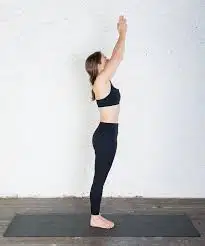
What yoga pose is shown on the picture?
Tadasana (Mountain Pose)
Utkatasana (Chair Pose)
Trikonasana (Triangle Pose)
Bhujangsana (Cobra Pose)

Identify what yoga pose is shown on the picture.
Sukhasana (Easy Pose)
Utkatasana (Chair Pose)
Baddha Konasana (Butterfly Pose)
Trikonasana (Triangle Pose)
Which of the following is a benefit of healthy eating during adolescence?
Improved concentration
Increased risk of illness
Poor growth and development
Decreased energy levels
What is the primary goal of practicing yoga?
To achieve physical strength and flexibility
To focus on the development of mental and spiritual awareness
To improve cardiovascular health and burn calories
To increase muscle mass and build power
Which ancient text, compiled by Patanjali around the 2nd century BCE, is considered foundational for the philosophy and practice of yoga?
The Vedas
The Yoga Sutras
The Upanishads
The Bhagavad Gita
The following are reasons why adolescents should practice yoga, EXCEPT:
managing stress, anxiety, and other emotions
enhances concentration and attention
develops a positive self-image
encourages proper alignment and body mechanics
Which among the following is the benefit of yoga to physical activity?
helps improve flexibility by stretching and lengthening muscles
promotes better body awareness, stability, and balance
reduces injuries in other physical activities and sports
All of the above
Which is TRUE to the following statements?
Active transport like biking is a way of promoting a physical activity in fighting obesity and underweight.
The Local Government Unit (LGU) provides subsidies to farmers and fisherfolk and increase access to nutritious food.
Obesity is a problem primarily faced by the low- and middle-income countries like Philippines.
Supporting the infants in their first 1050 days of life to prevent stunting and reduce risk of children to become obese in their later lives.
For item 29, choose the best reason in the box below, why does breastfeeding important to a baby in his/her first 1000 days?
I. It provides essential nutrition
II. It boosts baby’s immune system
III. Fosters emotional bonding between the mother and the child
IV. Supports cognitive and physical development
I only
I and II
I, II, III
I, II, III, IV
How do you promote nutritious and accessible food in your table?
buys fruits and vegetables
avoids drinking soft drinks
build a backyard garden
raises native poultries

