
 Worksheets
Directed Energy Deposition (DED)
Total questions: 8
Worksheet time: 4mins
What is one key advantage of DED technology compared to other metal additive manufacturing methods?
It requires no energy source for material fusion.
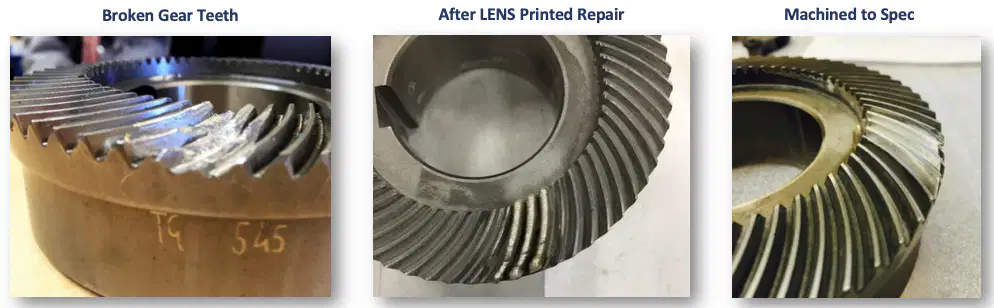
It can repair and add material to existing parts.
It has the smallest feature resolution among metal AM technologies.
It is primarily used for decorative purposes.

How does the powdered alloy metal material typically reach the energy source in DED printing?
It's pre-laid as a uniform bed on the build platform.
It's hand-fed manually during the printing process.
It's directly extruded as a molten stream.
It's blown through a nozzle in a gas stream to the focal point of the energy source.

Which of the following is a common application of DED technology?
Manufacturing large structural metal parts and repairing damaged components
Printing small, detailed plastic models
Producing full-color ceramic parts
Creating parts with high surface finishes without post-processing
What primarily determines the layer resolution in DED printing?
The precision of the powder spreading mechanism
The speed of the build platform
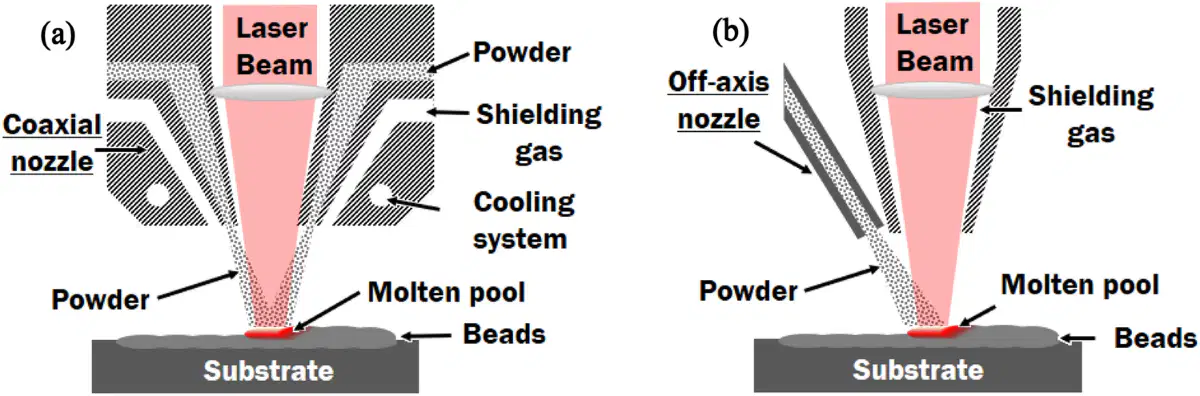
The size of the energy beam and the material feed rate
The type of shielding gas used

What are the two primary feedstock forms for material deposition in DED printers?
Filament and liquid resin
Metal powder and metal wire
Metal sheets and liquid metal
Granules and pellets

Which statement about powdered alloy metal materials used in DED printers is true?
Only ferrous metals can be used.
DED is limited to aluminum alloys.
Polymers are the primary material used.
A wide variety of powdered metals and alloys, such as titanium, stainless steel, and Inconel, can be used.
Which of the following energy sources is commonly used in DED printers?
Ultrasound
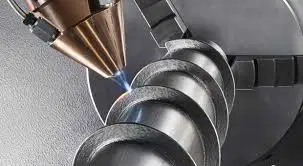
Focused laser beam
Infrared radiation
Electromagnetic induction
What is the primary process by which Directed Energy Deposition (DED) printers build parts?
Melting a powder bed layer by layer
Extruding a thermoplastic filament
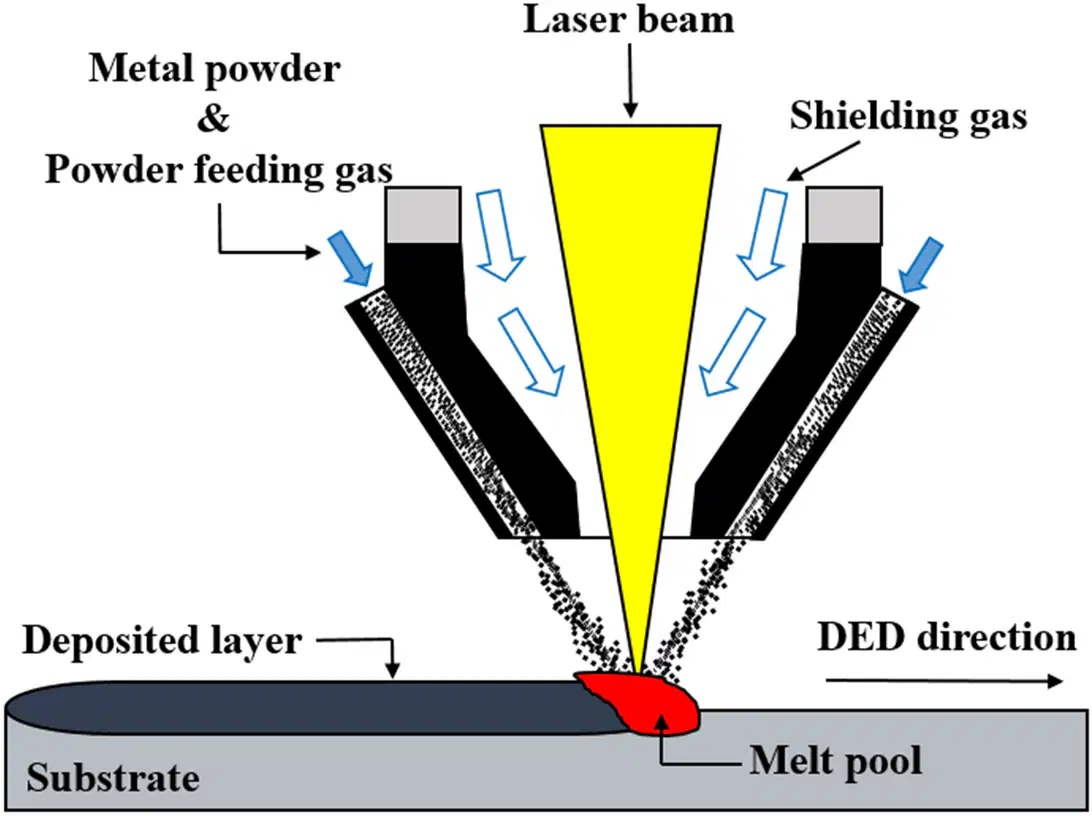
Depositing metal powder or wire and simultaneously melting it with a focused energy source
Curing resin using a UV laser

