
 Worksheets
Ancient China Comprehensive Test
Total questions: 39
Worksheet time: 20mins
Loess is defined as:
a type of soil composed mainly of silt-sized particles
a large body of ice moving slowly down a slope
a type of rock formed from volcanic lava
a deep, narrow valley with steep sides
The definition of 'oracle bone' is:
bone of animal like a turtle used to tell the future
A modern computing technology
A type of bone found in mammals
A type of musical instrument
The Gobi Desert is located in (a) China and southern Mongolia.
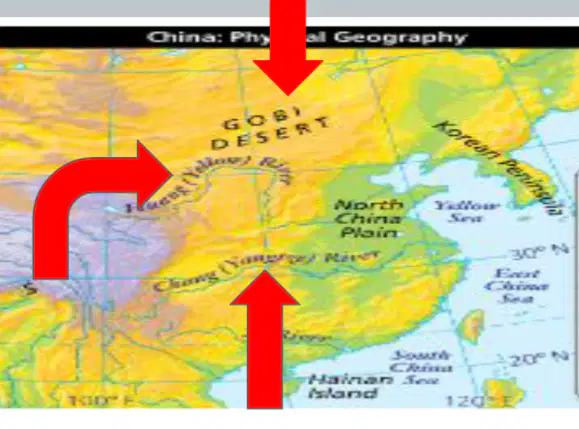
Identify and locate the Himalayan Mountains in ancient China.
In the northern region of ancient China
In the southern region of ancient China
In the western region of ancient China forming a wall between India
In the eastern region of ancient China
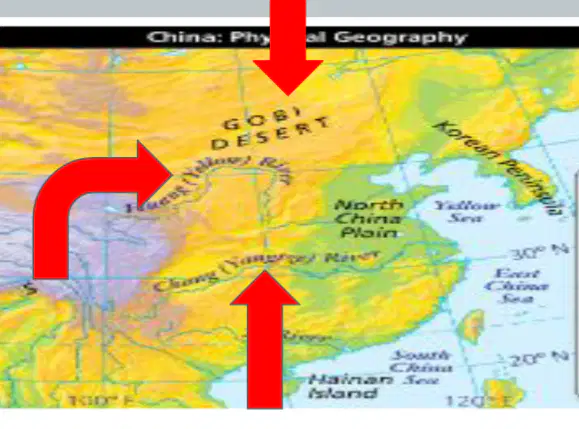
Identify and locate the Yangtze River in ancient China.
The Yangtze River is located in the northern part of ancient China.
The Yangtze River is located in the southern part of ancient China.
The Yangtze River is located in the eastern part of ancient China.
The Yangtze River is located in the western part of ancient China.

Identify and locate the Yellow River in ancient China.
The Yellow River is located in northern China, flowing through the Loess Plateau.
The Yellow River is located in southern China, near the Yangtze River.
The Yellow River is located in eastern China, near the coast.
The Yellow River is located in western China, near the Himalayas.

How did isolation affect China's development? China is nearly surrounded by physical barriers. Two great deserts, the Taklimakan and the Gobi, lie to the north and west of China. The towering Himalayas form a wall to the southwest. How did these features impact China's development?
Isolation led to unique cultural and technological development in China.
Isolation had no significant impact on China's development.
Isolation caused China to become heavily influenced by neighboring cultures.
Isolation made China dependent on foreign trade.
What is the Huang Valley also known as?
The Blue River
The Yellow River
The Red River
The Green River
Which river is also used for farming and is the longest river in China?
Huang River
Mekong River
Chang River (Yangtze River)
Pearl River
The Himalayas formed a wall between (a) and India.
Which ocean is to the east of China?
The Pacific Ocean.
The Atlantic Ocean.
The Indian Ocean.
The Arctic Ocean.
The influence of geographic features on the origins of ancient Chinese civilization in the Yellow River Valley was significant. How did China’s geography help create a unique yet diverse cultural identity that was isolated from the rest of the world?
By providing natural barriers that limited outside influence
By encouraging constant interaction with neighboring civilizations
By promoting a homogeneous culture across all regions
By facilitating easy access to foreign trade routes
What was believed to be the source of success for rulers according to the 'Right to Rule'?
The support of the people
Military strength
Heaven and its support
Economic prosperity
What happened to unfit rulers according to the 'Right to Rule'?
They were supported by the people
They lost control
They gained more power
They were celebrated
What became a tradition for Chinese government regarding rulers?
Rulers were elected by the people
Rulers were known as the Son of Heaven
Rulers were chosen by military strength
Rulers were selected based on wealth
What were considered 'proof' that a dynasty lost its right to rule?
Wars and natural disasters
Economic prosperity
Technological advancements
Cultural achievements
Why was it difficult for the Zhou dynasty to maintain a central government?
The Zhou dynasty had a strong central government.
The Zhou dynasty faced internal rebellions and external invasions based on geography.
The Zhou dynasty had abundant resources and wealth.
The Zhou dynasty had a unified and loyal population.
What did minor battles eventually escalate into during the Warring States Period?
major conflicts or wars
peaceful negotiations
economic treaties
diplomatic alliances
During which years did the era of chaos known as the Warring States Period occur?
The Warring States Period occurred from 475 BC to 221 BC.
The Warring States Period occurred from 500 BC to 200 BC.
The Warring States Period occurred from 600 BC to 300 BC.
The Warring States Period occurred from 450 BC to 250 BC.
Identify the political and cultural problems prevalent in the time of Confucius and explain how the philosophy of Confucianism and The Analects emphasized the concepts of kinship, order, and hierarchy to address these problems.
Confucianism addressed political and cultural problems by emphasizing kinship, order, and hierarchy.
Confucianism ignored political and cultural problems.
Confucianism focused solely on economic issues.
Confucianism promoted individualism over kinship.
What practice involved burning fake 'spirit' money?
To give income to the dead
To celebrate a festival
To scare away spirits
To honor the living
The practices of honoring the dead are known as (a)
Confucius is known as the "______ Teacher."
First
Great
Wise
Ancient
1. What is Emperor Qin most known for?
a. Defeating the Mongols and ousting Kublai Khan from China
b. Uniting China under one rule
c. Building the Forbidden City
d. Establishing trade on the Silk Road
e. Inventing the Printing Press
4. What major construction project did Emperor Qin begin during his reign?
a. The pyramids
b. The Great Buddha
c. The Forbidden City
d. The Grand Canal
e. The Great Wall of China
5. In what way did Emperor Qin help reform the economy of Ancient China?
a. He established uniform currency and measurements
b. He established a centralized bank
c. He established a welfare system to help the poor
d. He limited government interference in the economy
e. He only gave government positions to the rich
Who was responsible for the unification of ancient China into the first Chinese empire?
Liu Bang
Qin Shi Huangdi
Sun Tzu
Confucius
What happened to those who refused to follow the Emperor's standards?
They were rewarded
They were ignored
They were punished
They were promoted
What was the Silk Road primarily known for?
A network of trade routes
A famous battle site
A large river
A mountain range
Which regions did the Silk Road connect?
North America and South America
China to Central and Southwest Asia and Europe
Africa and Australia
India and Antarctica
What was the most important export of the Silk Road?
Gold
Spices
Silk
Tea
Which of the following was an accomplishment of the Han Dynasty?
Magnetic compass
Steam engine
Electric light bulb
Airplane
What is the name of the printing technique that was an accomplishment of the Han Dynasty?
Digital printing
Woodblock printing
Laser printing
Screen printing
What was the first full-length book to be printed using woodblock printing?
The Art of War
The Diamond Sutra
The Tale of Genji
The Book of Changes
What was the seismometer used for in ancient China?
To navigate ships
To detect earthquakes
To print documents
To plant gardens
Why was paper considered an important invention in ancient China?
It was used to navigate ships
It was cheaper than wood or silk prints
It helped detect earthquakes
It was a garden tool
5. What important invention allowed the Han government to stay organized and keep detailed records?
a. Compass
b. Paper
c. Ink
d. The quill pen
e. Acupuncture
6. This group of people became rich during the Han Dynasty, however they were not respected and were forced to wear white clothes and pay high taxes.
a. Farmers
b. Soldiers
c. Monks
d. Merchants
e. Artists
8. What major religion first arrived in China during the Han Dynasty?
a. Taoism
b. Christianity
c. Buddhism
d. Confucianism
e. Islam

