
 Worksheets
Natural Hazards
Total questions: 23
Worksheet time: 17mins
This happens during heavy rains when rivers overflow, ocean waves come on shore, snow melts too fast,or levees (banks of rivers) break.
Tsunamis
Hurricanes
Floods
Droughts
The shaking, rolling, or sudden shock of the earth's surface happens during this.
Tornado
Earthquakes
Tsunami
Cyclones
A fire that rages out of control in the wilderness, like forest or countryside is called a ______________.
Wildfires
Lightning
Drought
A series of giant waves that happen after underwater movement due to an earthquake or volcanic eruption is called a _______________ .
Flood
Tsunami
Hurricane
Cyclones
When there has not been enough rainfall and the water levels get too low, this is called __________________ .
Drought
Flood
Tsunami
Typhoons
The sudden sliding of snow, ice and rock down a slope.
Landslides
Avalanche
Lava flow
Mud flow
The sliding of rock and soil down a slope.
Flood
Avalanche
Landslides
Mud flow
An opening in Earth's crust that allows hot magma from beneath the crust to reach the surface.
Landslides
Volcano
Earthquake
Trench
Where do most volcanic activities occur?
In the center of the ocean
Along the boundaries between countries
In the center on continents
Ring of fire
A natural hazard is an event or process that...
...has caused damage and harm to human life
....has the potential to cause damage and harm to human life
...only cause damage to the natural environment
A natural hazards caused by movements in the Earth's surface.
Hydrological hazards
Geophysical Hazards
Climatological Hazards
A natural hazard that involves the mass movements of sediments.
Geophysical hazards
Hydrological hazards
Meteorological Hazards
Tropical storms are an example of...
Geophysical hazards
Meteorological hazards
Climatological Hazards
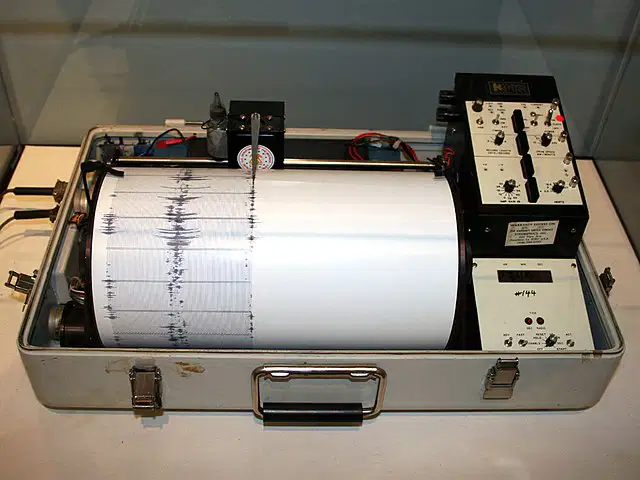
What do you call a tool that measures the size of an earthquake?
Scale
Earthquake scale
Seismograph
Why do many volcanoes and earthquakes happen along plate boundaries?
Plates move and shift
Bad weather in the areas
Urbanization
None of these
Natural Disaster
A natural event that could have a negative impact on humans; hurricanes, floods etc
A natural event that has already occurred and caused damage or injury.

This map shows tornado activity in the United States between 1950 and 1998. Based on the data provided by this map, which of the following cities would be mostly likely to experience a tornado with a rating Fe or greater in the next year?
Topeka, Kansas
Columbia, South Carolina
Phoenix, Arizona
Orlando, Florida
What natural hazard might affect people who live on island countries out in the ocean (select all that apply)?
Avalanches
Volcanic Eruption
Tsunamis
Flooding
Scientists can predict exactly when a natural hazard will occur.
False
True
The Richter scale is a measure of the magnitude of a(n):
Hurricane
Volcanic Eruption
Tornado
Earthquakes
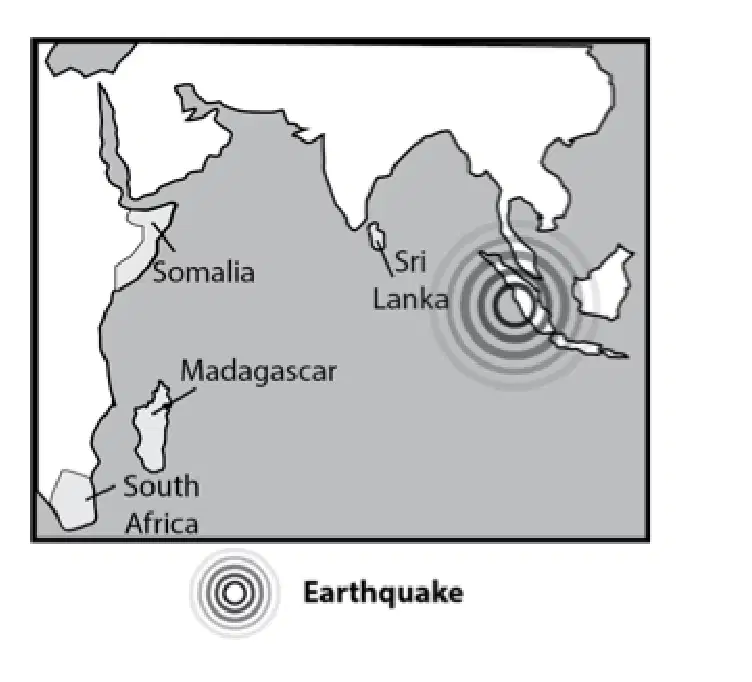
The provided map shows the location of an earthquake under the ocean.
The data on the map would best support a prediction of which of the following events?
Flash floods in Madagascar
A hurricane in Somalia
An earthquake in South Africa
A tsunami in Sri Lanka

The table provides data on the earthquakes recorded for four different cities over a ten year period. Assuming the data indicates patterns that will continue, which city will most likely experience an earthquake of a magnitude of 5.0 or higher in the next year or two?
City W
City Z
City Y
City X
Why is it beneficial to be able to predict when and where natural hazards will occur as much as possible?
So that we can stop them from happening again
So that scientists know where to go in order to
study them
Communities can be notified to evacuate
So that we can harness their power for
renewable energy

