
 Worksheets
Scale of the Solar System
Total questions: 15
Worksheet time: 1hrs 12mins
Name
Class
Date
1.
Name?
4 lines
2.
Class?
a)
A
b)
B
c)
C
3.
Which two planets are closest to being the same size?
a)
Venus
b)
Earth
c)
Mars
d)
Jupiter
e)
Saturn
4.
In our solar system, where can the largest planets be found?
a)
The inner four "terrestrial" planets
b)
The outer four "Jovian" planets
5.
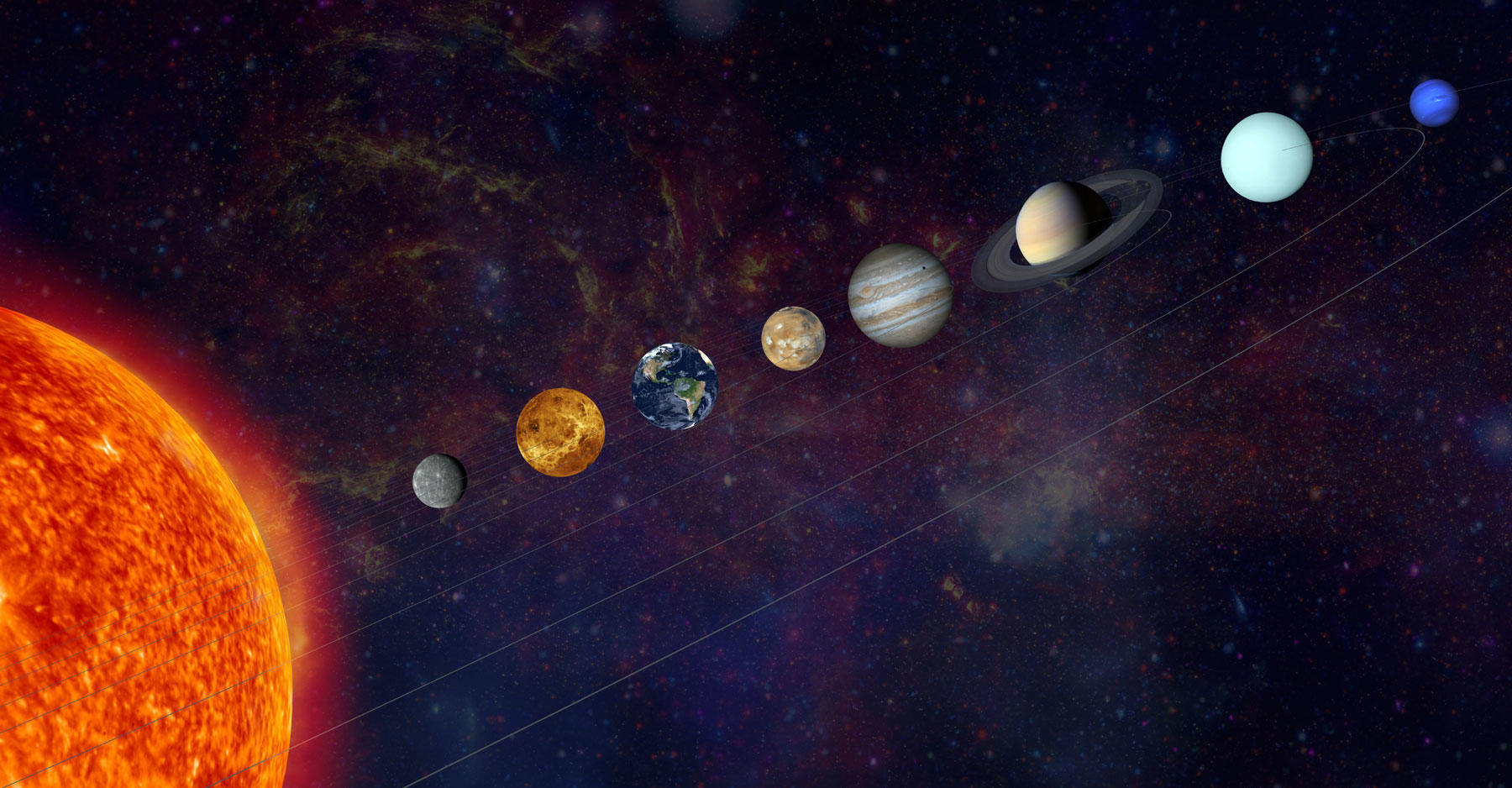
True or False
The planets are all equally distanced from each other.
The planets are all equally distanced from each other.
a)
True
b)
False
6.
How does the size of Mars compare to Earth?
a)
Mars is larger than Earth.
b)
Mars is smaller than Earth.
c)
Mars and Earth are the same size.
d)
Mars is twice the size of Earth.
7.
Which is the largest planet in our solar system?
a)
Jupiter
b)
Saturn
c)
Uranus
d)
Neptune
8.
Which is the smallest planet in our solar system?
a)
Mercury
b)
Venus
c)
Earth
d)
Mars
9.
Which group of planets has more space between them?
a)
The inner, terrestrial planets
b)
The outer, Jovian planets
10.
A student was making a model of the solar system. What order should she put the planets?
a)
b)
c)
d)
11.
Which planet is closest to the same size as Earth?
4 lines
12.
How does the size of Neptune compare to Earth?
a)
Neptune is larger than Earth.
b)
Neptune is smaller than Earth.
c)
Neptune and Earth are the same size.
d)
Neptune is half the size of Earth.
13.
EXPLAIN: What are at least two major differences between the inner planets (Mercury, Venus, Earth, Mars) and the outer planets (Jupiter, Saturn, Uranus, Neptune)?
4 lines
14.
ANALYZE: Why does it make sense that the inner planets would be mostly made of rock, and the outer planets mostly made of gas?
4 lines
15.
PREDICT: Jupiter has a reputation for protecting the inner planets from comets and debris that come from outside out solar system. Why might this be?
4 lines
100 %

