
NEW
Font size
 Worksheets
Unit 6: Weather and Climate
Total questions: 28
Worksheet time: 28mins

The hydrosphere is:
the solid outer layer of the Earth
the layer of gases surrounding the Earth
the water component of the Earth
the Earth's core
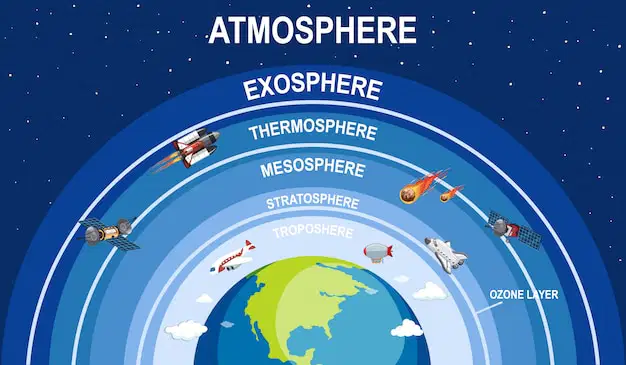
The atmosphere is:
a layer of gases surrounding the Earth
the solid outer layer of the Earth
the Earth's water bodies
the Earth's core

The water cycle is a continuous process that describes the movement of water on, above, and below the surface of the Earth.
Evaporation, condensation, precipitation, and collection
Photosynthesis, respiration, and transpiration
Erosion, weathering, and sedimentation
Melting, freezing, and sublimation
What is wind?
A natural phenomenon involving the movement of air
A type of water current
A form of precipitation
A geological formation
Precipitation is:
the process of water vapor turning into liquid water
the process of liquid water turning into water vapor
the process of water vapor turning into ice
the process of ice turning into water vapor
Convection is a process involving the movement of what?
Solids
Liquids
Gases
Both liquids and gases
An ocean current is:
a large system of circular ocean currents formed by global wind patterns and forces created by Earth's rotation.
a small stream of water flowing into the ocean.
a type of ocean wave caused by the gravitational pull of the moon.
a sudden and temporary change in the ocean's temperature.
A surface current is:
a deep ocean current
a horizontal current that flows within the top 100-200 meters in the ocean
a type of wind current
a current found only in rivers

Define gyre.
A type of ocean current
A type of wind pattern
A type of geological formation
A type of plant species
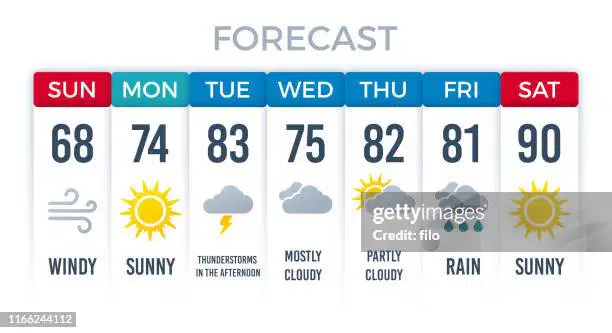
Weather is:
A type of food
A type of clothing
The state of the atmosphere at a place and time
A type of vehicle
What is climate?
The weather conditions prevailing in an area over a long period
A sudden change in weather
A type of clothing
A type of food
What is air pressure?
The force exerted by the weight of air on a surface
The weight of an object in air
The temperature of the air
The speed of the wind
A tropical cyclone is:
a type of weather phenomenon characterized by a low-pressure center, thunderstorms, and strong winds.
a type of earthquake that occurs in tropical regions.
a type of volcanic eruption that happens near the equator.
a type of drought that affects tropical areas.
A hurricane is a type of:
storm
earthquake
volcano
flood
Temperature is a measure of:
the amount of heat energy in a substance
the speed of sound in air
the brightness of a light source
the density of a material
Humidity is the measure of what?
Temperature
Air pressure
Moisture in the air
Wind speed

Define relative humidity.
The amount of water vapor present in air expressed as a percentage of the amount needed for saturation at the same temperature.
The temperature at which air becomes saturated with moisture.
The process by which water vapor becomes liquid water.
The measure of the total amount of water vapor in the air.

The dew point is:
the temperature at which air becomes saturated with moisture and dew forms
the temperature at which water boils
the temperature at which ice melts
the temperature at which air pressure is highest
A front in meteorology is:
a type of cloud formation
a boundary separating two masses of air of different densities
a weather phenomenon involving lightning
a seasonal wind pattern
A typhoon is a type of:
Hurricane
Earthquake
Tornado
Flood
Local winds are:
winds that blow over short distances
winds that blow over long distances
winds that blow from the poles
winds that blow from the equator
Wind direction is:
the direction from which the wind is coming.
the speed of the wind.
the temperature of the wind.
the humidity level of the wind.
An air mass is:
a large body of air with uniform temperature and humidity
a small pocket of air with varying temperature and humidity
a type of cloud formation
a weather phenomenon that occurs only in tropical regions
What is global wind?
A type of local wind
A pattern of wind circulation around the Earth
A wind that occurs only in the tropics
A seasonal wind in the Indian Ocean
A high-pressure system is characterized by:
low atmospheric pressure and stormy weather
high atmospheric pressure and clear skies
high humidity and precipitation
strong winds and thunderstorms
A low-pressure system is characterized by:
High atmospheric pressure
Active Weather- cloudiness, wind, rain, and snow
Stable weather conditions
Clear skies
A tornado is:
a type of storm with a violent rotating column of air
a type of earthquake
a type of flood
a type of hurricane
What is drought?
A prolonged period of abnormally low rainfall, leading to a shortage of water.
A sudden increase in rainfall, causing floods.
A type of storm characterized by strong winds and rain.
A seasonal change in weather patterns.

