
NEW
Font size
 Worksheets
Understanding DNA and Traits in Rock Pocket mouse populations
Total questions: 12
Worksheet time: 6mins

Why did the frequency of mice with specific traits change over time?
Their DNA mutated to keep them from being eaten
They received alleles for traits that increased their frequency
Those with advantageous traits were more fit for their environment
They hid in rock pockets
What role did natural selection play in the change in the number of mice with a specific fur color?
Nothing - the number of mice with a specific fur color changed due to random chance
Predators were more able to find those who were less fit
Mice with a specific fur color migrated to areas that were more advantageous, natural selection was not involved
The environment changed, making mutations regular and predictable
Which molecule carries genetic information from DNA to the cytoplasm?
tRNA
mRNA
rRNA
DNA
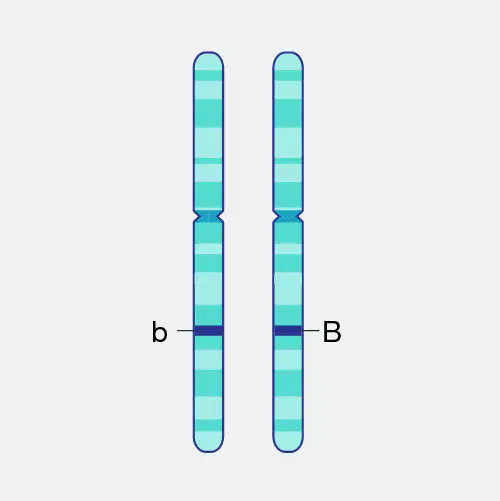
What is the role of alleles in the fur color of rock pocket mice?
Alleles are mutated forms of a gene that cause mouse fur color to change
They are the different forms of a gene from each parent passed from generation to generation
Alleles allow mice to know when to hide from predators
Alleles are the mRNA that codes for specific proteins
What is a substitution mutation?
A base is lost
A base is substituted for another
An extra base is added
A base is duplicated
What is the role of DNA in the survival of rock pocket mice?
DNA provides the food source for mice on the volcanic rocks
DNA mutates as the mice need in order to help them survive.
DNA makes up the genes responsible for their fur color, which helps them blend in to their environment
Mice change their DNA directly to make them more fit for their environment
What is the result of a missense mutation?
Mutated DNA is transcribed to mRNA resulting in a different amino acid being translated and a different protein being made
Mutated mRNA codes for the same amnio acid and no change is made in the protein being made
All the amino acids are changed and a completely different protein is made
Protein synthesis stops because the mutated DNA is transcribed to a mRNA corresponding to a STOP codon
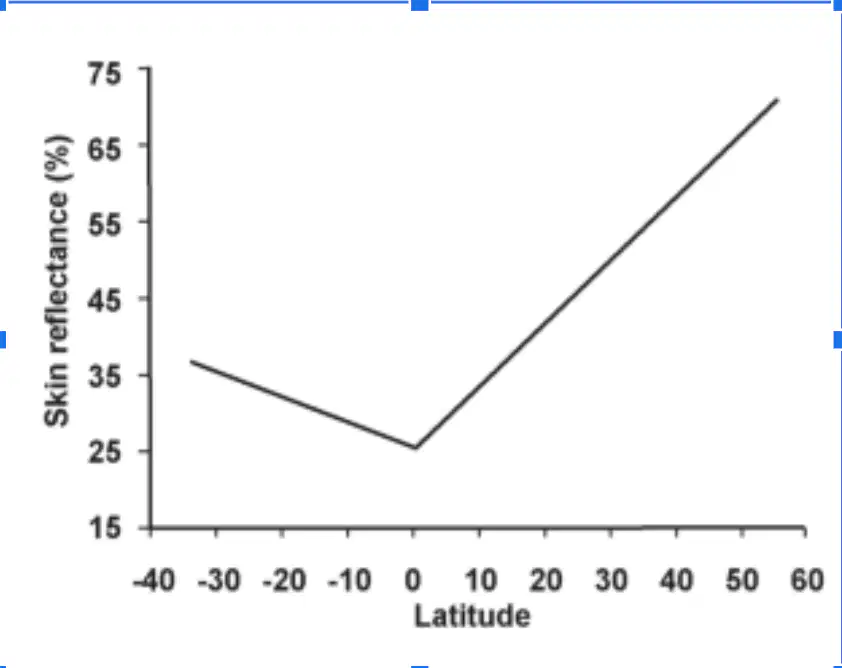
What is the independent variable in the graph provided?
Skin reflectance (%)
Temperature
Latitude
Altitude

How does fitness relate to the pictures?
Fitness strengthens the fur of the mice, determining how well they can fight off predators
Fitness changes with changes in the environment, allowing mice with a different fur color become more prevalent under different conditions
Fitness changes the environment, causing it to reflect the prevalent fur color
Fitness is an abstract concept that is unrelated to survival or natural selection
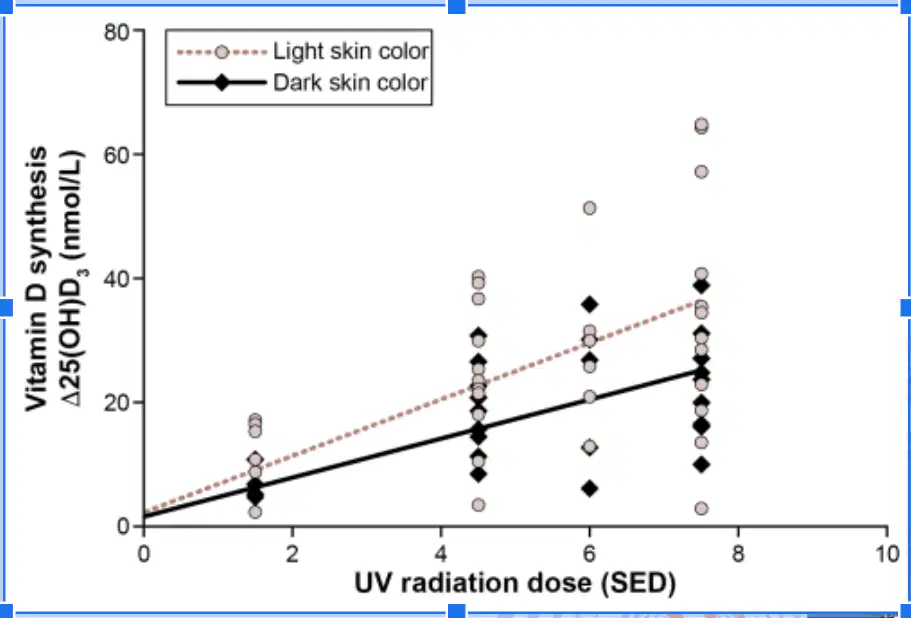
At a UV radiation dose of 6 SED, which skin color synthesizes more Vitamin D?
Dark skin color
Light skin color
Both synthesize equally
Neither synthesizes Vitamin D

What does the pattern in the mouse data over time at site B suggest is at work?
The process of natural selection, where the mice which are better adapted to the changed environment pass their alleles on to future generations.
The process of fitness translation, where mice which are less adapted to their environment choose to translate their fur color to fit the environment
The process of transcription, where parents transcribe their alleles onto their offspring, increasing their chances of fighting off predators
The process of parent mice training their offspring to avoid predators by hiding in rock pockets
How are transcription and RNA related?
Transcription changes proteins into RNA, allowing for changes in DNA in the cytoplasm
It changes amino acids into RNA which then is made into proteins in the nucleus
It translates alleles into amino acids, which are made up of RNA codons
In the nucleus, specific sections of DNA, also known as genes, are transcribed to RNA which then moves to the cytoplasm to be translated into amnio acid sequences

