
 Worksheets
Unit 4 Quiz
Total questions: 88
Worksheet time: 3hrs 15mins
What is HISTORY?
The things that have happened in a particular place or to a particular group of people over time.
A scientist who studies objects from the past to learn about cultures.
A person who found food by both hunting animals and gathering plants, fruits, and nuts.
A round Native American home made from arched poles covered with bark, in which one family lived.
What are HUNTER-GATHERERS?
A group of families who share some ancestors.
A person who found food by both hunting animals and gathering plants, fruits, and nuts.
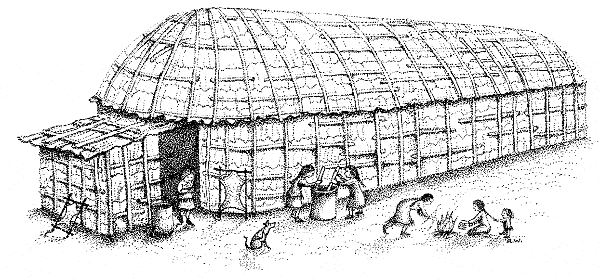
A long wooden building in a Native American village in which many related families lived.
The practice of growing crops and raising animals for food.
What is a RESERVATION?
To give one thing in exchange for something else; a job skill or field of work.
A decision made by a person or group.
A long wooden building in a Native American village in which many related families lived.
An area of land set aside for Native Americans to live on.
What is a LONGHOUSE?
An area of land set aside for Native Americans to live on.
A round Native American home made from arched poles covered with bark, in which one family lived.
A long wooden building in a Native American village in which many related families lived.
A group of people or nations that work together for their common interests.
What is a LEAGUE?
A group of people who meet to talk and make decisions.
A group of families who share some ancestors.
The head of a clan among the Iroquois people.
A group of people or nations that work together for their common interests.
What are SACHEMS?
A member of the Grand Council of the Iroquois League.
To give one thing in exchange for something else; a job skill or field of work.
The things that have happened in a particular place or to a particular group of people over time.
A group of families who share some ancestors.
What is the term for North American Indian people that lived in downstate New York border?
Iroquois
Algonquins
Haudenosaunee
Seneca
Fill in the blank: A _______ is two or more longhouse families.
Confederacy
Clan
Tribe
Nation
Which of the following is known as the Iroquois Constitution?
Great Law of Peace
Green Corn Festival
Longhouse
Confederacy
What is the term for North American Indian people that lived in upstate New York?
Iroquois
Algonquins
Haudenosaunee
Seneca
Fill in the blank: _______ was a 1500's Mohawk leader who, with Deganawida, helped organize the Iroquois Confederacy.
Hiawatha
Seneca
Cayuga
Onondaga
What are physical separations in the longhouse called?
Partition
Settlement
Wigwam
Powwow
Who is the leader of an Algonqian village?
Shaman
Sachem
Papoose
Wampum
people who hunt animals and look for plants to eat, instead of growing crops and raising animals
(a)
a woman who is the owner of the longhouse, makes decisions on who the leaders should be, and cares for the clan
(a)
I am in the Algonquin tribe. I am located in...
New York
Canada
Asia
Mexico
The continent in which the Native Americans traveled FROM was...
Canada
Asia
Africa
New York
Match the following

Wigwam

Canada

Longhouse

New York

Wampum
An alliance of five Native American tribes in the New York region
Spiritual League
Iroquois League
Algonquian Union
Chieftain Union
Which two tribes lived in what is today New York State?
Iroquois and Mahican
Algonquin and Iroquois
Aztec and Alqonquin
Iroquois and Pequot
What was one resource that was used for making clothing?
cactus
deer skin
buffalo
clay
Who wore moccasins?
Men
Women
Children
Everyone
The Iroquois homes were called
long houses
wigwams
teepees
treehouses
The Algonquins homes were called
long houses
wigwams
teepees
treehouses
What was the main weapon that men used for hunting larger animals?
sword
knife
bow and arrow
tomahawk
How did NY Native Americans share their beliefs and values?
Through drawings
By writing down their ideas
Through storytelling
Someone who does not live permanently one place, someone who moves around to follow a food source.
nomad
hunter-gatherer
Native American
naturalist
How did farming change the lives of Native Americans?
Farming allowed Native Americans to stop moving around and start building homes and villages.
Farming allowed Native Americans to move around more easily.
Farming allowed Native Americans to hunt more animals.
Farming didn't change the lives of Native Americans.
What was the main reason the Iroquois League of Nations was formed?
To stop wars so the Iroquois would live together peacefully
to help find a way to get food
to stop threats from European explorers
to discuss leaving the lands of New York

People who travel to new or unfamiliar places in search of riches.
Columbian Exchange
explorers
The Dutch
Why did Europeans begin exploring unfamiliar places?
They were bored
They hoped to find riches such as spices, gold and other treasures
They hoped to claim new land.
They were working on creating a map of the wold.
Which explorer sailed into New York Bay and then up a wide river?
Giovanni da Verrazano
Henry Hudson
Jaques Cartier
How did life change for the Native Americans once the explorers arrived?
They were happy because they had company!
They had to deal with people who spoke different languages and had different customs. They were sick from unfamiliar disease.
They learned the European way of life
They traded places with the explorers and moved to Europe.
Which of the following explorers has 300 mile river named after him?
Columbus
Vasco de Gama
Cartier
Hudson
Henry Hudson's journal encouraged which group to explore the New York area?
The Dutch
The British
The French
The Spanish
Identify one positive outcome of the Columbian Exchange.
Many Native Americans lost their land.
Columbus found a route to Asia.
New foods came to the Americas.
Many Native Americans lost their lives.
Someone who travels to unknown places to discover new things is called _______?
governor
soldier
colonists
explorer
The Northwest Passage is _____________. *
1 point
A water route to Asia through North America.
The route Henry Hudson took to go up the Hudson River.
A land route from Europe to Asia.
A route to Asia around the southern tip of Africa.
Which explorer navigated up a river to what is now Albany?
Christopher Columbus
Peter Minuit
Peter Stuyvesant
Henry Hudson
When an explorer discovered land, who claimed that land?
the country the explorer was born in
the explorer's family
the country the explorer sailed for
the Dutch West India Company
The Dutch West India Company ___________________.
brought furs to North America to trade
wanted colonists to trade with the Native Americans
treated the Native Americans poorly
set up Fort Orange to fight the Native Americans
A place ruled by another country is called a _________.
colony
company
patroon
city
The Dutch named their colony ___________.
Bronx
New York
Manhattan
New Netherland
What is the name of a place set up to trade products with others?
store
factory
trading post
farmers market
Early voyages set the stage for a great exchange, or trade, between what two countries?
Europe
Asia
Americas
Canada
That exchange was called the....
American Exchange
European Exchange
Explorer Exchange
Columbian Exchange
European countries sent explorers to the Americas in search of
freedom
Northwest Passage
religion
gold
What did people do at trading posts?
go shopping for groceries
exchange European goods for fur
mail post cards to their families
stop and store things there
Henry Hudson traveled in hopes to find an all-water route from Europe to Asia ending up in New York Bay. He then traveled north on what is known today as
Finger Lakes
Erie Canal
St. Lawrence River
Hudson River
What was the water route believed to run across North America called?
investor
Northwest Passage
proprietor
free trade
Who was the first European to explore what is now New York Harbor?
Christopher Columbus
Giovanni da Verrazano
Samuel de Champlain
Henry Hudson
The five nations of the Iroquois Confederacy are:
1. Mohawk 2. Oneida 3. Onondaga 4. Cayuga 5. Seneca
1. Cherokee 2. Navajo 3. Apache 4. Sioux 5. Cheyenne
1. Zuni 2. Hopi 3. Ute 4. Paiute 5. Shoshone
1. Inuit 2. Aleut 3. Tlingit 4. Haida 5. Tsimshian
Name the crops commonly known as “The Three Sisters”
1. Corn 2. Beans 3. Squash
1. Wheat 2. Rice 3. Barley
1. Tomato 2. Potato 3. Pepper
1. Lettuce 2. Cabbage 3. Carrot
What was the Iroquois Confederacy also known as?
The Five Nations
The Six Nations
The Seven Nations
The Eight Nations
Five Iroquois nations joined together to make peace and become strong. They organized a form of government called the___________________________________.
Hiawatha
wigwam
League of Nations
Asia longhouse
clan sachem
The Onondaga, Oneida, Seneca, Cayuga and Mohawk created the
Algonquin League
Southwest region
Great American Civilizations
Iroquois Confederacy
Which of the following is NOT one of the Iroquois nations?
Mohawk
Oneida
Mahican
Cayuga
Which two tribes lived in what is today New York State?
Iroquois and Mahican
Algonquin and Iroquois
Aztec and Alqonquin
Iroquois and Pequot
What was one resource that was used for making clothing?
cactus
deer skin
buffalo
clay

The male leader of an Algonquin village is called a.......
papoose
shaman
sachem
The Algonquins named themselves after _________________
where they lived
where they are going
who they are

A (a) is a special council meeting held to make important decisions
The Algonquins used Wampum belts as money.
true
false
An Algonquin home was called a (a) .
From what continent did the Native Americans move to North America?
Africa
Asia
Europe
South America
Native Americans lived in small villages called:
clans
councils
settlements
towns

Native Americans' water travel in our state was by means of:
kayaks
canoes
rafts
ships
Who was responsible for selecting tribal council leaders for the clan?
elder men
women
young adults
elder men and women
What was the name of the powerful Native American group in New York State?
Iroquois League of Nations
Iroquois Confederacy
Iroquois Union
Iroquois Compromise
Why did Native American tribes settle around rivers?
transportation
food
water
All of the above
Clans were named after
trees
animals
women
gods
An Algonquian tribal leader
sachem
wampum
wigwam
Mahicans
A dome-shaped Algonquian home
sachem
wigwam
wampum
Mahicans
A tribe who made their home in the Hudson River Valley
sachem
wampum
wigwam
Mahicans
A beaded belt used by American Indian tribes for ceremonial purposes
sachem
wampum
wigwam
Mahicans

