
 Worksheets
Covalent & Ionic Bonds
Total questions: 21
Worksheet time: 14mins
The chemical bond between a metal and a non-metal will be a _____ bond.
metal
ionic
covalent
polar
The chemical bond between a non-metal and another non-metal will be a ________ bond.
metal
ionic
covalent
polar

When a metal loses an electron(s) it becomes a ...
positive ion
negative ion
metalloid
nonmetal

When a non-metal gains an electron it becomes a...
positive ion
negative ion
metalloid
metal

In a covalent bond both non-metals _____ electrons.
transfer
share
Carbon and Oxygen will make a ___________ bond.
ionic
covalent
metallic
Nitrogen and Oxygen will make a ____________ bond
ionic
covalent
metallic
MgO
ionic
covalent
metallic
NaCl
ionic
covalent
metallic
If two fluorine atoms bond they will make a _____ bond.
ionic
covalent
metallic
Hydrogen and Chlorine will from a _________ bond
ionic
covalent
metallic
Outer shell electrons are called
outer electrons
valence electrons
negatives
super electrons
Which of the following is a covalent compound?
MgCl2
NaCl
O2
NaO2
In a covalent bond...
The metal atom gives its electrons to the non-metal
The non-metal atom gives its electrons to the metal
Both atoms share electrons
Electrons are destroyed
An ionic bond occurs between _________.
Two metals
A metal and a non-metal
Two non-metals
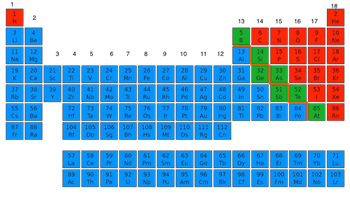

If two fluorine atoms bond they will make a _____ bond.
ionic
covalent
metallic

