
NEW
Font size
 Worksheets
The Solar System Vocab
Total questions: 20
Worksheet time: 15mins
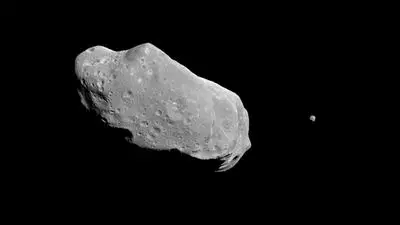
Meteoroid
A small rocky or metallic body in outer space, smaller than an asteroid.
A large celestial body that orbits the sun.
A fragment of a comet that has entered the Earth's atmosphere.
A type of star that has exploded in a supernova.

Gravity
A force that repels two bodies away from each other.
A force that attracts two bodies towards each other, typically noticeable as the force that gives weight to objects with mass.
A type of energy that allows objects to move freely in space.
A phenomenon that occurs only on Earth.

Gases
Substances in a state of matter with no fixed shape or volume, often making up planetary atmospheres.
Solid substances that maintain a fixed shape and volume.
Liquids that take the shape of their container but have a fixed volume.
Plasma states that are ionized and conduct electricity.

Atmosphere
The layer of gases surrounding a planet or moon, held in place by gravity.
A solid layer of minerals beneath the Earth's surface.
A type of weather phenomenon that occurs in the sky.
The region of space beyond the Earth's atmosphere.

Weight
The force exerted on an object due to gravity, calculated as mass times the gravitational acceleration.
The total mass of an object regardless of its location.
The measure of how much matter is in an object, independent of gravity.
The resistance an object offers to being accelerated by a force.
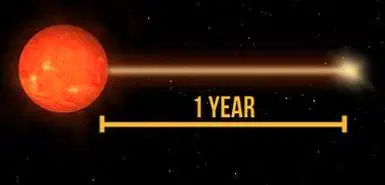
Light Year
A unit of time used to measure the speed of light.
A unit of astronomical distance equivalent to the distance that light travels in one year, approximately 9.46 trillion kilometers.
A measure of the brightness of stars.
A unit used to measure the temperature of stars.

Meteorite
A celestial body that burns up upon entering the Earth's atmosphere.
A fragment of a meteoroid that survives its passage through the atmosphere and lands on Earth's surface.
A type of rock found only on the Moon.
A meteor that is visible from Earth but does not reach the surface.

Force
An influence that can change the motion of an object, often described by its magnitude and direction.
A type of energy that is stored in an object.
A measure of the amount of matter in an object.
A push or pull that does not affect the object's motion.
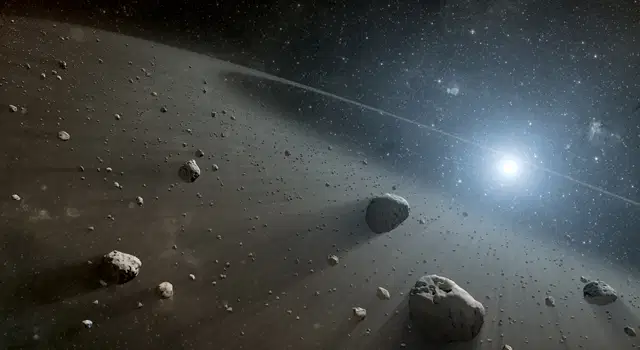
Asteroid
A small icy body orbiting the Sun, primarily found in the Kuiper Belt.
A small rocky body orbiting the Sun, mostly found in the asteroid belt between Mars and Jupiter.
A large planet that orbits the Sun between Mars and Jupiter.
A celestial object that emits light and is often visible at night.

Black Hole
A region of space with no gravitational pull.
A region of space having a gravitational field so intense that no matter or radiation can escape.
A celestial body that emits light.
A type of star that is larger than the sun.
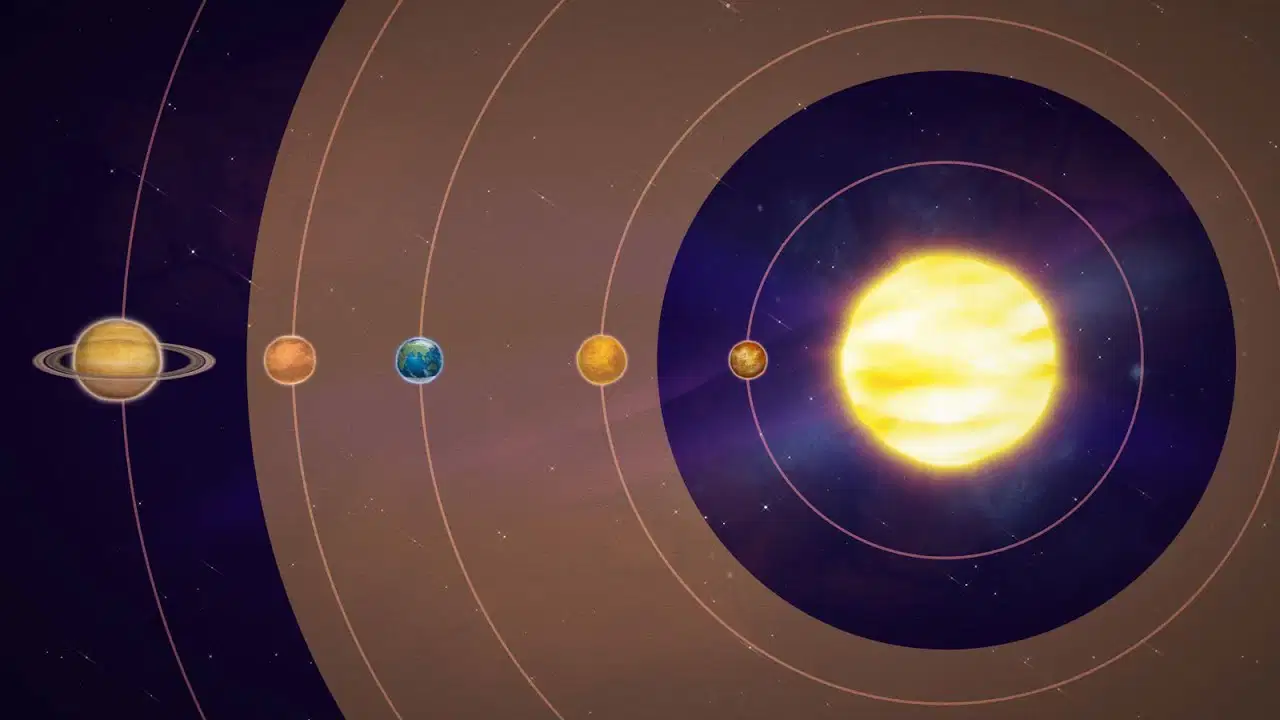
Habitable Zone
The region around a star where conditions may be right for life, often where liquid water can exist.
A zone in space where no life can survive due to extreme temperatures.
The area on a planet where only certain types of plants can grow.
A region in the universe that is completely devoid of any stars.

Moon
A natural satellite that orbits a planet.
A type of star that emits light.
A large asteroid in the asteroid belt.
A planet that orbits the sun.
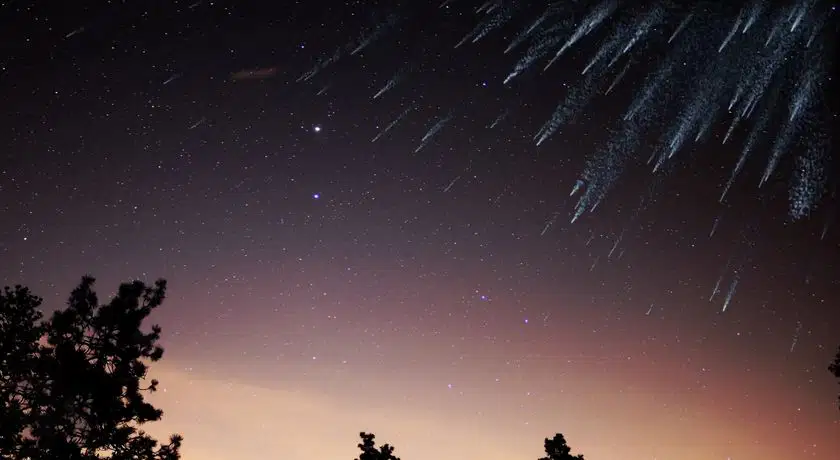
Meteor
A celestial body that orbits the sun
The streak of light produced when a meteoroid enters the Earth's atmosphere and burns up.
A type of star that has exploded
A planet that is no longer in orbit

Solar System
The collection of the Sun and the celestial bodies that are bound by its gravity, including planets, moons, asteroids, and comets.
A group of stars that form a constellation in the night sky.
A large cloud of gas and dust in space where stars are born.
A region of space where no celestial bodies exist.
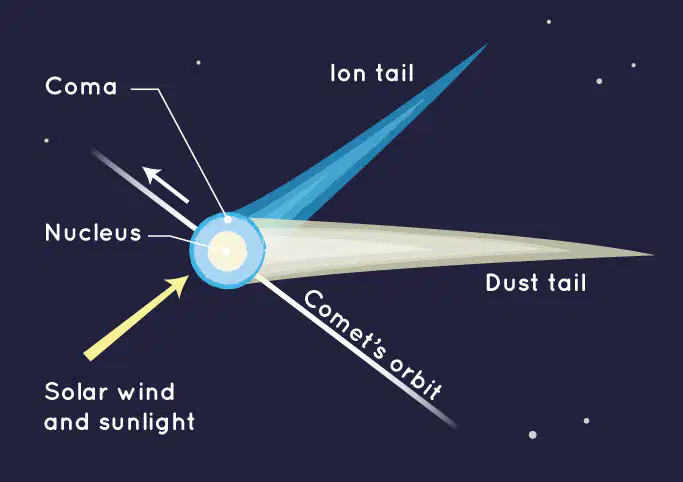
Coma
a fuzzy cloud of gas and dust that surrounds a comet's nucleus
a type of star that emits light
a large asteroid in the asteroid belt
a planet with rings

Space Dust
Tiny particles of matter floating in space, often remnants of comets or asteroids.
Large celestial bodies that orbit stars.
Gas clouds that form stars and planets.
Solid rocks that make up the surface of planets.
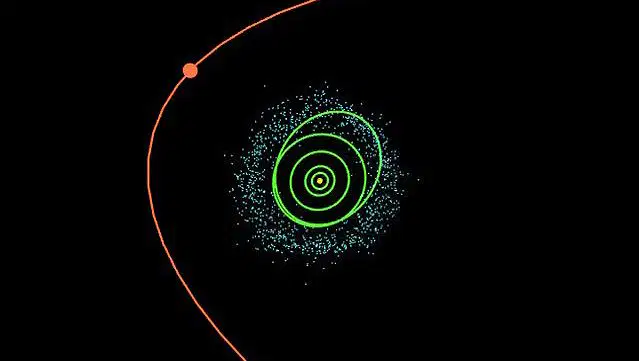
Orbit
The path of a celestial object around a star, planet, or moon.
A straight line that connects two celestial bodies.
The force that keeps celestial bodies in motion.
A type of spacecraft used for exploration.

Mass
A measure of the amount of matter in an object, typically in kilograms or grams.
A measure of the force exerted by gravity on an object.
A measure of the volume of an object, typically in liters or cubic meters.
A measure of the temperature of an object, typically in degrees Celsius.
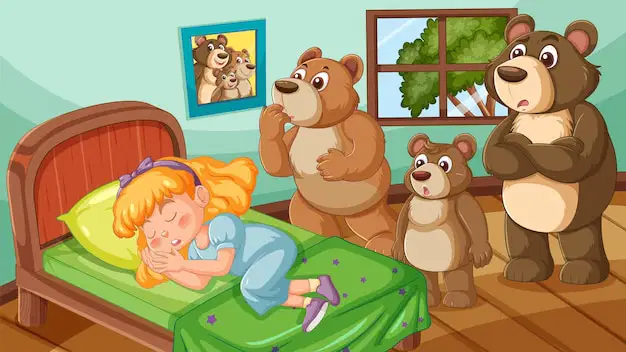
Goldilocks Zone
A region in space where no planets exist.
Another term for the habitable zone, where conditions are 'just right' for life as we know it.
A term used to describe the coldest part of the universe.
An area where only gold can be found.

Planet
A celestial body orbiting a star, large enough to be rounded by its own gravity, and having cleared its orbit of debris.
A large mass of rock that does not orbit a star.
A small, icy body that orbits the sun.
A gaseous giant that has no solid surface.

