
 Worksheets
3.2.2 - Common Traits of Successful Teams
Total questions: 29
Worksheet time: 1hrs 27mins
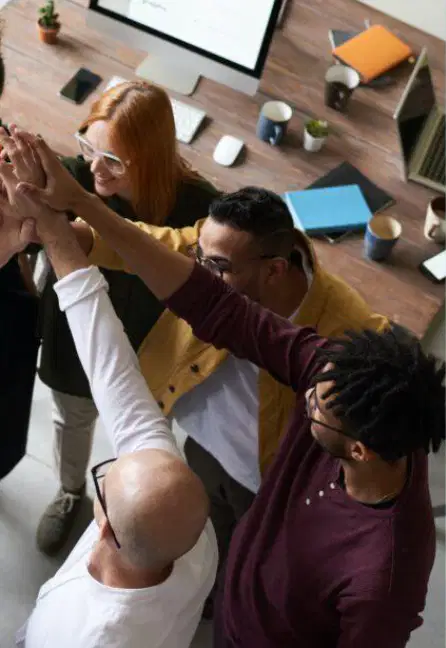
What is emphasized as equally vital for success in the current professional landscape?
Individual technical skills
Collaborating effectively in teams
Personal achievements
Independent work
What factors influence overall team performance according to the text?
Communication, trust, and leadership dynamics
Financial incentives and rewards
Individual competition
Personal hobbies and interests
What does the acronym SMART stand for in goal setting?
Specific, Measurable, Achievable, Relevant, Time-bound
Simple, Manageable, Accurate, Realistic, Timely
Strategic, Motivational, Attainable, Reliable, Tangible
Significant, Measurable, Actionable, Reasonable, Timely
What is one benefit of having a diverse team composition?
It limits problem-solving capabilities.
It creates a uniform skill set.
It fosters innovative and comprehensive solutions.
It improves communication abilities.
What does the collaborative synergy in a diverse team result in?
A decrease in creativity.
A collective intelligence greater than the sum of its parts.
A focus on individual achievements.
A uniform perspective.
What role does a good team leader play in a team setting?
Dominator
Facilitator
Controller
Observer
What is essential for cultivating a productive and engaged team?
Strict control
Clear direction and autonomy
Individual work
Frequent meetings
What is a key aspect of effective leadership in team settings?
Ensuring only the leader's voice is heard
Fostering a collaborative atmosphere
Maintaining strict control
Encouraging competition

What is one of the key roles of the Organizer within a team?
To create chaos and confusion
To act as a bridge between team members
To ignore deadlines and responsibilities
To discourage communication
How does the Organizer help in enhancing group productivity?
By ignoring team goals
By transforming plans into actionable steps
By avoiding communication
By creating bottlenecks
What does the Organizer diligently track to prevent potential bottlenecks?
Team conflicts
Deadlines and responsibilities
Personal achievements
Social events
What is the ultimate benefit of the Organizer's focus on maintaining clarity and direction?
It leads to a chaotic work environment
It helps the team stay focused on collective goals
It causes confusion among team members
It reduces team productivity
What is a key characteristic of creators?
They follow established procedures.
They generate fresh ideas and novel solutions.
They avoid brainstorming sessions.
They prefer conventional thinking patterns.

What role do creators play in problem-solving meetings?
They generate multiple solutions.
They focus on a single solution.
They avoid participating.
They follow others' ideas.

What is the primary role of the Gatherer in a team?
To lead the team in decision-making
To provide technical expertise
To scout for resources and opportunities
To manage the team's finances
What skills are essential for a Gatherer?
Technical skills
Networking skills
Artistic skills
Financial skills

What role do motivators play in a team?
They remove obstacles for the team.
They ensure momentum is maintained.
They work independently without team interaction.
They focus solely on individual achievements.
What is one effect of a motivator's positive attitude on a team?
It decreases team morale.
It fosters a strong team spirit and collaboration.
It leads to more conflicts within the team.
It causes team members to work harder.
How do evaluators prevent minor concerns from escalating into significant problems?
By ignoring them
By pinpointing potential issues proactively
By delegating them to others
By focusing only on major issues
What is essential for maintaining high-quality standards throughout the project's lifecycle?
A relaxed work environment
Meticulous attention to detail
Frequent team parties
Reducing project deadlines
How do Team Workers handle interpersonal tensions?
By ignoring them
By addressing them proactively
By escalating them into larger conflicts
By avoiding communication
What is the primary role of Solvers in a team?
To create theoretical models
To transform ideas into tangible outcomes
To manage financial resources
To design marketing strategies

What is the primary role of Finishers in a project?
To initiate new projects
To ensure projects are completed to the highest standards
To design project frameworks
To manage team conflicts
What is emphasized by Finishers to ensure project success?
Creativity and innovation
Timely completion and quality
Cost reduction and efficiency
Team expansion and training
What does the thoroughness of Finishers help prevent?
Project delays
Oversights
Budget overruns
Team disagreements
What does effective resource management entail?
Random allocation of resources
Thorough planning and careful allocation
Ignoring available assets
Focusing only on physical assets

What role does corporate culture play in a team?
It hinders team dynamics.
It shapes team dynamics and overall performance.
It has no impact on team dynamics.
It only affects individual performance.
Why is it important for teams to establish clear communication channels?
To increase competition
To reduce misunderstandings
To lower costs
To improve product quality
What is the benefit of regularly assessing and refining internal processes?
Ensures ongoing efficiency
Increases external competition
Reduces team size
Enhances product features

