
 Worksheets
Heat Pumps Quiz
Total questions: 51
Worksheet time: 26mins
What are the two types of heat pumps ?
Ground source heat pump and water source heat pump
Air source heat pump and solar heat pump
Ground source heat pump and air source heat pump
Water source heat pump and solar heat pump
At what temperature is there no heat energy to be extracted?
0°C
-10°C
100°C
Absolute zero (0K or -273°C)
What is the primary function of a heat pump?
To cool down the air in a room
To convert solar energy into electricity
To heat homes using energy from the ground or air
To generate electricity from wind
What happens to the refrigerant in a heat pump when it is heated?
It turns into a solid
It changes into a gas
It remains a liquid
It evaporates completely
What role does the compressor play in a heat pump?
It cools down the refrigerant
It compresses the refrigerant, causing it to heat up
It converts the refrigerant into electricity
It filters impurities from the refrigerant
What happens to the refrigerant after it releases heat in the system?
It turns into a solid
It evaporates
It changes back into a liquid
It remains a gas
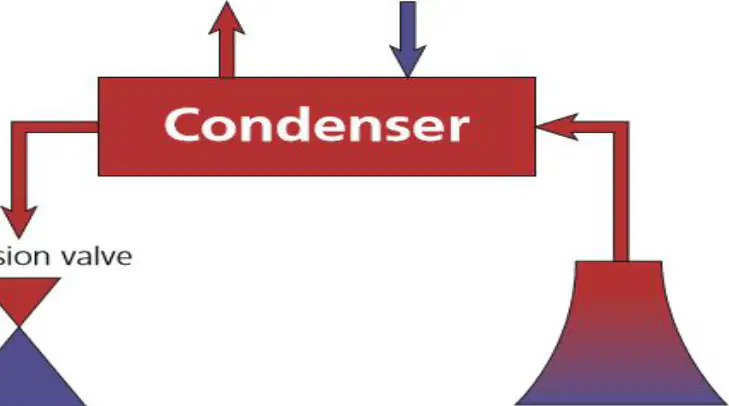
What is the primary function of the condenser in the refrigeration process?
To compress the refrigerant
To expand the refrigerant
To cool and condense the refrigerant
To heat the refrigerant
What role does the expansion valve play in the refrigeration process?
It compresses the refrigerant
It expands the refrigerant
It condenses the refrigerant
It evaporates the refrigerant
In the refrigeration process, what is the function of the evaporator?
To heat the refrigerant
To condense the refrigerant
To evaporate the refrigerant
To compress the refrigerant
What happens to the efficiency of the system as the difference between the refrigerant and the heat source increases?
The efficiency decreases
The efficiency remains the same
The efficiency increases
The efficiency becomes zero
What is the coefficient of performance (CoP) a ratio of?
Heat delivered to refrigerant power
Heat delivered to compressor power
Compressor power to heat source
Refrigerant power to heat source
What is the primary heat source for a ground source heat pump?
Air
Water
Earth
Sun
What is the purpose of the underground pipe run in a ground source heat pump system?
To circulate a mixture of water and antifreeze for heat collection
To provide electrical power to the heat pump
To store excess heat for later use
To filter impurities from the water supply
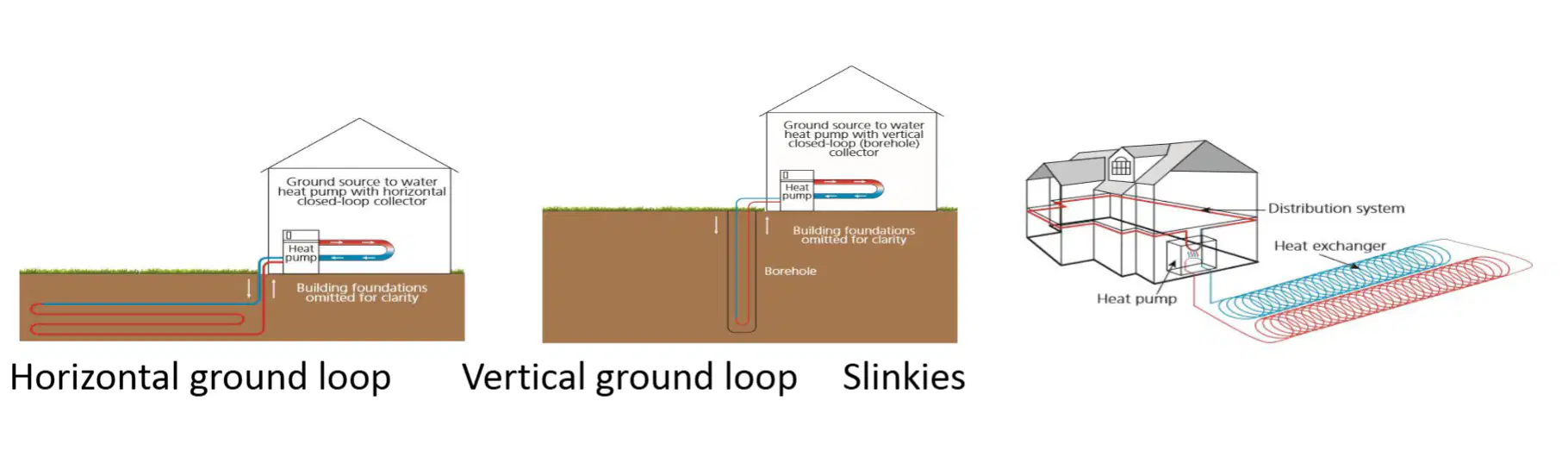
Which of the following is NOT a type of ground loop shown in the diagram?
Horizontal ground loop
Vertical ground loop
Slinkies
Diagonal ground loop
What is the primary function of the compressor in an air source heat pump?
To cool the refrigerant
To compress the gaseous refrigerant and increase its temperature
To circulate outside air
To convert liquid refrigerant to gas
What happens to the refrigerant liquid when it is warmed by heat from outside air?
It condenses to liquid
It evaporates to gas
It remains unchanged
It solidifies
In an air source heat pump, what occurs after the refrigerant pressure suddenly drops?
The refrigerant solidifies
The remaining gas cools to liquid
The refrigerant heats up
The refrigerant evaporates
What is a key requirement for a building that a heat pump supplies?
It must be well insulated.
It should have solar panels.
It needs to be painted white.
It should be located near a river.
What provision must be made for installing a heat pump?
Space for solar panels.
Access for machinery to dig the trench.
Installation of wind turbines.
A nearby water source.
Which building regulation is concerned with fire safety?
A
B
C
D
Which building regulation focuses on the conservation of fuel and power?
G
L
P
E
What is recommended to check with the local authority regarding GSHP installation?
If there are any criteria that need to be met
The cost of installation
The environmental impact
The energy efficiency
What does the BS7671 standard cover?
Installation and maintenance of refrigeration systems
Installation and maintenance of electrical circulators
Installation and maintenance of plumbing systems
Installation and maintenance of gas pipelines
What do F-gas regulations cover?
Electrical wiring
Plumbing systems
Refrigeration pipework
Gas pipelines
What is one of the benefits of GSHP related to energy consumption?
High maintenance costs
Reduction of energy bills and CO₂ emissions
Requires fuel storage
Short life span
Which of the following is NOT a benefit of GSHP?
No combustion in appliances
High efficiency
Requires fuel storage
Offers cooling in the summer period
How does GSHP compare to ASHP in terms of efficiency?
Less efficient than an ASHP
Equally efficient as an ASHP
More efficient than an ASHP
Efficiency is not comparable
What is a maintenance-related benefit of GSHP?
High maintenance costs
Lower maintenance costs
Requires frequent repairs
Complex maintenance procedures
What is one of the initial limitations of GSHP?
Low installation costs
Initial high installation costs
Minimal land required
Simple design and installation
Why might GSHP be unlikely to work efficiently with an existing heating system?
It is compatible with all systems
It requires a small area of land
It is unlikely to work efficiently with an existing heating system
It uses environmentally friendly refrigerants
What is a potential environmental concern associated with GSHP?
Uses renewable energy
Refrigerants are harmful to the environment
Reduces carbon footprint
Requires no refrigerants
Compared to ASHP, how is GSHP in terms of installation cost?
Less expensive
More expensive
The same cost
No cost difference
What is necessary for a property to allow an ASHP unit to work effectively?
It must be well insulated.
It must have solar panels.
It must be located in a cold climate.
It must have a large garden.
Where should there be sufficient space to mount an ASHP unit?
Inside the living room
Outside or on a wall
In the basement
In the attic
What is required around the ASHP unit to ensure proper functioning?
Good lighting
Good airflow
Good insulation
Good drainage
What is the ideal system to connect an ASHP to?
Radiator heating system
Underfloor heating system
Ceiling fan system
Wall-mounted heating system
What is the relevance of Building Regulation A in compliance with ASHP?
Fire safety
Structure
Electrical safety
Sanitation
Which building regulation is concerned with fire safety in the context of ASHP?
Regulation A
Regulation B
Regulation C
Regulation E
What does Building Regulation C address in terms of ASHP compliance?
Resistance to sound
Resistance to contaminants and moisture
Electrical safety
Conservation of fuel and power
Which regulation focuses on the energy efficiency of the system and the building?
Regulation G
Regulation L
Regulation P
Regulation E
When does a permitted development apply to an ASHP?
When it is installed on a house or block of flats
When it is installed on a commercial building
When it is installed on a vehicle
When it is installed on a public park
What is the maximum volume allowed for the outdoor compressor of an air source heat pump (ASHP)?
0.6m³
1.0m³
0.8m³
1.5m³
Where can an ASHP be installed ?
On a pitched roof
At ground level
Within 1.0m of the boundary
On a monument
How many ASHPs can be installed on a building or in the grounds?
Two
Three
One
Four
Which of the following is a location where an ASHP cannot be installed?
On a pitched roof
Within 2.0m of the boundary
In a garden
On a flat roof
What does BS7671 cover?
Installation and maintenance of plumbing systems
Installation and maintenance of all the electrical connections
Installation and maintenance of heating systems
Installation and maintenance of gas pipelines
What do F-gas regulations cover?
Electrical safety standards
Plumbing installation guidelines
Refrigeration pipework using fluorinated gas
Heating system maintenance
What is one of the benefits of an ASHP?
High efficiency
High fuel storage
High combustion
High maintenance requirements
How does an ASHP affect energy bills and CO₂ emissions?
Increases both
Reduces both
Has no effect
Only increases CO₂ emissions
Which of the following is NOT a characteristic of an ASHP?
No combustion in the unit
Requires fuel storage
Provides cooling in the summer
Lower maintenance requirements
Compared to a GSHP, an ASHP is:
More expensive and harder to install
Cheaper and easier to install
Equally expensive and difficult to install
Less efficient and more complex

