
 Worksheets
310 Water Supply and Conservation Quiz
Total questions: 47
Worksheet time: 24mins
What is one method of water conservation commonly used in the UK?
Desalination
Rainwater harvesting
Water importation
Iceberg towing
What is the purpose of water conservation ?
To increase water supply
To ensure demand does not exceed supply
To eliminate water usage
To promote water export
What is rainwater harvesting?
Capturing rainwater from the roof to be collected
Using rainwater to water plants
Collecting rainwater in open fields
Storing rainwater in lakes
How does rainwater harvesting reduce potable water demand?
By using rainwater for drinking
By refilling the WC with rainwater instead of potable water
By using rainwater for cooking
By storing rainwater in bottles
Which of the following is a correct use of harvested rainwater?
Drinking water
Flushing WCs
Washing dishes
Food preparation
What should harvested rainwater not be used for?
Car washing
Garden watering
Personal hygiene
Supplying washing machines
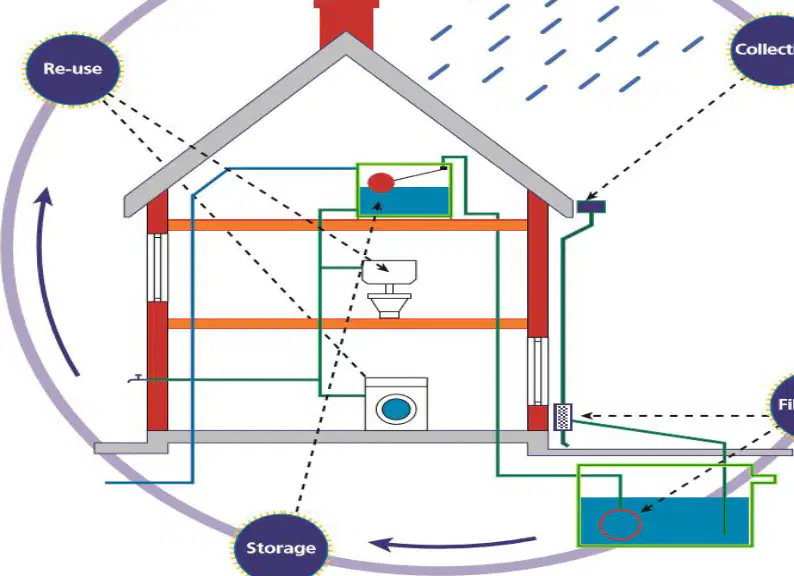
What are the four important stages of rainwater harvesting?
Collection, Filtration, Storage, Reuse
Collection, Evaporation, Storage, Reuse
Filtration, Collection, Evaporation, Reuse
Storage, Filtration, Collection, Evaporation
What is greywater?
Waste water from toilets
Waste water from baths, showers, basins, and washing machines
Waste water from kitchen sinks only
Freshwater from rivers
Why is kitchen sink waste not used for greywater reuse?
It contains too much soap
It is too clean
It contains fat, oil, and food content
It is too cold
What potential contaminants can be found in collected greywater?
Human intestinal bacteria, viruses, skin particles, and hair
Only soap and detergents
Only food particles
Only oil and grease
What environmental condition in greywater can promote bacterial growth?
Cold temperature
High acidity
Warmth of discharged water
High salinity
Under the Water Regulations, how is greywater classified?
Category 1 low-risk water
Category 3 moderate-risk water
Category 5 high-risk water
Category 7 extreme-risk water
What can greywater be used for ?
Drinking water
Flushing WCs
Washing dishes
Food preparation
Which of the following is NOT a use for greywater?
Car washing
Garden watering
Personal hygiene
Washing clothes (after additional treatment)
Greywater cannot be used for which of the following purposes?
Car washing
Garden watering
Food preparation
Flushing WCs
What is one of the considerations when deciding on the suitability of a location for rainwater harvesting?
The presence of wildlife
Sufficient rainfall to meet demand
The number of trees in the area
The color of the soil
Why should above ground tanks be avoided in rainwater harvesting?
They are too expensive
They are difficult to maintain
They may freeze or warm
They take up too much space
What is required if below ground tanks are used for rainwater harvesting?
Additional water filters
Excavation work
Solar panels
Extra insulation
What is the relevance of Building Regulation A in rainwater harvesting?
Fire safety
Structure
Electrical safety
Sanitation
Which Building Regulation is concerned with fire safety?
A
B
C
D
What does Building Regulation C focus on?
Resistance to sound
Electrical safety
Resistance from contaminants and moisture
Sanitation
Which Building Regulation is related to electrical safety?
P
G
H
E
What is the focus of Building Regulation G?
Drainage and waste disposal
Sanitation, hot water safety and water efficiency
Structure
Fire safety
Which Building Regulation deals with drainage and waste disposal?
E
H
C
P
Is planning permission generally required for the installation of a rainwater harvesting system?
Yes, always required
No, not required if it does not alter the outside appearance
Only required for commercial properties
Required only in urban areas
When is it advisable to check with the local authority regarding rainwater harvesting systems?
When the system is installed underground
If the property is listed or in a conservation area
Only if the system is visible from the street
When the system is larger than 1000 liters
What is the purpose of The Water Supply (Water Fittings) Regulation 1999 in rainwater harvesting?
To ensure the quality of rainwater
To avoid cross-contamination between rainwater and potable water
To regulate the amount of rainwater collected
To improve the taste of rainwater
What does BS7671 cover in the context of rainwater harvesting?
The quality of rainwater
The installation and maintenance of electrical connections
The amount of rainwater collected
The taste of rainwater
Which of the following is a benefit of rainwater harvesting?
Increases the use of potable water
Increases water bills
Requires extensive treatment prior to use
Reduces the use of wholesome potable water
What is one advantage of rainwater harvesting compared to greywater systems?
More complicated
Less complicated
More expensive
Requires more treatment
What is one limitation of rainwater harvesting related to the collection area?
The volume of water is unlimited.
The volume of water collected is limited to the collection area.
The collection area can be expanded indefinitely.
The collection area does not affect the volume of water.
What should be fitted to the property as a limitation of rainwater harvesting?
A solar panel.
A water meter.
A wind turbine.
A gas meter.
How is the volume of water limited in rainwater harvesting?
By the number of storage tanks.
By the rainfall in the area.
By the type of soil.
By the temperature.
Where should storage tanks for greywater be located?
In direct sunlight
Away from light and heat
Near heating systems
In open fields
What protection is required for greywater storage tanks?
Protection from rain
Protection from frost
Protection from dust
Protection from insects
Which building regulation deals with water efficiency?
Sanitation, hot water safety and water efficiency
Electrical safety
Resistance to sound
Structure
What does building regulation H focus on?
Electrical safety
Fire safety
Drainage and waste disposal
Resistance to contaminants and moisture
When is planning permission generally not required for a greywater reuse system?
When the system is above ground
When the property is listed
When the system is below ground
When an outhouse is required
What should be checked with the local authority regarding greywater reuse systems?
The color of the system
The cost of the system
If the system is above ground or in a conservation area
The brand of the system
When is planning permission required for a greywater reuse system?
When the system is underground
When an outhouse is required to house the storage system
When the system is portable
When the system is in a rural area
Is planning permission generally required for a greywater reuse system installation?
Yes, always required
No, not generally required
Only required for underground systems
Required only in urban areas
When should you check with the local authority regarding planning permission for a greywater reuse system?
If the system is underground
If the system is above ground
If the property is listed or in a conservation area
If the system is in a rural area
What is the purpose of The Water Supply (Water Fittings) Regulations 1999 in relation to greywater reuse?
To ensure the quality of drinking water
To avoid cross-contamination between greywater and wholesome water
To regulate the temperature of water
To manage the cost of water supply
Who must be informed prior to any greywater reuse installation?
The local authority
The water supply company
The property owner
The environmental agency
What is one of the benefits of greywater reuse?
Increase in water bills
Reduction in water bills
Increase in demand for potable water
Limited system designs
How does greywater reuse affect the demand for potable water?
Increases demand
No effect
Reduces demand
Makes water non-potable
What potential does greywater reuse have compared to rainwater harvesting?
Provides less reusable water
Provides more reusable water
Provides the same amount of reusable water
Provides no reusable water

