
 Worksheets
Earth, Moon, and Sun Unit Test
Total questions: 20
Worksheet time: 14mins
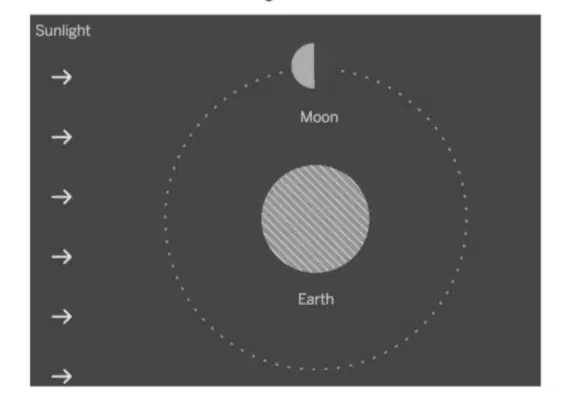
Alan, a space scientist, created this diagram of the Earth and Moon from above (top view), with the arrows indicating that sunlight is coming from the left. Why is the left part of the moon brighter, according to Martha's diagram?
Because Alan's diagram is showing that the half of the Moon that is facing the sun is lit by the sun, and the other half is dark.
Because the Moon has some lighter-colored rock and some darker-colored rock, and Alan’s diagram is showing that the half of the Moon with the lighter-colored rock has rotated to the left.
Because as the Moon gets closer to the sun more of it is lit by the sun, so Alan’s diagram is showing sunlight on half of the Moon.
Because there is a shadow from Earth falling on half of the Moon, and Alan’s diagram is showing that shadow on the right half of the Moon.
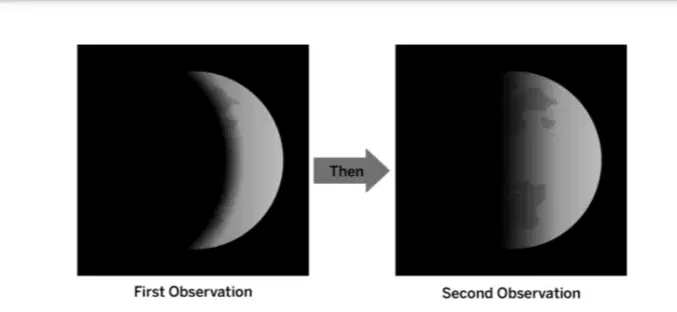
Denim stepped outside and observed the Moon twice, separated by a few days. The above diagram displays her observations. Over time, the Moon's luminous portion seemed to grow larger. What caused this to occur?
Between the first observation and the second observation, the Moon moved so that Tania was able to see more of the half that faces the sun.
Between the first observation and the second observation, the Moon moved closer to the sun so more sunlight reached the Moon’s surface.
Between the first observation and the second observation, the Moon rotated so that more of the light-colored rock on the Moon’s surface faced Earth.
Between the first observation and the second observation, Earth’s shadow moved and was blocking less of the Moon so Tania was able to see more of it.
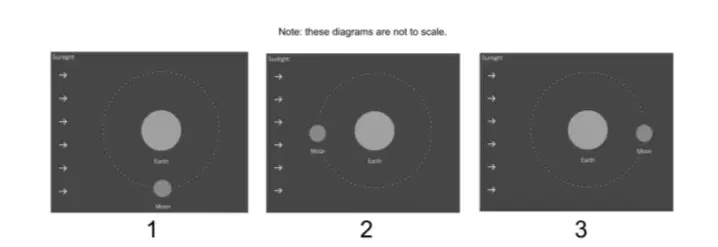
Could the half of the Moon that faces Earth ever be completely dark in any of these diagrams?
No, the Moon is always lit by the sun.
Yes, always in Diagrams 2 and 3, but never in Diagram 1.
Yes, always in Diagram 2, but never in Diagrams 1 or 3.
Yes, always in Diagram 2 and sometimes in Diagram 3.
How does light travel?
Light travels in straight lines only.
Light travels like a river, wherever there is an open path.
Light travels in unpredictable ways.
It depends; if the light is bright enough it can change direction.
One night, Jayden noticed a full moon when he gazed up. When will he be able to witness a full moon once more?
About one week.
About one month.
There is no way to tell because the Moon’s pattern is always changing.
It could be two weeks or a month, depending on what time of year it is.
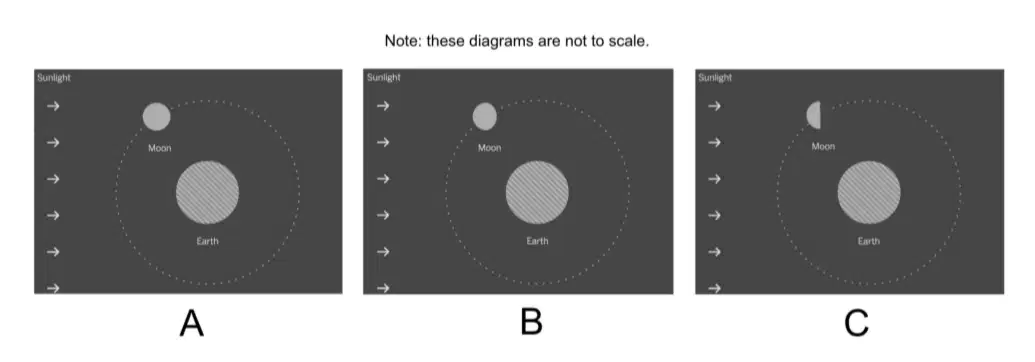
The diagrams above were created by three students to show what they thought of the Moon from above (top view). The arrows in these diagrams indicate that the sun is shining from the left. Which diagram is accurate and why?
Diagram A is accurate because the whole Moon is bright as long as there are no shadows covering parts of it.
Diagram B is accurate because the Moon is almost as close as it can be to the sun, so the Moon is almost fully lit by the sun.
Diagram C is accurate because the half of the Moon that is facing the sun is lit by the sun, and the other half is dark.
All three diagrams are sometimes accurate because the Moon has some lighter-colored rock and some darker-colored rock, and the half of the Moon with the lighter-colored rock rotates to face different directions.
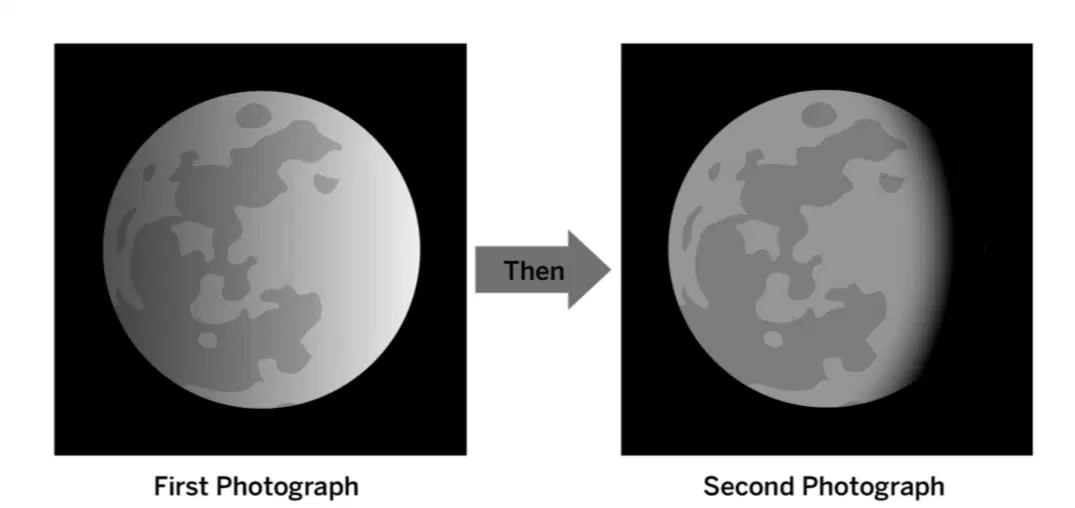
Throughout the week, a student astronomer went out and snapped pictures of the Moon. Above are pictures that resemble her photos. Over time, the Moon's illuminated portion seemed to shrink. What caused this to occur?
Between the first photograph and the second photograph, the Moon moved farther away from the sun so less sunlight reached the Moon’s surface.
Between the first photograph and the second photograph, Earth moved so its shadow was blocking more of the Moon so the student astronomer was able to see less of it.
Between the first photograph and the second photograph, the Moon rotated so that less of the light-colored rock on the Moon’s surface faced Earth.
Between the first photograph and the second photograph, the Moon moved so that the student astronomer was able to see less of the half that faces the sun.
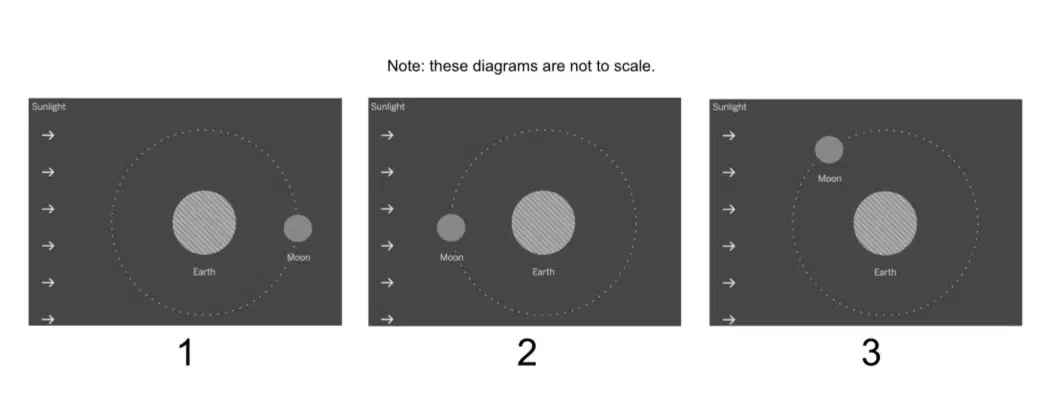
The Earth and the Moon appear in the diagrams above in different positions (top view). These diagrams don't show what areas of the Earth or the Moon are light or dark, even when sunlight is coming from the left.
Could the half of the Moon that faces Earth ever be completely dark in any of
these diagrams?
No, the Moon is always lit by the sun.
Yes, always in Diagrams 1 and 2, but never in Diagram 3.
Yes, always in Diagram 2, but never in Diagrams 1 or 3.
Yes, always in Diagram 2 and sometimes in Diagram 1.
Select the statement that is true about the moon:
The Moon is always moving around Earth in a circle.
The Moon is always in the same position in Earth’s sky.
The Moon is always moving in many changing patterns around Earth.
The Moon is always moving back and forth across Earth’s sky.
Anthony claimed that light bent around a corner to reach an object. Is his claim true?
No, light travels in straight lines only.
Yes, light travels like a river, wherever there is an open path.
Maybe; light travels in unpredictable ways.
Yes, if the light is bright enough, then it can change direction to go around corners.
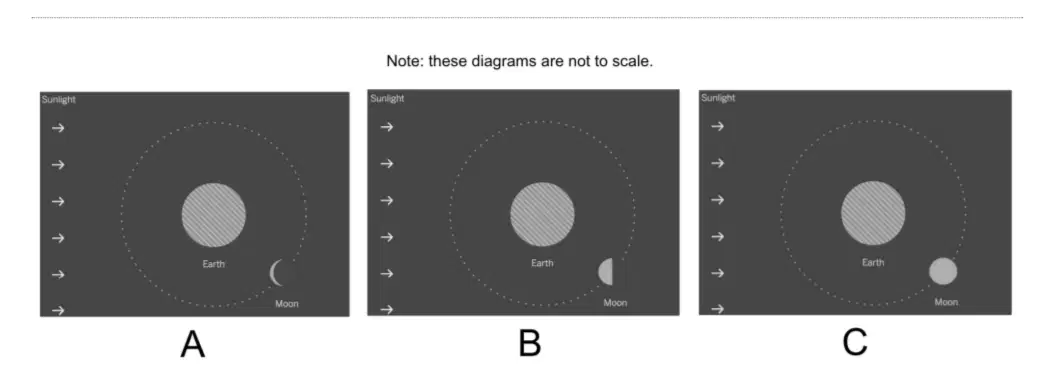
These diagrams were created by student astronomers Theo, JJ, and Anthony to show their ideas of the Moon's appearance from above (top view). In these diagrams, the sunlight is coming from the left, as shown by the arrows. Which diagram is correct, and why?
Diagram A is accurate because the Moon is almost as far as it can be from the sun, so almost none of the Moon is lit by the sun.
Diagram B is accurate because the half of the Moon that is facing the sun is lit by the sun, and the other half is dark.
Diagram C is accurate because the whole Moon is bright as long as there are no shadows covering parts of it.
All three diagrams are sometimes accurate because the Moon has some lighter-colored rock and some darker-colored rock, and the half of the Moon with the lighter-colored rock rotates to face different directions.
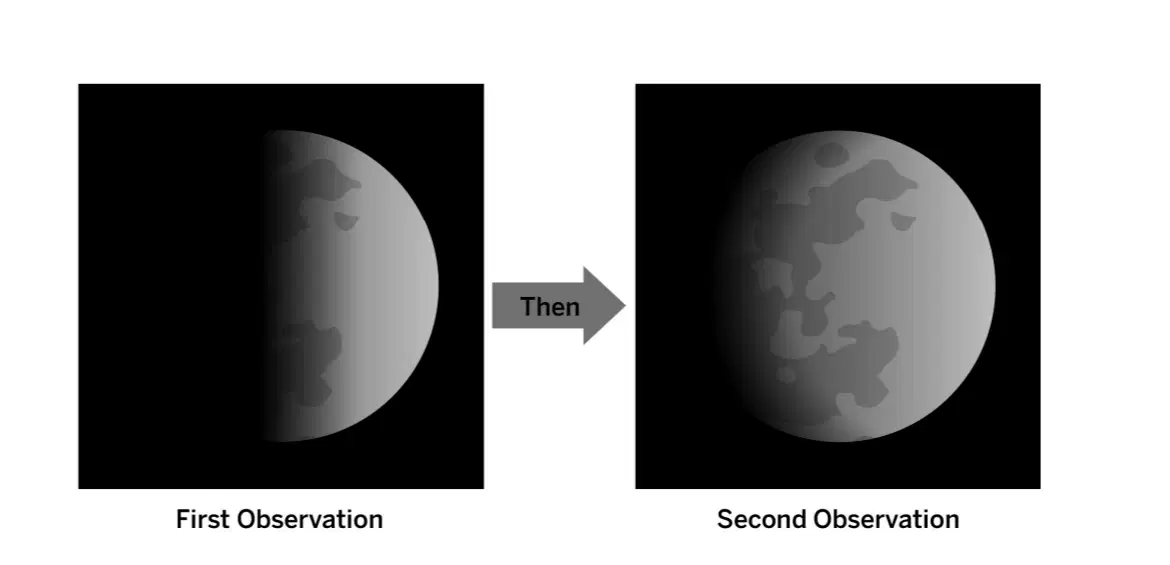
Student astronomer Keven made two observations of the Moon that were several days apart. Their observations are shown in the diagram above. The light part of the Moon appeared to get larger over time. Why did this happen?
(a) Between the first observation and the second observation, the Moon rotated so that more of the light-colored rock on the Moon’s surface faced Earth.
(b) Between the first observation and the second observation, the Moon moved so that the astronomers were able to see more of the half that faces the sun.
(c) Between the first observation and the second observation, the Moon moved closer to the sun so more sunlight reached the Moon’s surface.
(d) Between the first observation and the second observation, Earth’s shadow moved and was blocking less of the Moon so the astronomers were able to see more of it.
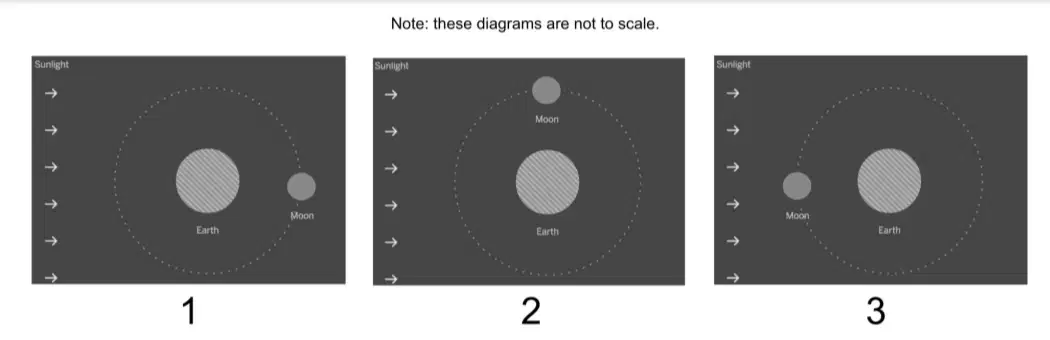
As viewed from above (top view), the Earth and the Moon are shown in the diagrams above in different locations. Although the left is where the sun is shining, these diagrams do not show which areas of the Earth or the Moon are bright or dark. Could the half of the moon that faces Earth ever be completely dark in any of these diagrams?
No, the Moon is always lit by the sun.
Yes, always in Diagrams 1 and 3, but never in Diagram 2.
Yes, always in Diagram 3 and sometimes in Diagram 1.
Yes, always in Diagram 3, but never in Diagrams 1 or 2.
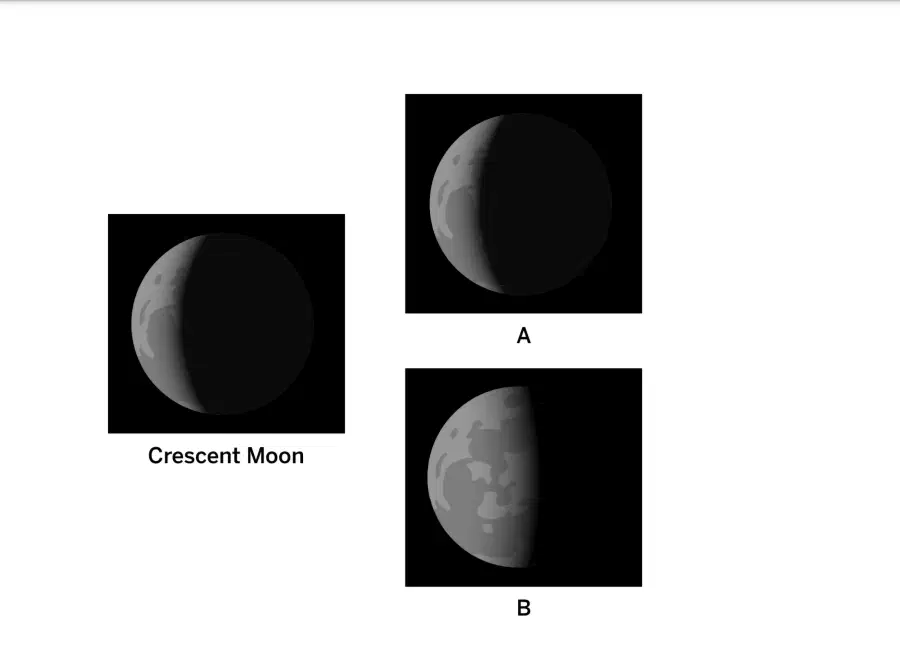
Bresaes looked up one night and saw a crescent moon. If Bresaes looks for the moon again in one month, what will he see?
Breseas will see a crescent moon again, like Diagram A.
Breseas will see a quarter moon, like Diagram B.
Breseas could see either a crescent or a quarter moon; it depends on the time of year.
There’s no way to tell because the Moon’s pattern is always changing.
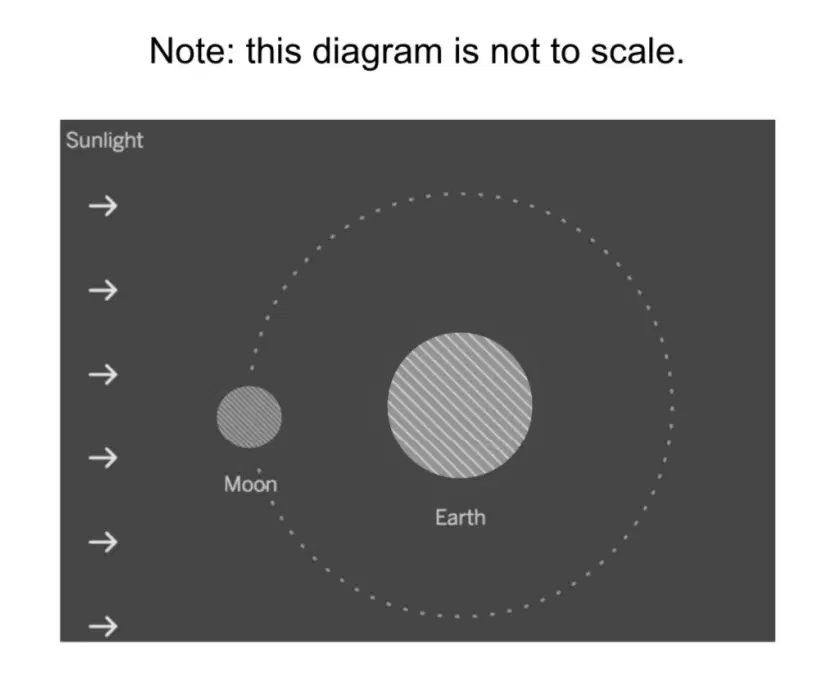
The diagram above shows Earth and the Moon from above (top view). Carter would like to know why there is a dotted circle drawn in this diagram. Which answer would be accurate?
To show that the Moon is always moving around Earth in a circle.
To show the locations of satellites that are in Earth’s atmosphere.
To show the way that the Moon can move back and forth across Earth’s sky.
To show the locations where the sun’s light can reach the Moon.
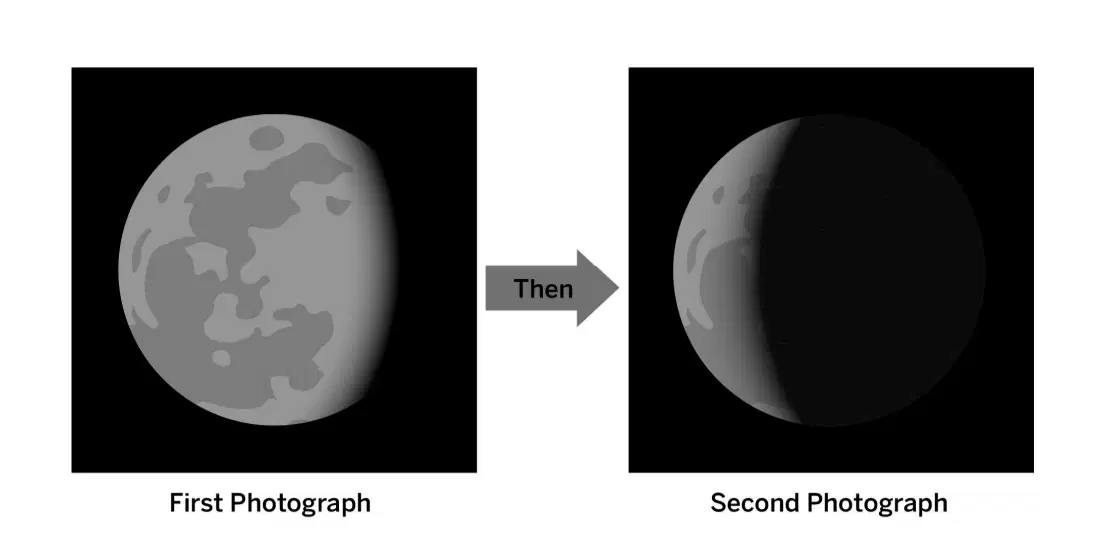
A group of artists, Ashley, Melanie, and Marylin took photographs of the Moon that were several days apart. Their photographs are shown above. The light part of the Moon appeared to get smaller over time. Why did this happen?
Between the first photograph and the second photograph, the Moon rotated so that less of the light-colored rock on the Moon’s surface faced Earth.
Between the first photograph and the second photograph, Earth’s shadow moved and was blocking more of the Moon so the artist was able to see less of it.
Between the first photograph and the second photograph, the Moon moved so that the artist could see less of the half that faces the sun.
Between the first photograph and the second photograph, the Moon moved farther away from the sun so less sunlight reached the Moon’s surface.
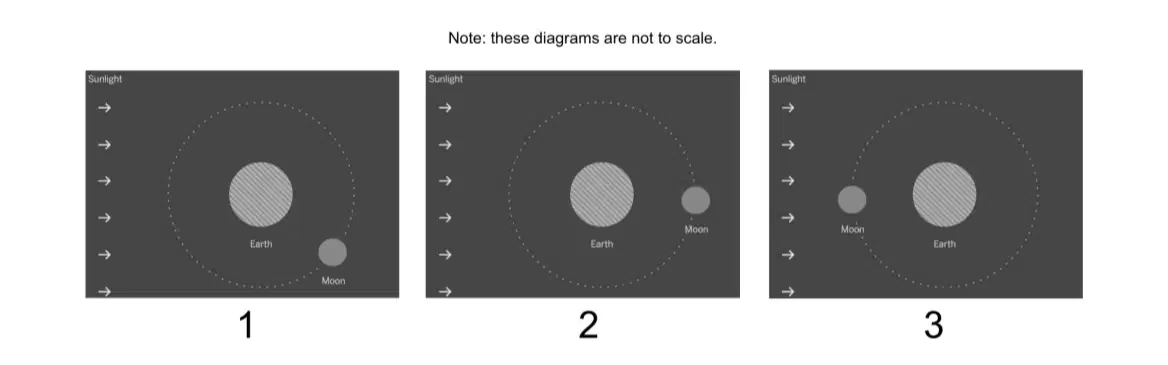
The diagrams above show Earth and the Moon in different positions, as seen from above (top view). Sunlight is coming from the left, but these diagrams do not show what parts of Earth or the Moon are light or dark. Could the half of the Moon that faces Earth ever be completely dark in any of these diagrams?
No, the Moon is always lit by the sun.
Yes, always in Diagrams 2 and 3, but never in Diagram 1.
Yes, always in Diagram 3 and sometimes in Diagram 2.
Yes, always in Diagram 3, but never in Diagrams 1 or 2.
Mason needed help figuring out when a lunar eclipse occured. Which phase does the moon need to be in for it to happen?
Full moon
New moon
Gibbous
Crescent
Gabriel and Kayla were wondering when they could see a solar eclipse. Which moon phase needs to occur for them to see one?
Full moon
New moon
Gibbous
Crescent
Lucas and Z'Liyah were arguing about when lunar eclipses occur. Lucas claimed that a lunar eclipse can be photographed sometimes when Earth is in between the sun and the moon. Z'Liyah said they can be seen on any night. Who is correct?
Lucas
Z'Liyah
They are both right
They are both wrong

