
 Worksheets
2/13 Organelles Quizizz Review
Total questions: 65
Worksheet time: 1hrs 16mins

Which of the following are key differences between eukaryotic and prokaryotic cells?
Eukaryotic cells have a nucleus, while prokaryotic cells do not.
Prokaryotic cells have a nucleus, while eukaryotic cells do not.
Both have a nucleus, but eukaryotic cells are larger.
Neither have a nucleus, but prokaryotic cells are larger.

Match the following are organelles and their functions?
Mitochondria
Powerhouse of the cell, producing energy
Ribosomes
Site of protein production
Chloroplasts
Site of photosynthesis, converting sunlight to energy
Endoplasmic Reticulum
Transports materials within the cell
Nucleus
Control center of the cell, containing DNA
List the part of Cell Theory proven by Robert Hooke while looking at cork cells under a microscope.
Cells are the basic unit of life.
All living things are made of cells.
Cells arise from pre-existing cells.
Cells contain a nucleus.
List the part of Cell Theory proven by Schleiden and Schwann.
All living things are composed of cells.
Cells are the basic unit of life.
All cells arise from pre-existing cells.
Cells contain hereditary information.
List the part of Cell Theory researched by Robert Remak, but often not credited.
All cells arise from pre-existing cells
Cells are the basic unit of life
All living organisms are composed of cells
Cells contain hereditary information

Compare and contrast the structure and function of the cell wall in plant and animal cells.
Plant cells have a cell wall, animal cells do not.
Both plant and animal cells have a cell wall.
Animal cells have a cell wall, plant cells do not.
Neither plant nor animal cells have a cell wall.

The function of the cell membrane in both plant and animal cells is to:
protect the cell and control what enters and leaves
produce energy for the cell
store genetic information
synthesize proteins

Which organelle is responsible for photosynthesis in plant cells?

The _______ is the control center of the cell, containing DNA.
nucleus
mitochondria
ribosome
cell membrane

The primary function of mitochondria in cells is:
energy production
protein synthesis
photosynthesis
cell division
Which organelle is involved in the storage of substances (water and food) within the cell?
_______ is a jelly-like substance that fills the cell and holds organelles in place.
cytoplasm
nucleus
cell membrane
mitochondria
A prokaryotic cell is:
a cell with a nucleus
a cell without a nucleus
a cell with multiple nuclei
a cell with a single nucleus
Which of the following are characteristics of prokaryotic cells?
A) They have a nucleus.
B) They lack membrane-bound organelles.
C) Their genetic material floats freely in the cell.
Prokaryotic cells do not have a ______ or membrane-bound organelles.
nucleus
cell wall
cytoplasm
ribosome
Give two examples of prokaryotic organisms.
Bacteria and Archaea
Fungi and Algae
Plants and Animals
Viruses and Prions
A eukaryotic cell is characterized by the presence of what?
Nucleus
Cell wall
Chloroplast
Ribosome
The nucleus of a eukaryotic cell is surrounded by a ________.
nuclear envelope
cell wall
plasma membrane
cytoplasm
An organism made up of one or more eukaryotic cells is called a(n) ________.
Eukaryote
Prokaryote
Virus
Bacterium
Which of the following is a function of the nucleus in a eukaryotic cell?
Stores genetic material (DNA)
Produces energy
Digests nutrients
Synthesizes proteins
What is the difference between Prokaryotic and Eukaryotic Cells?
Prokaryotic cells have a nucleus, while eukaryotic cells do not.
Eukaryotic cells have a nucleus, while prokaryotic cells do not.
Both have a nucleus, but eukaryotic cells are larger.
Neither have a nucleus, but eukaryotic cells are more complex.
What is the property of the cell membrane that allows it to let in certain small things with special tags?
Permeable
Semi-permeable
Impermeable
The cell membrane is the ______ structure in cells that do not have a cell wall.
outside
inner
central
supportive

In plant cells, where does the cell membrane lie?
Outside the cell wall
Inside the cell wall
Within the nucleus
What is the nucleus often referred to as in a cell?
What does the nucleus store for the cell?
The nucleus stores the cell's genetic material, including DNA.
The nucleus stores the cell's energy.
The nucleus stores the cell's waste products.
The nucleus stores the cell's proteins.
What is the jelly-like fluid inside the cell called?
The fluid and almost all of its contents are called ________.
Cytosol
Nucleus
Mitochondria
Ribosome
What is the main function of mitochondria in a cell?
To produce energy in the form of ATP.
A mitochondrion is the bean-shaped organelle in which sugar is broken down to produce _______.
ATP (Energy)
Oxygen
Carbon Dioxide
Water
Which organelle is known as the main power source of a cell?
Draw lines to match the organelle to the description:
Cell Membrane
Outside structure that allows things to pass in and out of the cell.
Nucleus
Controls the life processes of the cell.
Cytoplasm
Jelly like fluid that helps to keep the cell from collapsing.
Mitochondria
Breaks down sugar to produce energy to power the cell.
What is the endoplasmic reticulum (ER)?
The ER is part of the internal _______ system of the cell. Substances move through the ER to different places in the cell.
delivery
communication
transport
storage
The endoplasmic reticulum acts like a highway, transferring _______ to other organelles in the cell like the Golgi complex.
proteins
lipids
carbohydrates
nucleic acids
True or False: The endoplasmic reticulum is the FedEX of the cell.
True
False
What is the rough endoplasmic reticulum covered with?
Mitochondria
Ribosomes
Nucleus
Golgi apparatus
Ribosomes are the _______ and most plentiful of the organelles.
smallest
largest
heaviest
least numerous
What is the primary function of ribosomes in cells?
Where are ribosomes found in the cell?
The proteins made by ribosomes are composed of organic molecules called ________.
amino acids
carbohydrates
lipids
nucleic acids
What is the organelle that packages and distributes proteins called?
Mitochondrion
Lysosome
Golgi Complex
Ribosome
What is the function of lysosomes in the cell?
They produce energy.
They break down wastes and food products.
They transport nutrients.
They store genetic information.
Lysosomes are like the _______ of the cell.
garbage disposals
powerhouses
nucleus
ribosomes
What do lysosomes destroy in the cell?
New cell organelles
Old cell organelles
Cell membrane
Ribosomes
An organism made up of a prokaryotic cell is called a

The Cell Theory:
1. All living organisms are composed of one or more (a) . (Unicellular or Multicellular)
2. All cells arise from (b) cells. (Not from Spontaneous Generation)
3. Cells are the structural and functional unit of (c) . (Nothing living smaller than a Cell)
(a) cells are simple and have NO nucleus and NO membrane-bound organelles.

Sort the following statements based on if the statement is talking about prokaryotes or eukaryotes
Place the following terms in their corresponding categories
nucleus
no nucleus
ribosomes
A table comparing the characteristics of four samples is shown. Click on the sample name that is most likely a prokaryote.
Place the following terms in their corresponding categories
no membrane bound organelles
membrane bound organelles
cell membrane
Label the Table
Prokaryotic or Eukaryotic?
prokaryotic
eukaryotic

See how much you remember! Match the following characteristics that belong to Eukaryotes, Prokaryotes, or BOTH!
- No nucleus
- No membrane-bound organelles
- DNA in the cytoplasm
- Single Celled
Prokaryote
- Nucleus
- Membrane bound organelles
- DNA in the nucleus
- Single & Multi celled
Eukaryote
- Ribosomes
- DNA
- Cell Division
- Plasma Membrane
Prokaryote and Eukaryote

Based on the structure of the cell seen under the microscope, scientist determined the cell was a (a) cell.
Which cell is a Prokaryote?

In which part of the plant cell does photosynthesis take place?
Nucleus
Mitochondria
Chloroplast
Ribosome

would a cell perform?
respond to its environment
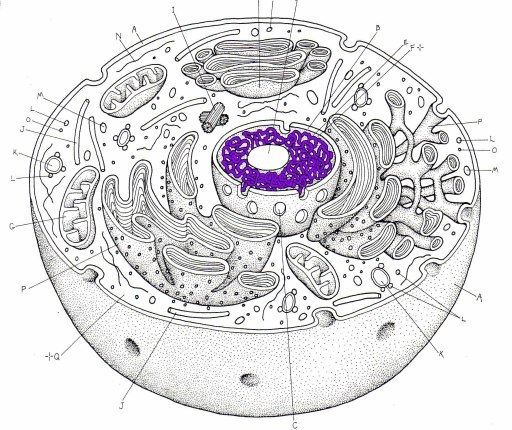
What are some differences between plant and animal cells?
Name two organelles that plant cells have that animal cells do not have.
Mitochondria
Chloroplast
Cell Wall
Cell Membrane
All living things are made
The smallest unit of life
What is an organelle?

