
 Worksheets
Unit 3 Mystery Science Birth of Rocks
Total questions: 44
Worksheet time: 23mins
What is the definition of "brainstorm"?
To solve problems using science
To come up with many new questions or ideas about something
To roll down rocks and soil from a mountain
To measure how steep a slope is
Who is an engineer?
A person who studies rocks and soil
A person who uses science to come up with solutions to problems
A person who predicts natural hazards
A person who measures slopes
What is a landslide?
An event where water overflows onto land
When lots of rocks and soil roll down from a cliff or mountain
A type of engineer's design
A brainstorm session
Which of the following is a natural hazard?
A brainstorm
An engineer's design
A landslide
A slope measurement
What does "slope" refer to?
The height of a mountain
How much higher one side is than the other
The speed of a landslide
The depth of a brainstorm
What does "steep" mean?
Something that is very high up on one end and very low at the other end
A type of natural hazard
A method used by engineers
A type of brainstorm
Which of the following is NOT a cause of landslides?
Rain
Loose rocks
Flat ground
Slopes of more than 35 degrees
Why do engineers brainstorm ideas?
To predict natural hazards
To find the best ideas for their designs
To measure slopes
To cause landslides
Which of the following is an example of a natural hazard?
A brainstorm session
A steep slope
A forest fire
An engineer's solution
What is the relationship between rain and landslides?
Rain prevents landslides
Rain can cause landslides
Rain measures the steepness of slopes
Rain is a type of engineer's design
Which of the following is NOT a natural hazard?
Landslide
Flood
Brainstorm
Earthquake
How does a slope of more than 35 degrees relate to landslides?
It prevents landslides
It can cause landslides
It measures the height of a mountain
It is a type of natural hazard
What is the main purpose of an engineer's work?
To cause natural hazards
To come up with solutions to problems using science
To measure the steepness of slopes
To brainstorm natural hazards
Which of the following is a characteristic of a steep slope?
It is flat
It is very high up on one end and very low at the other end
It prevents landslides
It is a type of natural hazard
What is one way engineers might use brainstorming in their work?
To predict when a landslide will occur
To find the best ideas for their designs
To measure the steepness of a slope
To cause natural hazards
What is erosion?
The process of rocks breaking into smaller pieces
The movement of tiny rock bits from one place to another by water, wind, ice, or gravity
The process of sediment settling on a surface
The remains of a plant or animal that lived a long time ago
Which process involves water freezing and expanding to break rocks apart?
Root wedging
Weathering
Ice wedging
Deposition
How does root wedging occur?
By water freezing and expanding
By plant roots growing and breaking rocks apart
By sediment settling on a surface
By rocks rolling down a mountain
Why are rocks at the bottom of a mountain smoother?
They are formed by sediment settling and pressing together
They have been burned for energy
They have rolled down the sides and become smoother
They are covered in water
What is the process of sediment falling and settling on a surface called?
Erosion
Weathering
Deposition
Ice wedging
What is sedimentary rock?
A dark rock made from fossil plants
A type of rock formed when sediments settle and press together over a long time
The remains of a plant or animal
A habitat covered in water
What happens when rocks hit against each other as they fall down a mountain?
Someone could get hurt.
They make loud sounds.
The edges of the rocks break off.
The rocks stay the same.
What is root wedging?
Seeds fall in cracks of rocks. The roots grow and break the rock apart.
Tree roots wedge themselves into each other.
Gardners cut roots to get them to grow better.
Rocks fall in the roots of plants and break the plants apart.
What TWO things can loosen rocks that slide down the mountain?
ice wedging
animals
root wedging
thunder
What are fossils?
Fossils are the remains of plants and animals that have turned to rock.
Fossils are bones of dead animals.
Fossils are rocks that have turned to bones.
How do fossils give us clues about habitats?
We can tell what color the animals were based on their fossils.
Habitats and fossils aren’t connected. We can only guess since it was so long ago.
The traits of the fossils can be compared to the animals that live there today.
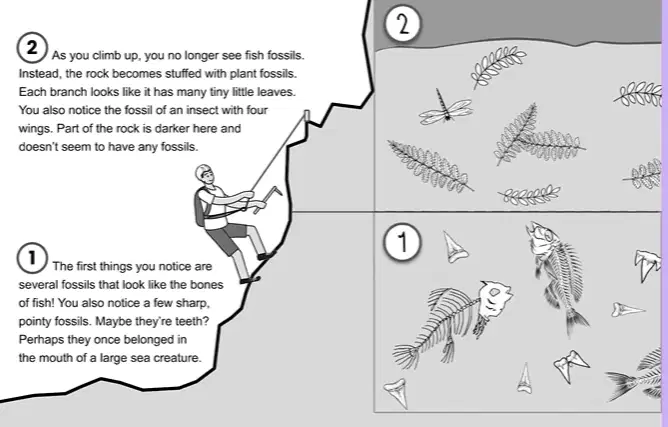
Think back to our mystery lesson about colossal canyon. Which fossil would be the oldest according to the picture?
2
1

What kind of volcano is this?
Shield volcano
cone volcano
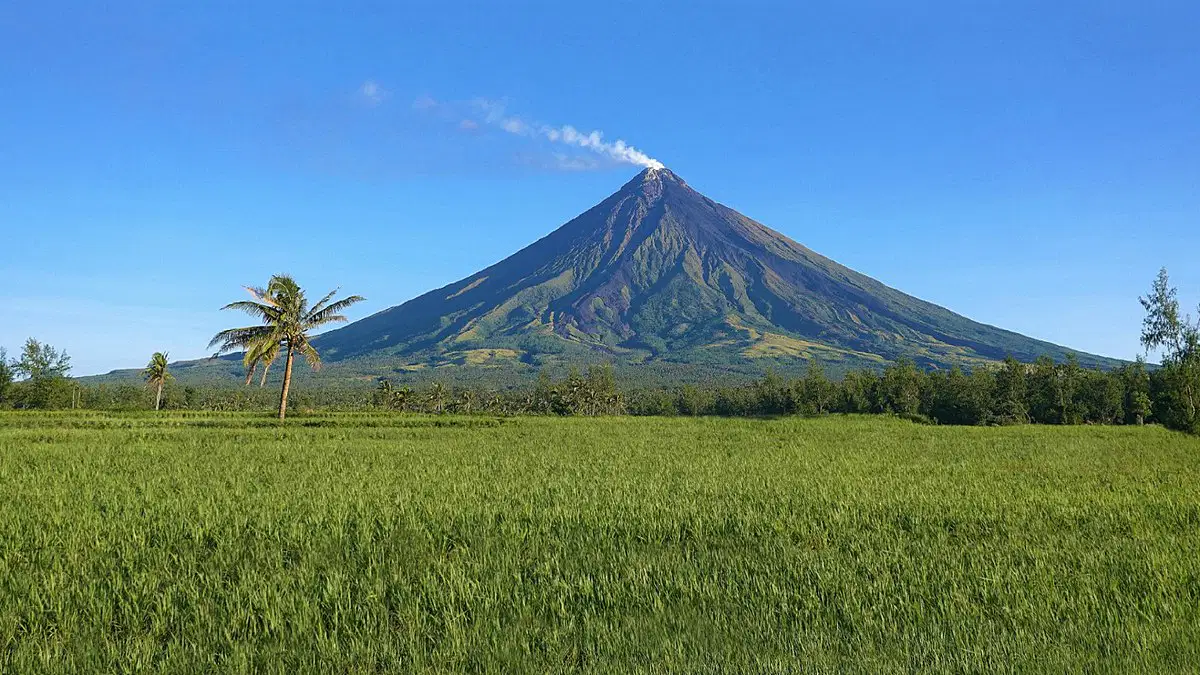
Cone

What are the type kinds of lava?
thin and large
small and thick
thin and thick
Volcanoes with thick lava are more likely to explode because...
air bubbles can't escape and the pressure builds until it blows up.
earthquakes cause thick lava.
air bubbles escape more easily and very little pressure builds up.
they get much angrier than volcanoes with thin lava!
Which type of lava is found in a cone-shaped volcano?
green lava
thin lava
thick lava
a type of lava that no one has ever seen
Could a volcano pop up in Pennsylvania? Why or why not?
Yes, anything can happen.
Yes, there are volcanoes nearby and we get a lot of earthquakes.
No, there is no pattern of volcanoes or earthquakes nearby.
The pattern of volcanoes and fault lines around the Pacific Ocean is sometimes called.
The Ring of Fire
The Horseshoe of Fire
The Ring of Volcanoes
The Pacific Plate
This volcano has a low, mound shape with thin, spread-out lava.
Mt. St. Helens
shield volcano
Hawaiian volcano
cone volcano
Why is the Ring of Fire important to volcanologists?
It is a place with no volcanic activity
It helps them study patterns of volcanic eruptions
It is the only place where basalt is found
It is a map of all volcanoes
What does it mean to erupt?
To cool down
When lava quickly comes out of a volcano
To form a rock
To create a map
What is a map used for?
To predict volcanic eruptions
To show where things are in a place
To create rocks
To study lava
What is lava?
A type of rock
Liquid rock that flows or explodes from a volcano
A type of volcano
A map of the Earth
How does an experiment help scientists?
It creates new rocks
It helps discover new information about a question
It predicts the weather
It maps the ocean
How can you predict if a volcano will erupt?
By looking at a map
By studying patterns of past eruptions
By measuring the height of the volcano
By checking the color of the lava
Which of the following best describes an extinct volcano?
A volcano that is erupting
A volcano that is not likely to erupt in the future
A volcano that is likely to erupt soon
A volcano with fast-flowing lava
What is a volcano?
A type of rock
A high area of land with an opening where lava flows or explodes out from
A scientist who studies rocks
A map of the ocean
What does a volcanologist study?
Maps
Rocks
Volcanoes
Patterns

