
NEW
Font size
 Worksheets
HOA2 ME FDAR2B
Total questions: 40
Worksheet time: 30mins
Romanesque architecture is based on Greek
architectural elements
TRUE
FALSE
a religious lifestyle that involves giving up
worldly possessions and devoting oneself to
spiritual activities.
Fuedalism
Monarchy
Monasticism
Catholicism
It is very common to see Churches during the Gothic era to be
built with thick walls, since these were mainly built with stone, which is heavy
and particulary in a big vaulted room,
TRUE
FALSE
When you have two Barrel Vaults cross at a right
angle, that is what you call a ________.
Ribbed Vault
Fan Vault
Arch Vault
Groin Vault
Taking the title for the largest Romanesque Church in the world.
constructed in 1080-1120, the Church was originally meant to be part of a
much larger abbey.
Trier Cathedral
Basilica of
Saint-Sernin
Speyer Cathedral
San Miniato al Monte
Influenced Romanesque Architecture’s use of religious imagery.
Round Arches, Column Capitals, and Domes.
Byzantine Architecture
Ottonian Architecture
Carolingian Architecture
Greek Architecture
_________ architecture is characterized by towering round arches, massive stone and
brickwork, small windows, thick walls, and a propensity for housing art and sculpture
depicting biblical scenes.
Gothic Architecture
Renaissance
Architecture
Baroque Architecture
Romanesque Architecture
Beginning in the twelfth century, Romanesque design began
to evolve into the ________ style.
Roman Style
Greek Style
Gothic Style
Byzantine Style
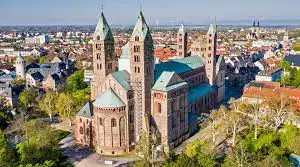
Identify this Structure:
San Miniato al Monte
Cathedral of
Monreale
Speyer Cathedral
Basilica of
Saint-Sernin
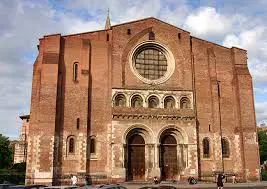
Identify this Structure:
Trier Cathedral
Basilica of
Saint-Sernin
Speyer Cathedral
Cathedral of
Monreale
____________ ORIGINATING IN 12TH-CENTURY FRANCE, TRANSFORMED CHURCH DESIGN WITH TALLER STRUCTURES AND LARGE WINDOWS THAT WELCOMED NATURAL LIGHT. KNOWN AS "FRENCH WORK, "
Romanesque Architecture
Renaissance Architecture
Gothic Architecture
Baroque
Architecture
____________ ARCHITECTURE PIONEERED POINTED ARCHES, RIBBED VAULTS, AND FLYING BUTTRESSES, WHICH ENABLED TALLER STRUCTURES, THINNER WALLS, AND GREATER WINDOWS.
Romanesque
Architecture
Gothic
Architecture
Renaissance
Architecture
Roman
Architecture
CHARACTERIZED BY THEIR TALL, NARROW FRAMES WITH POINTED TOPS WINDOWS.
Stained Glass Window
Lancet Window
French Window
Clerestory Window
ARE CARVED STONE CREATURES OFTEN MADE OF GRANITE. THEY SERVE BOTH DECORATIVE AND FUNCTIONAL ROLES IN ARCHITECTURE, FEATURING SPOUTS THAT CHANNEL WATER AWAY FROM BUILDING WALLS.
Grotesque
Statues
Gargoyles
Dragons
ARE OFTEN DESCRIBED BY SCHOLARS AS SYMBOLS MEANT TO WARD OFF EVIL AND REMIND ONLOOKERS OF THE DIVIDE BETWEEN THE EARTHLY AND THE DIVINE. THESE FANTASTICAL OR MYTHICAL STONE FIGURES ARE COMMONLY FOUND ON RELIGIOUS BUILDINGS, PARTICULARLY CHURCHES AND CATHEDRALS, WHERE THEY ARE CARVED INTO WALLS OR ROOFS.
Gargoyles
Grotesque
Dragons
Frescoes
A LARGE CIRCULAR WINDOW, OFTEN FILLED WITH INTRICATE STAINED GLASS, COMMONLY FOUND IN GOTHIC CATHEDRALS. SUPPORTED BY STONE TRACERY, IT BECAME A HALLMARK OF GOTHIC ARCHITECTURE, ALLOWING ETHEREAL LIGHT TO FILL THE INTERIOR SPACES
Clerestory Window
Dormer Window
Rose Window
Oculus
ARE STAINED - GLASS WINDOWS FEATURING DECORATIVE,
NON FIGURATIVE DESIGNS PAINTED IN BLACK ON CLEAR GLASS.
Lancet Window
Window Tracery
Grisailles Panels
Rose Window
BARREL VAULTS GAVE THE ROOF A STRUCTURE THAT ALLOWED FOR THE CREATION OF MORE ELABORATE CEILING PATTERNS AND THE SPANNING OF BIGGER EXPANSES.
TRUE
FALSE

Identify the given structure:
Notre Dame
Cathedral
Gloucester
Cathedral
St. Stephens
Cathedral
Cologne Cathedral

Identify the given structure:
St. Stephens
Cathedral
Gloucester
Cathedral
Cathedral of Our Lady of Chartres, France
Notre-Dame
Cathedral
Rebirth of Classical Architecture and Culture.
Rococo
Architecture
Baroque
Architecture
Gothic
Architecture
Renaissance
Architecture
Used for coating, protecting internal walls and ceilings.
Frescoes
Concrete
Paints
Plaster
Triangle gable at the end of the roof slope over a portico.
Vault
Dome
Cupola
Pediment
Assemblage of horizontal moldings and bands above columns.
Pediment
Capital
Entablatures
Piers
Curved structure that supports weight from above.
Vault
Arches
Roof
Pediment
The Father of Renaissance Architecture and the 1st Renaissance Architect.
Donato
Bramante
Leonardo
Da Vinci
Filippo
Brunelleschi
Vitruvius
Pollio
Best know for the Frescoes of the Saint Sistine Chapel.
Donato
Bramante
Leonardo
Da Vinci
Michelangelo
Buonarotti
Vitruvius
Pollio
Characterized by ornamentation, exuberance, and artistic expression. Detailed, complex and dynamic form complemented by a drive toward creative transcendence.
Renaissance
Architecture
Gothic
Architecture
Baroque
Architecture
Rococo
Architecture

Identify the given structure:
Florence
Cathedral
St. Paul
Cathedral
St. Peter's
Basilica
San Andrea Al
Quirinale

Identify the given structure:
Notre Dame
Cathedral
St. Peters
Basilica
Florence Cathedral
St. Paul
Cathedral
Reflected a “Classical Revival” style, heavily
influenced by Greek and Roman.
Late Georgian Period
Regency Period
Victorian Britain
Edwardian Era
The dominant church architectural style was Neo-Baroque, characterized by
elaborate decoration, large scale features like domes and towers.
This period was relatively short and heavily influenced by the Arts and Crafts Movement.
Late Georgian
Period
Victorian Britain
Edwardian Era
Regency Period
Columns with shallow grooves,
carved into the surface of the shaft.
Volute Columns
Pilaster Columns
Fluted Columns
Piers Columns
decorative horizontal bands, often found on
walls, columns, or ceilings.
Vaults
Moldings
Friezes
Ribbed
Architectural style that drew
its inspiration from medieval architecture.
Romanesque
Architecture
Neo-Classical
Style
Gothic Revival
Classic Revival
-influenced by Bauhaus, Le Corbusier, and industrial materials, focusing on
function over decoration.
Industrial Style
Modernism
International
Style
Arts & Craft
Movement
–Minimalist design, open spaces, raw materials (concrete, steel, glass),
abstract stained glass, and functional layouts.
Modernism
Industrial Style
Minimalism
International
Style
Show cases Gothic Revival style with a soaring central spire, pointed arch entrance, ornate tracery windows, decorative buttresses, and intricate stone carvings, all crafted in local sand stone to evoke medieval ecclesiastical grandeur.
St. Walburge, Preston, Lancashire
Westminister
Cathedral
St. Giles Cheadle Staffordshire
Christ the King, Plymouth Devon

Identify the given structure:
Westminister
Cathedral
St. Walburge, Preston, Lancashire
Christ the King,
Plymouth Devon
St. Giles Cheadle, Staffordshire
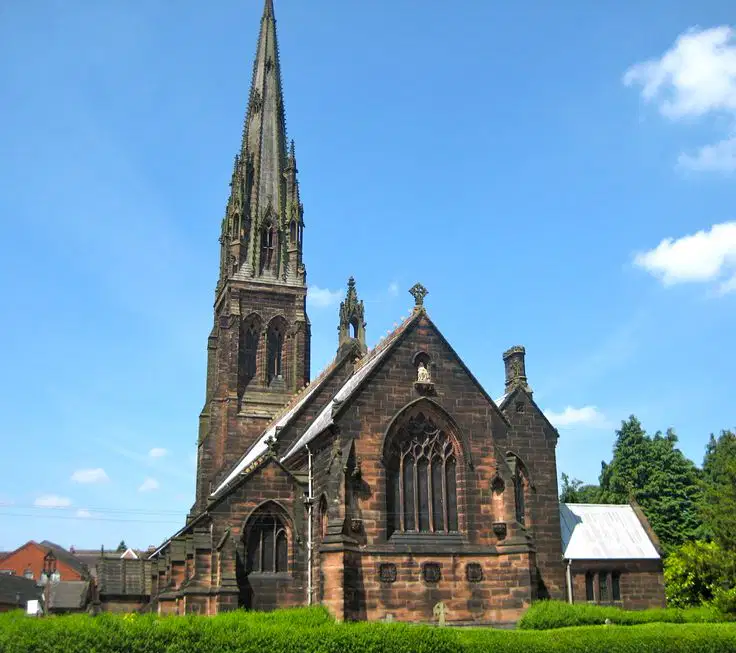
Identify the given structure:
St. Walburge, Preston, Lancashire
Westminister
Cathedral
St. Giles Cheadle Staffordshire
Christ the King, Plymouth Devon