
 Worksheets
TE- Revision- Aamna
Total questions: 135
Worksheet time: 3hrs 39mins
The place where pilots sit to fly the plane
Cockpit
Deck Flight
Flight Cabin
Cabin

The wheels of a plane are called the
landing gear
landing wheels
fuselage
wheel rims
The body of the plane is called the
Tail cone
Fuselage
Landing Gear
Empenage
____________ are hinged control surfaces used to steer and control the airplane
flaps
ailerons
landing gear
propelers
The ______________ at the rear of the plane provides stability
tail
rudder
flaps
power plant
The _______________ moves left and right to control the left or right movement of the plane
rudder
tail
fin
flaps

The __________ can be raised or lowered to change the direction of the plane's nose
Elevators
Flaps
Rudder
Ailerons
The force that pushes a plane forward
lift
thrust
weight
drag
The force that pushes a plane upward
lift
thrust
weight
drag
The force that pulls the plane downward
lift
thrust
weight
drag
The force that slows the plane down
lift
thrust
weight
drag
What part of a plane generates thrust
wings
tail
engine
landing gear
What part of the plane generates lift?
wings
tail
engine
landing gear
The body of the plane is called the
flaps
fuselage
landing gear
The ______________ at the rear of the plane provides stability
Horizontal stabilizers
rudder
flaps

Where do the pilots fly the plane from?
thrust
cockpit
aileron
rudder

Which force of flight opposes the force of lift and pushes the plane downwards?
lift
gravity
thrust
drag

What is the function of the rudder on an aircraft?
To control the yaw motion of the aircraft.
To regulate the cabin pressure of the aircraft.
To adjust the engine power of the aircraft.
To control the pitch motion of the aircraft.

What is the primary function of the fuselage?
To store food and beverages
To house the crew, passengers, cargo, and other essential components of an aircraft.
To provide stability during flight
To control the engine thrust

Which force of flight is responsible for keeping the plane in the air?
Lift
Gravity
Thrust
Drag

These help birds and planes to lift into the air.
head
wings
tail
nose

Dogs shake it when they are happy but it's also the back part of a plane?
tail
nose
ear
front legs

What is the force that pushes the plane forward?
lift
gravity
drag
thrust
An ____________is a vehicle for traveling through the air, and includes lighter-than-air vehicles such as balloons and also vehicles without fixed wings, such as helicopters.
Aircraft
Aerodynamic
Aerostatic
Airlift
The ____________ is powered by an engine (usually just behind the propeller) and the propeller blades create __________to move an airplane forward.
thrust, propeller
lift,drag
propeller, thrust
thrust, drag
The __________is a part of an airplane that produces much of an airplane’s total lift when air flows over it.
aileron
wing
elevator
rudder
The wheels of a plane are called the
landing gear
wheels
fuselage
____________ are hinged control surfaces used to steer and control the airplane
flaps
ailerons
landing gear
The __________ can be raised or lowered to change the direction of the plane's nose
elevator
fin
fudder
The controlling surface that regulates an aircraft's roll.
Aileron
Rudder
Wing
Flaps
A controlling surface on an aircraft's tail that regulates yaw.
Aileron
rudder
wing
Flaps
The major horizontal surface on an airplane that provides lift.
Aileron
rudder
wing
Flaps
A controlling surface on an aircraft's tail that regulates yaw.
Aileron
rudder
wing
Flaps
The _______________ is the main body of an airplane.
cockpit
window
emmpennage
fuselage
The horizontal stabilizer, vertical stabilizer, rudder and elevator together are called the “_______________.”
flaps
empennage
wings
fuselage

What is the part of the plane that helps it move forward?
Rudder
Propeller
Elevator
Cockpit

Which part of the plane is responsible for housing the pilot?
Left flap
Cockpit
Vertical Stabilizer
Propeller

What is the function of the elevator on a plane?
To control the plane's pitch
To control the plane's yaw
To control the plane's roll
To provide lift
What is the function of the Vertical Stabilizer in an aircraft?
Generate Lift
Control the yaw of the plane
Change Pitch (Going Up-Down)
Hold things together & Carry load
Which part of the aircraft is responsible for generating thrust?
Wing
Flaps
Propeller
Rudder
What is the effect of air moving more quickly over the top of the wing?
It creates lift
It creates drag
It creates weight
It creates thrust

Which force of flight is highlighted in the diagram?
Lift
Thrust
Drag
Weight

Which force of flight is highlighted in the diagram?
Lift
Thrust
Drag
Weight

Which force of flight is highlighted in the diagram?
Lift
Thrust
Drag
Weight

Which force of flight is highlighted in the diagram?
Lift
Thrust
Drag
Weight
Which forces must be increased to cause an airplane to TAKE OFF?
lift and thrust
lift and weight
drag and thrust
drag and weight
A downward pull on an aircraft is called ___________. It is the force working against lift.
lift
thrust
weight
drag
The fuel used in engines of flying vehicles
propellant
thrust
Mach
velocity
To send something upwards.
propellant
thrust
Mach
launch
A measurement of how far something travels in a set amount of time.
propellant
thrust
Mach
velocity
The force exerted by an engine.
propellant
thrust
Mach
velocity
Paying a company for the right to use its design.
licensed production
thrust
Mach
velocity
The amount of fuel carried inside a vehicle.
internal fuel capacity
spacecraft
ramjet
flyaway value
Vehicles that fly beyond the Earth's atmosphere
spacecraft
ramjet
flyaway value
Mach
Engine that compresses air
spacecraft
ramjet
flyaway value
Mach
The cost of getting a vehicle to fly
spacecraft
ramjet
flyaway value
Mach
What word is used as a synonym for 'cockpit'?
Flight deck
Cockpit
Passenger cabin
Flight platform
Part on the leading edge of each wing. Moves to give the aircraft more lift.
Slats
Flaps
Ailerons
Spoilers
Which isn't an aircraft component?
Trap
Wing
Flap
Slat
When are slats and flaps used?
During an emergency
During landing
During take-off
During landing and take-off
What generates thrust?
Engines
Cockpit
Batteries
Landing gear
What is the main function of the ailerons?
Rolling left and right
Pitching up and down
Yawing left and right
Allows aircraft to hover
Where is the winglet located?
At the wing tip
On the horizontal stabilizer
On the vertical stabilizer
In front of the wing
The ______________ at the rear of the plane provides stability
tail
rudder
flaps
power plant

What time is the ____________ for the flight to London?
delivery
custom
departure
captain

Can you name this airplane part?
Engine
Propeller
Jetway
Spoiler

Airplanes wouldn't fly as well without the part shown here. Can you name it?
Landing gear
Fuselage
Winglet
Oxygen mask

Can you name the part shown in this image?
Altitude indicator
Fuel gauge
Rudder
Wing

Can you name the equipment in this picture?
Winglet
Propeller
Altimeter
Aileron

Choose the correct name for the equipment shown here
Jetway
Rudder
Flaps
Pylons

What is this airplane component called?
Vertical stabilizer
Propeller
Flaps
Rudder

Know what this equipment is called?
APU exhaust
Winglet
Windshield
Turn coordinator
Know what this equipment is called?
APU exhaust
Winglet
Windshield
Turn coordinator

What is the purpose of this component?
as the main power source for aircraft
to provide thrust
to provide power in case of generator and APU fail
for air conditioning

If flammable _______________ are present, electrical equipment not required to complete the above steps should not be turned on or off until the fumes are eliminated.
fumes
brace
rapture
severe
What does AFCS stand for?
Automatic Flight Control System
Air Force Code Specialty
A Funny Cold Snow
Aircraft Flying Controller System
Bumpy, rough
Up and down movement of the aircraft
Warm covering
interior of the aircraft
the part of the plane where the captain and his co-pilots sit
Aisle
Place where you pick up your baggage after arrival
Cost to a plane ticket
Help
The long empty space that you walk down
What pushes the plane forward (thrust) for fast speed?
the wings
the throttle
the jet engines
the landing gear
What is used to land and take off from the runway?
the wings
the landing gear
the throttle
the rudder
What do the stabilizers do for the plane?
make it do loops
make it go higher
make it fly straight
make it slower

When the rudder turns to the left the...
plane turns to the left
plane turns to the right
the plane will land
plane goes up

What do you use if you want the airplane to go up?
the throttle
the elevators
move all the passengers to the back
the landing gear

What is used to create "drag" on an airplane?
the throttle
the rudder
the flaps on the wings
the lights

The screens and buttons in the cockpit are called the
seats
wings
instrument panel
front
When the drag force become more than the thrust force ,the speed of an aircraft
It will increase
It will decrease
It will remains same
None of the above
All are correct

What word best describes this shape?
airplane
airfoil
airway
airon
A place where an airplane takes off and lands.
runway
taxiway
ramp
terminal
Global Positioning System (GPS)
a database of geographic information used to create maps
it is a physical feature on the earths surface
it is a boundary that divides to continents
system that uses satellite data to pinpoint exact locations

Small hinged sections on the outboard portion of a wing that are used to generate rolling motion of a plane are called:
ailerons
rudders
flaps
elevators

Any surface, such as a wing, that produces aerodynamic force when it interacts with a moving stream of air is called:
leading edge
pitch
airfoil
wing

Rear horizontal stabilizer that controls up and down motion of the nose of the aircraft:
aileron
rudder
flaps
elevator

Tail assembly of the aircraft including the horizontal and vertical stabilizers, as well as the elevators and rudders:
cockpit
power plant
empennage
airfoil

Control surfaces of a wing attached nearest the fuselage on the trailing edge of the wing that increase the lift efficiency of a wing and decrease stall speed:
ailerons
flaps
elevators
leading edge

Structure that creates up and down forces at the tail end of a plane. The structure is horizontal but creates vertical forces:
rudder
horizontal stabilizer
vertical stabilizer
elevator
Structure that consists of both the engine and the propeller:
turbo jet
power plant
battery
wing
A part of the wing furthest away from the fuselage, located on the wingtip:
slat
aileron
winglet
spoiler
These control surfaces located on the top of each wing are used immediately on landing to greatly reduce lift and increase drag (synonym is lift dumper):
spoilers
slats
flaps
ailerons

Which kind of plane movement is being shown?
roll
pitch
yaw

Which kind of plane movement is being shown in this picture?
roll
pitch
yaw
Which part of the airplane controls the roll of an airplane?
ailerons
elevators
rudders
Which part of the plane controls the pitch of the plane?
ailerons
elevators
rudders
Which part of the plane is responsible for the yaw movement?
ailerons
elevators
rudder

What is the name of the green control surface?
Horizontal stabilizer
Aileron
Rudder
Elevators

This part is responsible for an airplanes left and right stability. It is called a:
Horizontal stabilizer
Flaps
Diagonal Stabilizer
Vertical stabilizer

To cause this plane to pitch upward, the pilot probably:
Turned the ailerons down.
Moved the elevators up.
Moved the elevators down.
Moved the rudder up.
To prevent overload damage to the electrical system power distribution and to avoid fire hazard caused by overheating wiring, is the main function of:
Inverter
Circuit breaker
Outside Air Temperature probe
Auxiliary battery
What role does the pressurization system play ?
Cooling the cabin air
Regulating cabin pressure
Controlling aircraft altitude
Providing fresh air to the cabin
Is a small turbine engine located within the airframe of the aircraft for backup power
Auxiliary Power Unit (APU)
Compressor section
Turbine Section
GPS
What are the flaps for?
To look good
To help the plane fly
To slow the plane before landing
To taxi
The body of the plane...
fuselage
wings
fin/rudder
stabilizer
Generates Lift and controls Roll.
fuselage
wings
fin/rudder
stabilizer
Rotation around wingtip to wingtip (nose-up, nose-down).
pitch
yaw
roll
lift
Rotation around the vertical axis (left, right)
pitch
yaw
roll
lift
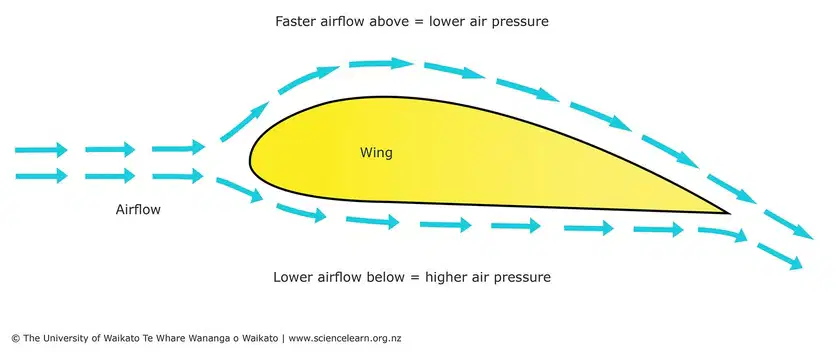
air moves faster over the top of the wing creating....
lift
drag
gravity
thrust
Resistance due to friction with the air. Increases with speed. Reduced by streamlining or aerodynamics.
lift
drag
gravity
thrust
Is the force of the engine pushing or pulling the craft forward.
lift
drag
gravity
thrust
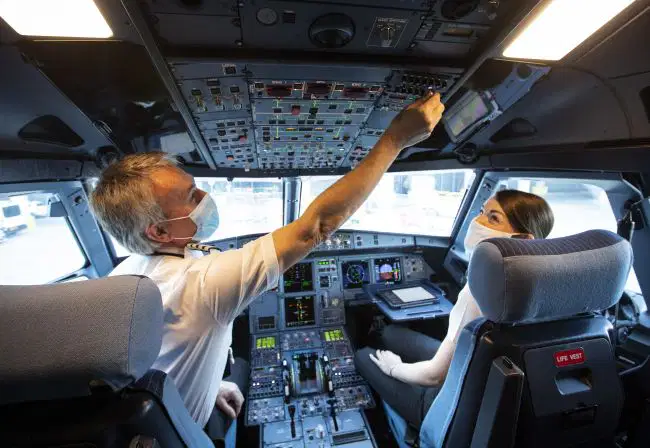
In the early 1900s, few pilots followed safety
...................... when they flew.
inundated
restrictive
exhibition
precautions
What is roll?
motion of an aircraft rocking back and forth
make the best of something
pull something forcefully
the heaviness of a person or thing
What is horizontal?
motion of an aircraft rocking back and forth
rotation of an aircraft around a side-to-side axis or the up and down movement
a way to make a design the most effective it can be
parallel to the horizon
What is a stabilizer?
a fixed wing section that keeps a plane flying straight
rotation of an aircraft around a side-to-side axis or the up and down movement
a horizontal structure on either side of a plane that provides support for an aircraft
parallel to the horizon
What is the nose of an airplane?
a fixed wing section that keeps a plane flying straight
the very front section of the plane
a horizontal structure on either side of a plane that provides support for an aircraft
parallel to the horizon
What is thrust?
the force that moves an aircraft
the very front section of the plane
a horizontal structure on either side of a plane that provides support for an aircraft
the flying or operating of an aircraft
Airfoils attached to each side of the fuselage and are the main lifting surfaces that support the airplane in flight
WINGS
RUDDER
ELEVATOR
TRIM TABS
It usually includes both the engine and the propeller. The primary function of the engine is to provide the power to turn the propeller
UNDERCARRIAGE
POWERPLANT
FUSELAGE
EMPENNAGE
A rectangular area prepared for the landing and take-off of an aircraft is a
TAXIWAY
RUNWAY
APRON
HANGAR
The part of a plane responsible for lift is the ___________
Nose
Wing
Tail
Rudder
Wings produce ______ which is what makes flight possible
Drag
Lift
Thrust
Gravity
Engines provide ______ which moves the aircraft forward.
Lift
Drag
Thrust
Heat
This device measures the height of the airplane.
Attitude indicator
Altimeter
gyroscope
Which part of the plane is responsible for the yaw movement?
ailerons
elevators
rudder

