
 Worksheets
Unit 3 END OF UNIT Review
Total questions: 99
Worksheet time: 3570secs
What is point of view?
a type of figurative language similar to hyperbole
the way a story is going
perspective
from which the
narrator tells a
story
how a story develops to create a strong story structure

What is first person point of view? What pronouns are used?
presents the
story from the
perspective of a
character (I,
me, my)
only the main character in the story has any dialogue in the story
tells the story
from the
perspective of a
narrator outside
the story (he,
she, they)
it's the perspective of the author
What is the third person point of view? What pronouns are used?
there are three main characters in the story
The narrator
knows
everything
about ALL
characters. (They)
the story is told as a soliloquy (I, me, they)
tells the story
from the
perspective of a
narrator outside
the story (he,
she, they
What is a synonym for patronized?
angry or fed up
belittled,
underestimate,
or undervalued
puzzled or confused
small in size, tiny
What is a verb?
a person, place, thing. or idea
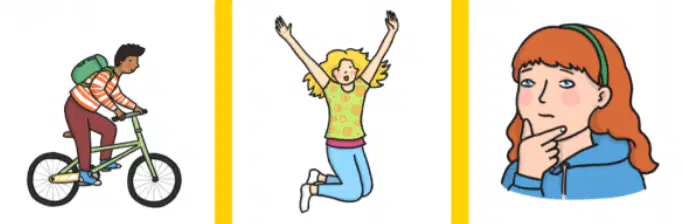
a word that describes an action
a word that describes
an
action or state
of being.
What does verb mood mean?
the verb
mood indicates
the attitude or
intention of the
writer
the verb mood is the style that the writer chose use in writing the piece
verb mood is an exaggeration, similar to a hyperbole
it refers to the questions that the reader generates while reading a piece
When is an interrogative verb mood used?
to make a statement
to show emotion
to ask a question
to exclamatory statement

When is a conditional verb mood used?
to show excitement
to refer to
something that
may or may not
happen and
express
uncertainty
to show that the author is asking a question about a specific topc
to make a vague statement
When is the subjunctive verb mood used?
to make an exclamatory statement filled with anger
to express uncertainty
to ask a question
to express a
wish, hope, or
statement
contrary to fact
OR to express a
request,
demand, or
proposal
Explain the difference between indicative and imperative verb mood.
Indicative is
used to state a
fact or opinion.
Imperative is
used to give a
command.
Actually, they both state a fact.
Indicative and imperative both ask questions.
Indicative is an exclamatory statement and imperative asks a question
What verb mood is the sentence “The land is dry” an example of?
subjunctive
conditional
imperative
indicative
What verb mood is the sentence “Do not leave” an example of?
subjunctive
indicative
imperative
conditional
What verb mood is the sentence “Is Nhamo happy about leaving?” an example of?
interrogative
imperative
indicative
interactive
Define the word retort.
confused
quick, witty, sharp reply
angry and snappy
a sweet dessert
Define the word commendable.
worthy of praise
discouraged
to be unsure
writing a letter that shows how good someone is at a particular skill
Define the term meditating.
to be the go-between in solving problems
engaging in reflection or deep thought, often as a method of relaxation
a line that divides a region
another word for "mediocre" or average

In an argument, the authors makes a claim. This means...
The author finds clear bias in their own opinoin.
The author is unsure about the topic and has many opinions.
The author is stating their position on the topic.
The author is asking a. question about the topic

Which of the following BEST describes the pieces of a STRONG argument?
only a claim with some evidence
claim, reasons, evidence, conclusion
claim, reasons, evidence & analysis of the evidence, and a counter-argument
introduction, body paragraphs, conclusion
a deep feeling of regret or guilt for a past action
(a)
In an _______________, a writer tries to convince readers to take action or think a certain way.
short story
opinion piece
narrative piece
argumentative piece
In an ________________, a writer supports a position using reasoning and emotional appeal.
argumentative piece
realistic fiction piece
opinion piece
narrative story
"Video games are actually good for our minds and bodies."
reason
evidence
claim
counter-argument
"(The BYU study) It found that 90% of gamers-an overwhelming majority-do not suffer any negative mental, social, or behavioral consequences."
claim
reason
evidence
counter-argument
"Anti-gamers will tell you that video games are a waste of time!"
claim
reason
evidence
counter-argument
behavior acquired by frequent repetition
(a)
abnormal physical or mental condition
(a)
hostile or attacking behavior
(a)
presenting a problem or difficulty
(a)
using your own words to restate information in simplier terms while keeping the meaning and order of the text
making connections
paragraphing
paraphrasing
predicting
In an argument, the author should acknowledge any ____________ that disprove their claim.
counter-arguments
words or vocabulary
verb moods
paragraphs
Define buoyant.
duties and responsibilities
cheerful, optimistic
regret or guilt
obligations
related to thinking, reasoning, and remembering
annotate
spatial
visuomotor
cognitive
related to vision and muscular movement
visuomotor
cognitive
counter-argument
spatial
a synonym for "triggers"
spatial
stimulates
meditate
cognitive
The root -vis means:
to visit
to understand
to see
to wonder
A comparison that shows how an unfamiliar thing or idea is similar to a familiar one:
counterclaim
juxtaposition
direct address
analogy
Use of "you" to speak directly to the reader:
juxtaposition
direct address
analogy
first person point of view
Placing of extremely different ideas side by side:
juxtaposition
direct address
analogy
claim
Writers of arguments often use __________ to create emphasis, clarify ideas, or stir emotion.
a table of contents as a first page to their wriring
first person point of view
synonyms
rhetorical devices
This rhetorical device is used to make complex ideas clearer to readers.
analogy
direct address
juxtaposition
This rhetorical device is used to engage readers, making them feel connected to the text and author.
analogy
direct address
juxtaposition
This rhetorical device is used to emphasize comparisons and contrasts.
analogy
direct address
juxtaposition
This is used to give credit to a source.
(a)
We use citations to:
avoid plagiarism and give credit to a source
we need to define a word
we want to show an image or graphic about the topic
my reasons are confusing
We always want our writing to be logical, flow smoothly, be organized. In other words, have
(a)
Numerical data includes:
claim, reasons, and opposing arguments
graphics or images related to the topic
data, percentages, totals, polls,
anecdotes
a short persuasice essay that appears in newspapers and on news sites
editorials
research papers
narrative pieces
informative papers
Which sentence correctly uses a colon?
Remember to bring: the cheese.
Remember: to bring the cheese
Remember to bring our appetizers: cheese, cake, and lettuce.
: - )
Which sentence is correctly capitalized?
Our committee has a meeting with principal Juarez.
our committee has a meeting with Principal Juarez.
Our committee has a meeting with Principal Juarez.
ouR committeE haS a meetinG with Principal juareZ.
In general, the job of a colon ( : ) is to...
separate dependent and independent clauses
connect ideas
introduce items
act as a gerund
In general, the job of a semicolon ( ; ) is...
to connect ideas
to introduce
to make "winking" eyes
to act as a verb tense
A fantasy story that often employs elements of magic and features characters from folklore.
modern retelling
narrative story
argument piece
traditional fairy tale
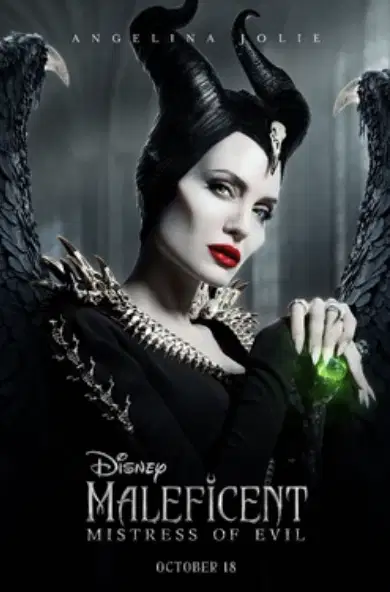
an updated version of a well-known story, such as a fairy tale
editorial
modern retelling
realistic fiction
traditional fairy tale
a word you can use in place of a noun (I, me, we, us, her, they, him, etc.)
(a)
refers to the person speaking (first person), the person spoken to (second person), or the person, place, thing, spoken about (third person)
direct quote
gerund
possessive pronoun
personal pronoun

shows ownership; includes: my, mine, your, yours, his, her,hers, its, ours, their, theirs, etc.
reflexive pronouns
possessive pronouns
juxtaspostion
direct address
is used when a person or think acts upon itself; includes: himself, herself, yourself, itself, ourselves, etc.
personal pronoun
reflexive pronoun
direct address
verb

plots that follow a direct time-order sequence
direct address
linear plot
chronological timeline
non-linear plot
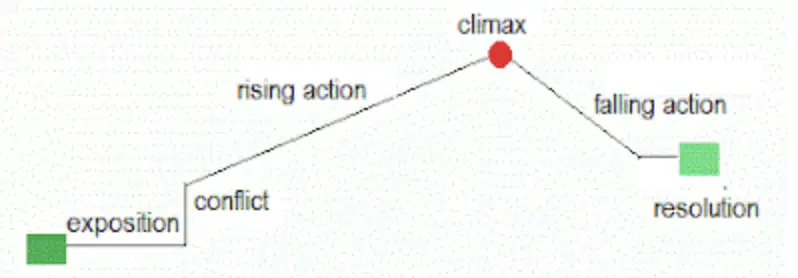
conflicts develop in a clear path or rising action, climax, and complete resolution
linear plot
non-sequential story telling
non-linear plot
flashback
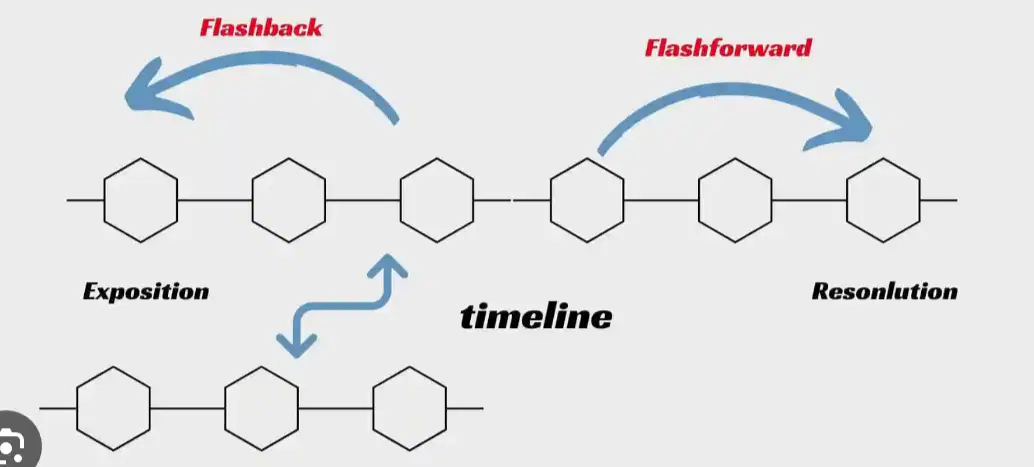
plots that shift in time
archetype
timeline
linear plot
non-linear plot

a scene that interrupts a story's present action to show a moment from the past
(a)

What is the best meaning of affluent?
exhausted
wealthy
sad and bothered
grateful
a fantasy story that often employs elements of magic and features characters from folklore
historical fiction
realistic fiction
traditional fairy tale
modern retelling
an updated version of a well-known story
modern retelling
traditional fairy tale
historical fiction
fantasy
In a _________ plot development, conflicts develop in a clear path that includes rising action, climax, and complete resolution.
realistic fiction story
anti-climatic
non-linear
linear
Non-linear plot development often includes:
flashbacks and no climax
flashbacks or foreshadowing
foreshadowing every single time
no major plot changes
This term means "in the middle of things" (include spaces between words)
(a)
Pronouns such as: I, me, you, he, him, she, her, they, them
possessive pronouns
...are actually verbs
reflexive pronouns
personal pronouns
Choose the best word: lacking movement, action, or change
fluctuate
unwavering
active
static
events happen that directly contradict (or are the opposite of) what readers expect to happen
linear plot
situational irony
hyperbole
static
engages the feelings of an audience rather than their sense of logic or reason
logos
hyperbole
arguments
emotional appeals
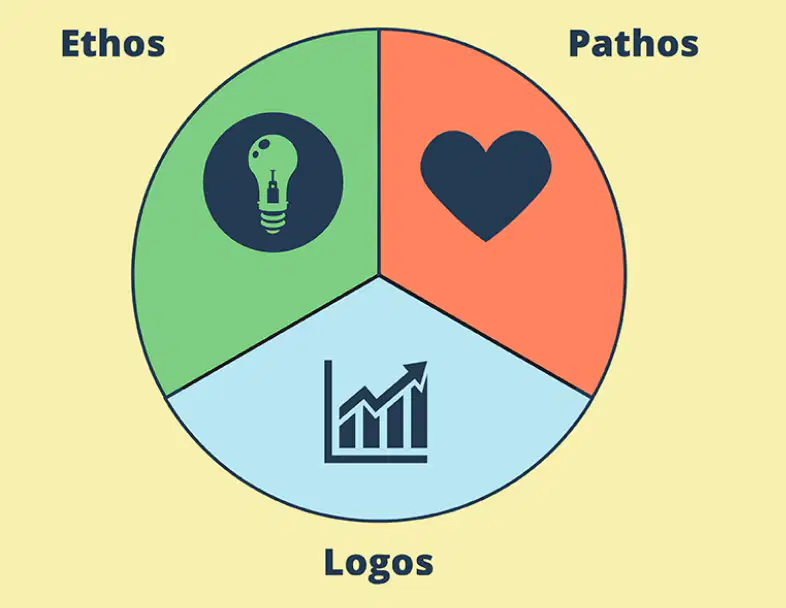
appeals to emotion (ethos, pathos, logos)
(a)
appeals to reason (ethos, pathos, logos)
(a)
appeals to authority (ethos, pathos, logos)
(a)
the use of a similar grammatical form or pattern to express similar ideas
parallelism
hyperbole
persuasive techniques
allusion
Which rhetorical device is used to create a vivid image in the reader's mind by comparing two unlike things?
metaphor
direct address
juxtaposition
analogy
What is the primary purpose of using a counter-argument in an essay?
to strengthen the author's claim by addressing opposing views
to confuse the reader
to introduce new evidence
to summarize the main points

Which of the following is an example of a first-person narrative?
The story is told using 'he' and 'she' to describe the characters.
The story is told using 'I' and 'me' to describe the narrator's experiences.
The story is told from the perspective of an all-knowing narrator.
The story is told from the perspective of a character who is not the protagonist.

What is the purpose of a thesis statement in an argumentative essay?
to list the sources used in the essay
to state the author's main argument or position
to provide a summary of the essay
to introduce the main topic of the essay

Which of the following is an example of a rhetorical question?
Isn't it obvious?
What are the colors that make the sky blue?
How do you solve this problem?
What time is it?

What are the stages of linear plot development?
exposition (beginning) , rising action, climax, falling action, resolution
introduction, conflict, climax, falling action, conclusion
exposition (beginning), rising action, climax, falling action, conclusion
resolution, rising action, climax, falling action, exposition

This plot consist of a series of events that have a clear beginning, middle and end.
Linear
Nonlinear
Chronological
Non-Chronological

This literary device in which a writer gives an advance hint of what is to come later in the story is known as...
Flashback
Foreshadowing
Suspense
Sub Plot

If flashback occurs after the story begins, it disrupts the chronological events of the story, which creates a ____________ plot.
Linear
Non-linear
Chronological
Which verb mood is used to express a wish or hypothetical situation?
imperative
subjunctive
indicative
conditional
What is the term for a plot that jumps back and forth in time?
static plot
chronological timeline
linear plot
non-linear plot
Which pronoun would you use to show ownership for something belonging to them?
theirs
mine
ours
hers
Which sentence is written in the imperative mood?
She will visit the museum tomorrow.
Please close the door.
If I were you, I would study harder.
He is reading a book.
What is the purpose of using a counter-argument in persuasive writing?
To present only one side of an issue
To provide background information
To summarize the main idea
To address and refute opposing viewpoints
Which word is most similar in meaning to elated?
disappointed
confused
joyful
tired
Which of the following sentences uses a semicolon correctly?
I went to the store; I bought some apples.
I went to the store, I bought some apples.
I went to the store: I bought some apples.
I went to the store and; I bought some apples.
What is the main purpose of paraphrasing in academic writing?
To copy the author's words exactly
To restate information in your own words
To summarize the entire text
To add new information
Which literary device involves a reference to a well-known person, place, event, or work of art?
Allusion
Irony
Foreshadowing
Flashback
The store manager always closes the store, sets the alarm, and
makes sure to lock the door.
locking the door.
locks the door.
lock the door.
Parallel Structure or Parallelism is...
joins two complete sentences together
a repeated grammatical pattern
how you write the Declaration of Independence
when two things happen at the same time
Choose the correct sentence that follows a parallel structure:
Michael likes to travel, to swim and painting.
Michael likes traveling, swimming and to paint.
Michael likes traveling, swimming, and painting.
Fill in the blank: The concept of parallelism in writing involves the use of ______ structures.
Different
Similar
Opposite
Complex
Identify the parallel structure in the following sentence: 'She likes to swim, to run, and to bike.'
She likes
to swim, to run, and to bike
likes to
swim, run, bike.
Rewrite the following sentence using parallel structure: I like swimming, to run, and reading.
I like swimming, to run, and to read.
I like to swim, running, and reading.
I like swimming, run, and to read.
I like swimming, running, and reading.

