
 Worksheets
ASBDJ
Total questions: 96
Worksheet time: 53mins
What is an Computer Functions ?
gathers data, allows users to input data.
Input, Output, Process, Storage.
What is a computer Output ?
displays data and information for user.
Input, Output, Process, Storage.
representation of fact, figure, or idea.
What is a Input ?
gathers data, allows users to input data.
displays data and information for user.
Examples of Input Devices
CPU, ROM, RAM and cache, Slots for expansion cards
monitors, printers, speakers and earphones
keyboard, mouse, microphone, stylus, scanner, camera
Algorithm
Pulling out specific differences to make one solution work for multiple problems.
A list of steps to finish a task. A set of instructions that can be performed with or without a computer. For example, the collection of steps to make a peanut butter and jelly sandwich is an algorithm.
Mental processes and strategies that include: decomposition, pattern matching, abstraction, algorithms (decomposing problems into smaller, more manageable problems, finding repeating patterns, abstracting specific differences to make one solution work for multiple problems, and creating step-by-step algorithms).
DEFINE: Command
An instruction for the computer. Many commands put together makeup algorithms and computer programs.
A way of representing information using only two options.
DEFINE: Computational Thinking
Mental processes and strategies that include: decomposition, pattern matching, abstraction, algorithms (decomposing problems into smaller, more manageable problems, finding repeating patterns, abstracting specific differences to make one solution work for multiple problems, and creating step-by-step algorithms).
A list of steps to finish a task. A set of instructions that can be performed with or without a computer. For example, the collection of steps to make a peanut butter and jelly sandwich is an algorithm.
DEFINE: Computer Science
Computer science is the study of processes that interact with data and that can be represented as data in the form of programs. It enables the use of algorithms to manipulate, store, and communicate digital information.
A way of representing information using only two options.
The visual programming language used in Code.org's online learning system for K-5 students.
the study of the principles and use of computers.
The smallest unit of information is ?
a byte (Pronounced: bite)
a bit
a nibble
a block
Fortran
Which programming language is most commonly used for complex scientific programming?
BASIC
Cobol
Fortran
R-P-G
Some programs allow the computer's video display to be divided into separate areas in order to look at more than one item or portions of an item simultaneously. These are called?
disks
windows
fonts
directories
The smallest visual element on a video monitor is called what?
Character
Pixel
Byte
Kwerk
DEFINE: Central Processing Unit (CPU)
Software used to control the computer and its peripheral equipment.
Brain of the computer that performs instructions defined by software
Groupings of 1's and 0's that makes information that a computer can understand.
Something anyone can operate
DEFINE: Binary Code
Any type of computer network that is not connected by cables of any kind.
Read Only Memory- Permanent instructions that cannot be changed. It makes the BIOS function. Checks your OS.
Groupings of 1's and 0's that makes information that a computer can understand.
DEFINE: Wireless Network
Any type of computer network that is not connected by cables of any kind.
The Network allows computers to connect and communicate with different computers via any medium. LAN, MAN and WAN are the three major types of the network designed to ... A Communication medium used for LAN has twisted pair cables and coaxial
Software used to control the computer and its peripheral equipment.
device used to insert data into a computer or other device (ex: keyboard, mouse, microphone, scanner, voice recognition)

What do we call this?
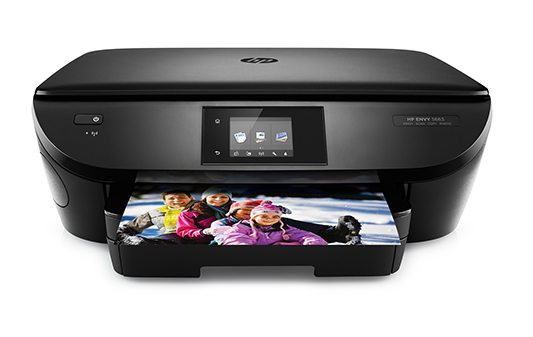
What do we call this?

What do we call this?

What do we call this?

What do we call this?


This man sets correctly on the computer?
True
False
What is Computer Science?
Running Races
Using computers to solve problems
typing on my keyboard
Singing Songs

What is a Computer?
An electronic device for storing and processing data, typically in binary form, according to instructions given to it in a variable program
A movable indicator on a computer screen identifying the point that will be affected by input from the user, for example, showing where the typed text will be inserted
A part of a computer system or network which is designed to block unauthorized access while permitting outward communication
A hand-held pointing device that detects two-dimensional motion relative to a surface

What is this usually the sign for?
Coaxial Connection
Wired Connection
Wi-Fi Connection
BluTooth Connection
The computer can work without the CPU
True
False
I LOOK LIKE A TV, WHO AM I?
KEYBOARD
MONITOR
MOUSE
CPU
__________ is regarded as the " Father of Computer"
Charles Babbage
Charles Cabbage
Charles Voyage

Game Systems, Tablets, Cell Phones, and laptops are examples of computers
True
False
What is an electronic device that manipulates information, or data. It has the ability to store, retrieve, and process data.
Central Process Unit
Computer
Web browser
Covers a small geographical area on a single site
LAN
PAN
WAN
SAN
The biggest WAN
Internet
Intranet
Extranet
PAN is known asa
public network
home network
bluetooth network
personal network
Networks require lots of hardware...
False
True
Radiowaves to transmit data
Wired
Wireless
Local
Wide
Connected to a central switch or server
Mesh
Star
Bus
Ring
use a single backbone cable
Mesh
Star
Bus
Ring
What is a protocol?
The law of computers
set of rules for how devices to communicate
set of ideas of communication
processes to which devices must obey
Which model has 4 layers?
UCP/UP
TCP/IP
CS/IP
UDP/IP
passes data over the physical network
transport layer
internet layer
link layer
application layer
directing them between devices
transport layer
internet layer
link layer
application layer
providing networking services to applications
transport layer
internet layer
link layer
application layer
encrypts all information sent and received
HTTP
FTP
HTTPS
SMTP
retreieve emails from server
HTTP
FTP
SMTP
IMAP
Responsible for packet switching
TCP
UDP
IP
FTP
What does LAN stand for?
Local Area Network
Long Area Network
Limited Area Network
Look, A Numpty
What does WAN stand for?
Wide Area Network
Wireless Aerial Network
Wireless Access Network
We Ate Nothing
What does PAN stand for?
Personal Area Network
Private Access Network
Primary Access Network
Peculiar American Nobility
Reginald is hosting a party with his cadre of amusement partners. Archibald suggests that they all play video games together, but on separate machines. "Good lord, man," says Reginald, "Are you insane? That would require us to construct a ...."
LAN
WAN
PAN
Global empire through the repeated subjugation and usurpation of native cultures using excessive military force
which of the following describes a PAN? Tick all that apply.
Alice enjoys listening to podcasts on her phone. She listens through bluetooth headphones and selects the chapters on her smartwatch
Lil' Timmy works from home on his laptop which is connected wirelessly to his internet router. He syncs his mobile phone from the internet connection via his laptop
Patricia works from home on her laptop which is connected to the internet via a tethered connection with her mobile phone
Jamiroquai does not work at home. He doesn't even work. He just wears outlandish hats, some of which have flashing lights on.
Which of the following are true of WANS (select all which apply)
Can have nodes in separate countries
All the hardware is owned by the company
They are more secure than linking networks over the Internet
Generally faster than LANS
Which of the following are true of LANS?
Nodes must be connected using physical cables
Usually very fast
Can include machines in separate buildings
Must have a server
Covers a small geographical area on a single site
LAN
PAN
WAN
SAN
Uses radiowaves to transmit data
Wired
Wireless
Local
Wide
Which of the following network types is made up of nodes connected to a central switch or hub
Mesh
Star
Bus
Ring
What is a protocol?
The law of computers
set of rules for how devices to communicate
set of ideas of communication
processes to which devices must obey

Which is the right order for network layers
Application Link Transport Network
Application Transport Link Network
Application Transport Network Link
Transport Link Network Application

Which topology is this a picture of
Star
Bus
Mesh
Ring

Which is more secure?
wireless networks
wired networks

Which protocol is used for sending emails?
POP
IMAP
SMTP
FTP
WLAN stands for
Wide Long Area Network
Wide Local Area Network
Wireless Local Area Network
Wide Legal Area Nework
What is data representation?
Method or format used to encode and store data in a computer system.
A type of computer programming language
The process of analyzing data
A type of computer virus
What does RAM stand for?
Random Access Module
Read Access Memory
Random Access Machine
Random Access Memory
What is the difference between SRAM and DRAM?
SRAM and DRAM have the same construction and functionality.
SRAM is cheaper and more compact than DRAM.
DRAM is faster and more reliable than SRAM.
The main difference between SRAM and DRAM is in their construction and functionality. SRAM uses flip-flops to store each bit of data, which makes it faster and more reliable but also more expensive and consumes more power. On the other hand, DRAM uses capacitors to store each bit of data, which makes it cheaper and more compact but also slower and less reliable.
What is secondary storage?
Temporary storage devices used for short-term data storage.
Volatile storage devices used for long-term data storage.
Non-volatile storage devices used for long-term data storage.
Non-volatile storage devices used for short-term data storage.
How is data represented in binary?
Using colors
Using symbols
Using 0s and 1s
Using letters and numbers
What are the advantages of SRAM over DRAM?
SRAM is faster, does not require refreshing, consumes less power, has lower latency, and higher bandwidth compared to DRAM.
SRAM is slower, requires refreshing, consumes more power, has higher latency, and lower bandwidth compared to DRAM.
SRAM and DRAM have the same speed, power consumption, latency, and bandwidth.
SRAM and DRAM have no differences in terms of speed, power consumption, latency, and bandwidth.
What are the disadvantages of DRAM?
What are some examples of secondary storage devices?
hard disk drives (HDD), solid-state drives (SSD), optical drives (CD/DVD), USB flash drives, and external hard drives
RAM, CPU, GPU
Keyboard, Mouse, Monitor
Printer, Scanner, Projector
What is the purpose of cache memory?
The purpose of cache memory is to improve the performance of the computer system.
The purpose of cache memory is to protect the computer system from viruses.
The purpose of cache memory is to increase the storage capacity of the computer system.
The purpose of cache memory is to store temporary data.
What is the difference between volatile and non-volatile memory?
Volatile memory does not require power to retain data, while non-volatile memory requires power.
Volatile memory can retain data without power, while non-volatile memory requires power.
Volatile memory and non-volatile memory are the same and can both retain data without power.
Volatile memory requires power to retain data, while non-volatile memory can retain data without power.
Which of the following is NOT a pointing input device?
Mouse
Light Pen
Bar code reader
Touch Screen
A device that inputs moving images into a computer which is mainly used for video conferencing.
Digital camera
Video camera
Web cam
Film camera
Choose the devices needed in a POS.
Keyboard
Monitor
Printer
Chip and pin reader
It is often used in presentations and in multimedia applications.
printer
projector
speaker
plotter
Device which reads or measures physical properties from the surroundings.
monitor
screen
sensors
printer

Actuators are used for tasks such as:
controlling robotic arm
spinning a fan
pumping water
controlling flight control surfaces
What is B in denary
10
11
12
13
What is 0111 in hex
E
A
7
3
What is D in binary
1111
1101
1011
0111

