
 Worksheets
Unit 2 Test Review
Total questions: 91
Worksheet time: 1hrs 24mins
A protein is a macromolecule that is used to...
give cells/systems energy.
build cell parts.
give cells/systems long term energy storage.
help cells with chemical processes.
A carbohydrate is a macromolecule that is used to...
give cells/systems energy.
build cell parts.
give cells/systems long term energy storage.
help cells with chemical processes.


What is the function of the cell membrane?
To control what comes in and out of the cell
To break down food inside the cell
to not let any material in and out of the cell
to eat the cells food

Which organelle produces the energy a cell needs to carry out its function
Mitochondria
Golgi Bodies
Cytoplasm
Nucleus

What is the function of the Vacuoles
Store food, water, and sometimes waste
Receive proteins
Assembles amino acids
Found inside the nucleus

Which cell contains Chloroplasts?
Animal
Plant

What means of cellular transport requires energy?


What are the two types of cell transport?
Passive and Active
Active and Facilitated
Passive and Facilitated
None of the above

Which describes a hypotonic environment?
Too much water in the cell will cause the cell to burst - the percentage of water is higher outside the cell than inside the cell
Too little water in the cell will cause the cell to shrink - the percentage of water is lower outside the cell than inside the cell
Concentrations of water are equal inside and outside the cell

Which describes a hypertonic environment?
Too much water in the cell will cause the cell to burst - the percentage of water is higher outside the cell than inside the cell
Too little water in the cell will cause the cell to shrink - the percentage of water is lower outside the cell than inside the cell
Concentrations of water are equal inside and outside the cell

Which describes an isotonic environment?
Too much water in the cell will cause the cell to burst - the percentage of water is higher outside the cell than inside the cell
Too little water in the cell will cause the cell to shrink - the percentage of water is lower outside the cell than inside the cell
Concentrations of water are equal inside and outside the cell
Match the following organelles to their function.
Nucleus
Stores DNA (genetic information)
Mitochondria
makes cellular energy
Vacuole
stores food, water and
waste
Cell Membrane
Surrounds and protects
the cell
Golgi Apparatus
collects, modifies,
stores and delivers molecules
in the cell
Match the following organelles to their function.
Ribosome
makes proteins according to
DNA instructions
Chloroplast
uses energy from the sun
to make food through photosynthesis
Lysosomes
clean the cell
Endoplasmic Reticulum
produce and transport lipids
and proteins
Cell Wall
rigid, protective barrier (maintains plant cell
shape)

Which number in the picture represents the enzyme?
1
2
3
4
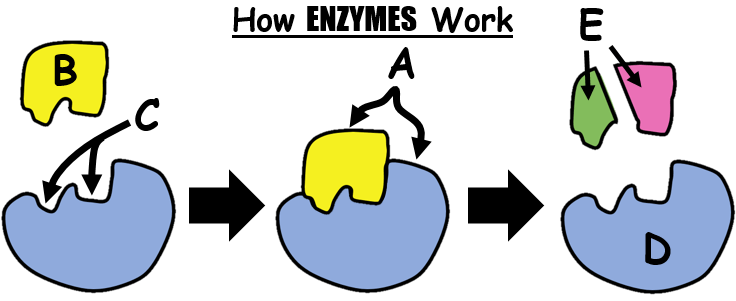
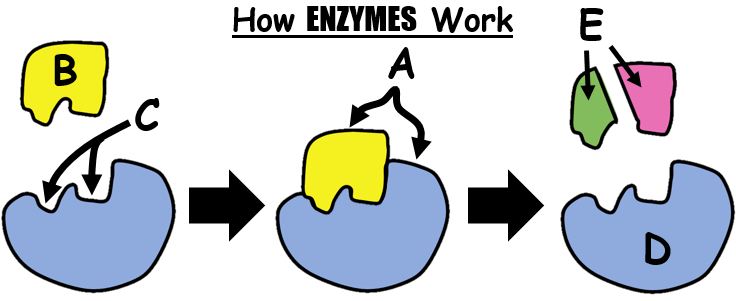
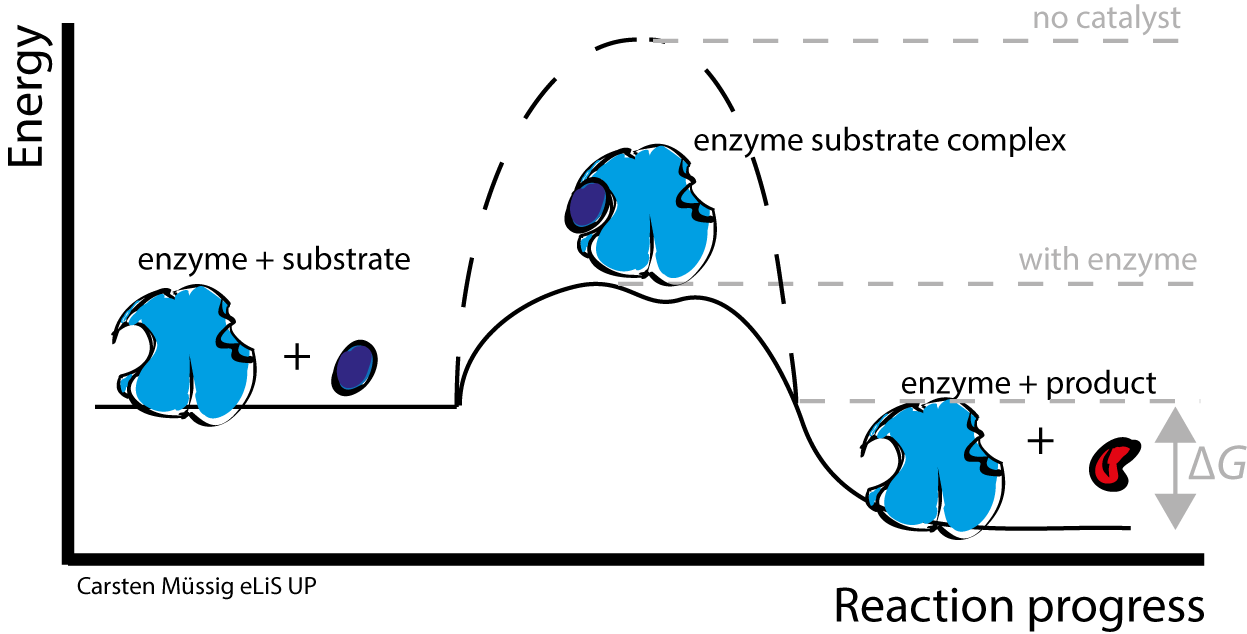
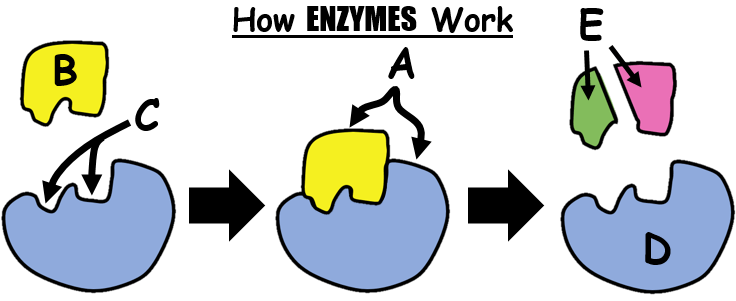
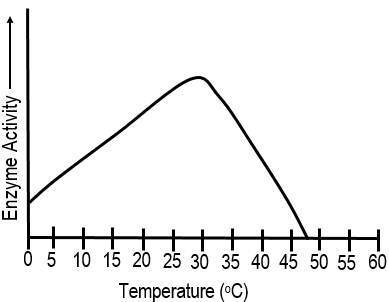

The enzyme amylase (green line) will work best at what pH?
pH 2
pH 7
pH 9
pH 5

Identify the structure in the diagram.
Phospholipid
Cholesterol
Triglyceride
Carbohydrate
Which part of the phospholipid is the hydrophobic portion (repels water)?
Glycerol
Fatty acids
Water
Glycogen
Drag and label the parts of the phospholipid bilayer.
hydrophilic
hydrophobic

Determine the tonicity


Organize these options into the right categories
Determine the Tonicity
(Each has 1 picture answer and 3 discrilptions)


Cells are in an environment in which solute concentration is high
Cells are in an environment in which solute concentration is low
Cells are in an environment in which solute concentration is the same inside/outside the cell
Water diffuses out of the cell
Water diffuses into the cell
Water diffuses into and out of the cell
Cell shrink / shrivel
Cell swell and can burst (lyse)
Cell is at normal functional size

What type of solution is this healthy looking red blood cell in?
Isotonic
Hypertonic
Hypotonic

Match the following

Hypertonic

Hypotonic

Isotonic

Osmosis

Diffusion
An autotroph can:
Make its own food
Make its own water
Make its own oxygen
Make its own carbon
Where does photosynthesis occur?
In the mitochondria
In the chloroplast of animal cells
In the chloroplast of plant cells
In the mitochondria of plant cells
What type of energy conversion occurs in photosynthesis?
Light from the sun to chemical in glucose
Chemical in glucose to chemical in ATP
Which of the following equations represents the overall chemical reaction for photosynthesis?
6O2+ 6H2O → C6H12O6+ 6O2
C6H12O6 + 6H2O→ 6O2+ 6O2
6CO2+ 6H2O→ C6H12O6+ 6O2
6O2 + 6H2O→ C6H12O6 + 6CO2
Which of the following are the products of photosynthesis?
Glucose
Oxygen
Carbon Dioxide
Water
Where do plants get the energy to store in the bonds of glucose?
The Soil
The Sun
Water
Carbon Dioxide
Where does the light dependant reaction take place?
What are the reactants (what is needed) of the light-dependent reaction of photosynthesis?
What are the products of the light-dependent reaction of photosynthesis?
ATP and NADPH (high energy molecules)
(oxygen as waste)
ADP is converted into what during the light-dependant reaction, and NADP+ is converted into what?
What is the primary goal of the light-dependent reaction of photosynthesis?
To convert light energy into chemical energy (high energy molecules)
How is the light-independent reaction different from the light dependent reaction?
What is the product of the light-independent reactions?
Label the process of photosynthesis
Glucose (sugars)
Light
H20
O2
CO2
Organize these options into the right categories
Determine the following as a light-dependent reaction or light-independent reaction.
Occurs in Thylakoid
Occurs in Stroma
Requires light
Does not require light
Reactants: Water + Light / Products: Oxygen + NADPH + ATP
Reactants: CO2 + NADPH + ATP / Products: Sugars (Glucose)


What is the purpose of cellular respiration?
Cellular energy
Oxygen
Sugar
Protein
What is the sugar that carbohydrates are broken down into?
sucrose
maltose
glucose
lactose
What is the correct equation for cellular respiration?
6O2 + C6H12O6 -> 6CO2 + 6H2O + Energy
6O2 + C6H12O6 + Energy -> 6CO2 + 6H2O
6CO2 + 6H2O -> 6O2 + C6H12O6 + Energy
6CO2 + 6H2O + Energy -> 6O2 + C6H12O6
Which statement is true regarding cellular respiration?
The reactants of cellular respiration are identical to the reactants of photosynthesis.
The reactants of cellular respiration are obtained from the products of photosynthesis.
The products of cellular respiration are the same as the products of photosynthesis.
Cellular respiration only occurs in autotrophs, while photosynthesis only occurs in heterotrophs.
What is the correct equation for cellular respiration?
Oxygen + Sugar -> Carbon Dioxide + Water + Energy
Carbon Dioxide + Sugar + Energy -> Carbon Dioxide + Water
Carbon Dioxide + Water -> Oxygen + Sugar + Energy
Carbon Dioxide + Water + Energy -> Oxygen + Sugar

The following diagram shows the relationship between photosynthesis and respiration. What products of photosynthesis are the starting materials for cellular respiration?
glucose and oxygen
heat energy and ATP
carbon dioxide and water
light energy and chlorophyll
Along with 2 net ATP, what is produced during glycolysis?
6CO2
6O2
C6H12O6
2 pyruvate (pyruvic acid)

What 3 things do plants need for the process of photosynthesis?
Sunlight, oxygen, and sugar.
Water, soil, and oxygen.
Sunlight, carbon dioxide, and water.
Sunlight, soil, and water.
Photosynthesis occurs in:
Mitochondria
Chloroplasts
Humans
Animals
The two main stages of photosynthesis are the
light reactions and respiration
dark reactions and the Calvin cycle
light reactions and the Calvin cycle
dark reactions and fermentation
What is another name for producers?
heterotrophs
autotrophs
What is the difference between food chains and food webs?
Food chains show a single energy pathways, while food webs show several energy pathways
Food web show multiple energy pathways, while food chains show only one energy pathway
How much energy do you think is passed to the consumer when they eat food?
100%
90%
75%
10%
How is the majority of energy lost between each trophic level?
heat
sleeping
no energy is lost
How much energy is lost from trophic level to trophic level?
100%
90%
75%
10%

