
 Worksheets
U3/CH2 Ancient China
Total questions: 47
Worksheet time: 26mins
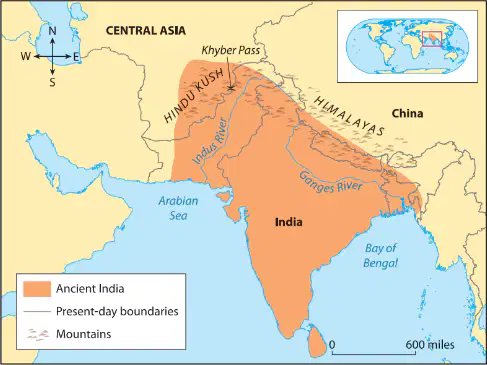
What geological feature separates China from India?
Andes
Rockies
Himalayas
Alps
In ancient India, the earliest civilization in China arose in a river valley, around which river?
Nile
Amazon
Huang He
Mississippi
What do silkworms eat before they build cocoons?
Grass
Mulberry leaves
Bamboo
Oak leaves
What material is made from the thread spun by silkworms?
Cotton
Wool
Silk
Linen
Who is the Xia ruler known for controlling the Huang He floods?
Yu the Great
Qin Shi Huang
Genghis Khan
Kublai Khan
What dynasty followed the Shang dynasty and ruled for eight hundred years?
Han dynasty
Zhou dynasty
Qin dynasty
Tang dynasty
What system did the Zhou develop to divide their lands?
Democratic system
Feudal system
Monarchical system
Tribal system
Who was Confucianism named after?
Laozi
Sun Tzu
Kong Qiu
Mencius
What is the core idea of Daoism?
The world works according to a natural order
The world is chaotic and unpredictable
The world is controlled by human actions
The world is governed by strict rules
In ancient China, who had the privilege of trying to learn the future?
The emperor
The king
The general
The philosopher
True or False...China's terrain includes mountains, deserts, plateaus, and plains.
True
False
Daoism was different from Buddhism and Confucianism in that it was also concerned with people's relation to..
nature
government
suffering
morality
Daoism and Confucianism
agreed on the importance of education.
disagreed on the need for personal reflection.
taught that active political involvement was essential to a stable society.
agreed on how to address the turmoil after the fall of the Zhou dynasty.
based their teachings on Chinese traditions.

Suppose four Chinese emperors are in the same dynasty. Which statement must be true about them?
They were born in the same region
They are members of the same family
They belong to the same political party
They use the same style of government
Filial piety is a major feature of which system of thought influential in China?
Confucianism
Daoism
Legalism
Buddhism
Which was the first dynasty in Ancient China?
Shang
Zhou
Han
Confucius
Some of the early chinese writing was discovered on
mud bricks
papyrus
cattle and sheep bones
stone
Which new dynasty defeated the Shang?
Hyksos
Zhou
Han
Confucius
What is the Mandate of Heaven?
A belief that when everyone dies they must go to heaven.
That government may rule as long as they rule fairly.
That everyone must have a priest read their oracle bones.
An idea that many gods and goddesses will help their people get to heaven.
The period that lasted from about 475 B.C. to 221 B.C., which was caused by many local rulers going to war with each other was called the
Warring States Period
Shang and Zhou Battle
China's Classic Age
Dynasty Age
China's most famous scholar whose teachings about government changed China forever was
Lay Zie
Confucius
Xian
Huang He
What was the important river delta to the ancient chinese?
Inus River
Huang He
Euphrates River
Nile River
What was it called when the people believed that the emperor of China was given the right to rule by the gods?
Manifest Destiny
Rule of the gods
Emperor`s Blessing
Mandate of Heaven
Ordained Rule
Which dynasty is considered to have been the first dynasty of Ancient China?
Ming
Song
Yuan
Xia
Tang
Which of the following is true about the Zhou dynasty?
It was the longest running dynasty.
It used the Mandate of Heaven to secure its rule.
The land was ruled by feudal lords who were relatives of the Zhou family.
All of the above
None of the above
Which advancements helped the government of the Zhou and Qin dynasties solve problems that they experienced? Select the two correct answers.
development of paper
invention of the wheel
construction of canals
use of forms of money
discovery of gunpowder

Use the map to answer the question: What physical feature separates China and India?
Himalayas
Hindu Kush
Gobi Desert
Indian Ocean

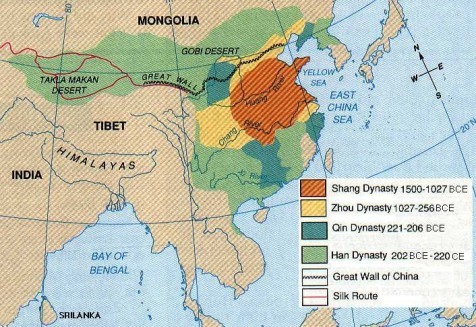
Use the map to answer the question: Where did the first Chinese civilizations emerge?
in western China
near the Huang He
on the Tibetan Plateau
along the Pacific Coast
Which textile was most important to the economy of ancient China?
silk
flax
wool
cotton
Which recurring natural disaster shaped the lives of ancient Chinese people up through the Xia dynasty?
earthquakes
monsoons
typhoons
floods
Which concept was introduced by the rulers of the Zhou dynasty?
Daoism
filial piety
Confucianism
mandate of heaven
How was Zhou society organized?
by a feudal system
by castes
by wealth
by clans
What role did Confucius play in ancient China?
warlord
emperor
philosopher
religious leader
Which ideas were supported by the value of filial piety? Select the two correct answers.
Dao keeps the world in balance.
A country’s rulers should be respected.
Children owe a deep respect to their parents.
The supreme power of the universe can give and take away the right to rule.
Society should be organized based on social status, wealth, occupation, and family connections.
What is the core idea of Daoism?
The family is the basic unit of society.
The purpose of life is service to others.
Rulers have a duty to care for their people.
The world works according to a natural order.
Which phrase best describes how oracle bones were used in ancient China?
to show respect for a parent
to express feelings through art
to support the authority of a leader
to seek knowledge through a ceremony
Which advancements helped the government of the Zhou and Qin dynasties solve problems that they experienced? Select the two correct answers.
development of paper
invention of the wheel
construction of canals
use of forms of money
discovery of gunpowder
Use the quotation to answer the question. “Learning without thought is labor lost; thought without learning is perilous.” —The Analects of Confucius, Book II, Chapter XV Which statement best summarizes this quotation?
You should think before you speak.
Knowing facts is better than having an opinion.
It is important to think deeply about what you have learned.
Knowledge is a powerful tool as long as you know what do to with it.
Which dynasty was the longest lasting?
Xia
Shang
Zhou
Qin
The political influence dynasties had was based on
The first known dynasty in ancient China was the Xia Dynasty.
True
False
Which dynasty made laws and taxes uniform and standardized weights & measurements?
Han
Qin
Shang
Zhou

