wayground logo

Free Printable Worksheets

Font size

S
M
L
XL
Worksheets

Space Unit; Exam

Total questions: 85

Worksheet time: 1hrs 4mins

Name
Class
Date
1.

What is a constellation?

a)

A group of patterns that form a star

b)

A group of stars that form a pattern

c)

Fine Italian cuisine

d)

A star

2.
Who founded constellations?
a)
Chinese
b)
Europeans
c)
Ancient Greeks
d)
Americans
3.
A constellation is a group of visible ____ that form a pattern when viewed from Earth.  
a)
planets
b)
stars
c)
patterns
d)
creatures
4.

The Big Dipper

a)
b)
c)
d)
5.
People in the Northern Hemisphere do see the same constellations as the people in the Southern Hemisphere.
a)
True
b)
False
6.
Constellations may be only visible during certain seasons due to the Earth’s orbit around the____.  
a)
Earth
b)
Mars
c)
Planets
d)
sun
7.
What are the three important constellations?
 
a)
Ursa Major, Ursa Minor, Orion  
b)
Ursa Major, Big Dipper, Orion  
c)
Ursa big, Ursa small, Orion 
d)
Polaris, Ursa Minor, Orion  
8.
The constellation Orion is named because it resembles
a)
part man, part horse
b)
a great bear
c)
a great hunter
d)
a plow
9.
Ursa Major is also called “Great Bear” and is one of the largest constellations.  
a)
True
b)
False
10.
Ursa Minor means “Little Bear” in Latin and is commonly known as the Big Dipper.
a)
True
b)
False
11.
Our sun is a _____ star
a)
blue
b)
orange 
c)
yellow
d)
red
12.
Polaris always points
a)
East 
b)
West
c)
North
d)
South
13.
What is the name of the largest stars?
a)
Protostars
b)
Supergiants
c)
Red Giants
d)
Dwarf Stars
14.

How many constellations are there officially?

a)

12

b)

72

c)

88

d)

1

15.

Stars like the sun appear to move across the sky due to Earth _________________ on it's axis

a)

Revolving

b)

Wobbling

c)

Rotating

d)

Jumping

16.
The constellation pattern may take the shape of an ___, ___, ____, ___, or object such as a crown or compass.
a)
planets, stars, animals, people
b)
stars, animals, people, man
c)
man, animals, stars, planets
d)
animal, mythological creature, man, woman, 
17.
The stars in a constellation appear to be close to each other in the shape, but may be ______  in space.
a)
very close
b)
some are close
c)
great distances apart
d)
some are great distances apart
18.
Orion is visible during the winter night sky and is one of the most recognizable constellations – it contains some of the____stars that we can see and is named for the hunter from Greek mythology.
a)
biggest
b)
brightest
c)
smallest
d)
darkest
19.

The constellation pattern may take the shape of a(n) _____

a)

animal

b)

man

c)

woman

d)

all of these

20.

Polaris always points _____

a)

north

b)

south

c)

east

d)

west

21.

If you live in the Northern Hemisphere, at what time of year can you see Polaris, the north star? Choose the best answer.

a)

The Winter

b)

The spring and fall

c)

The summer

d)

All year round

22.

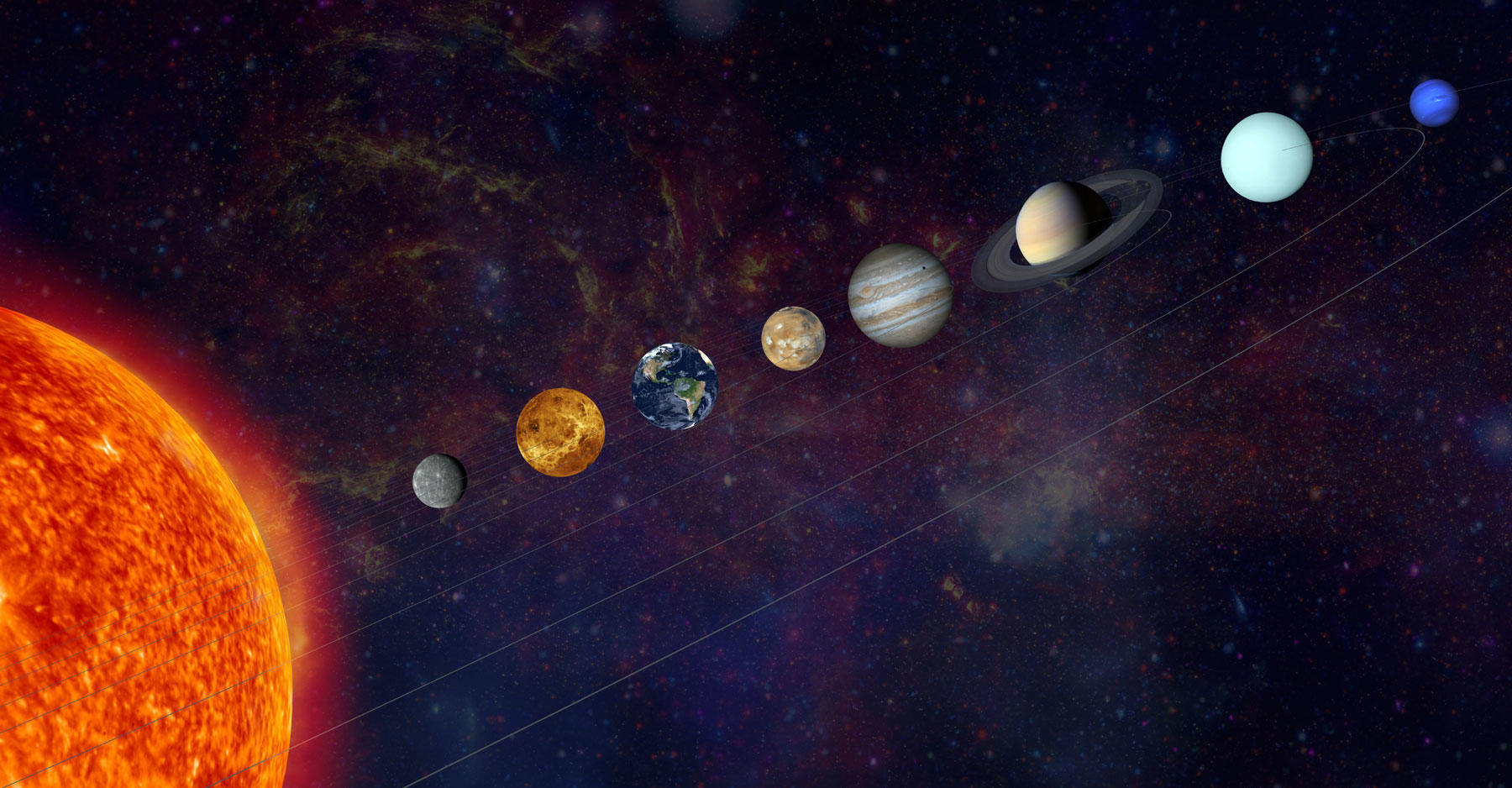
Planet #1 is ...

a)

Mars

b)

Earth

c)

Venus

d)

Mercury

23.

Planet #2 is ...

a)

Mars

b)

Venus

c)

Earth

d)

Mercury

24.

Planet #3 is ...

a)

Mars

b)

Venus

c)

Earth

d)

Mercury

25.

Planet #4 is ...

a)

Mars

b)

Venus

c)

Earth

d)

Mercury

26.

Which planet is the hottest?

a)

Mars

b)

Venus

c)

Earth

d)

Mercury

27.

Which planet has an atmosphere that allows life?

a)

Mars

b)

Venus

c)

Earth

d)

Mercury

28.

Which planet is the least dense and know for its impressive ring system?

a)

Jupiter

b)

Saturn

c)

Uranus

d)

Neptune

29.

The largest planet in our Solar System is _____. It has over 63 moons and a "Large Red Spot."

a)

Jupiter

b)

Neptune

c)

Saturn

d)

Uranus

30.

Earth's orbit around the Sun is

a)

circular

b)

oval

c)

Elliptical

d)

elongated

31.

Takes 365 days to complete.

a)

rotation

b)

revolution

32.

Earth spins on its axis.

a)

rotation

b)

revolution

33.

TAkes 24 hours to complete.

a)

rotation

b)

revolution

34.

How we measure one day.

a)

rotation

b)

revolution

35.

The movement of one object around another.

a)

rotation

b)

revolution

36.

Creates the day/night cycle.

a)

rotation

b)

revolution

37.

How we measure one year.

a)

rotation

b)

revolution

38.

Creates the seasons.

a)

rotation

b)

revolution

39.

The earth is tilted on its _____

a)

line

b)

axis

c)

equator

d)

core

40.

How many moons does earth have?

a)

2

b)

5

c)

9

d)

1

41.

What part of the earth gets the most direct sunlight all year?

a)

North pole

b)

Antarctica

c)

Equator

d)

Utah

42.

The earth is the only planet that ____________.

a)

supports life

b)

contains humans

c)

has water

d)

all of the above

43.
What are the reasons for the seasons?
a)
Earth's tilt and rotation.
b)
Earth's rotation and revolution.
c)
Earth's tilt and revolution.
d)
Earth's tilt and resolution
44.
When the Northern Hemisphere of Earth is Leaning away from the Sun, What season is the Southern Hemisphere experiencing?
a)
Summer
b)
Winter
c)
Spring
d)
Fall
45.

An equinox is

a)

When there is a long day and short night

b)

When there is a short day and long night

c)

When there is equal day and equal night

46.

If it is winter in the southern hemisphere, it is what season in the northern hemisphere?

a)

Summer

b)

Fall

c)

Winter

d)

Spring

47.

If it is summer in the Northern hemisphere, it is what season in the southern hemisphere?

a)

Summer

b)

Fall

c)

Winter

d)

Spring

48.

If it is fall in the northern hemisphere, what season is it in the southern hemisphere?

a)

Summer

b)

Fall

c)

Winter

d)

Spring

49.

If it is spring in the northern hemisphere, what season is it in the southern hemisphere?

a)

Summer

b)

Fall

c)

Winter

d)

Spring

50.

The pathway the Earth takes around the Sun is...

a)

Orbit

b)

Rotation

c)

Hemisphere

d)

Axis

51.

What hemisphere do we live in?

a)

Northern hemisphere

b)

Southern hemisphere

52.

Where would the sun be based off of the shadow being casted?

a)

A

b)

B

c)

C

d)

D

53.

How many days are in a calendar year?

a)

362.1

b)

356 1/5

c)

635

d)

365 1/4

54.

What must happen in order for there to be an eclipse?

a)

the sun, earth, and moon must perfectly align

b)

The earth must be higher than the sun and moon

c)

A full moon occurs

d)

The moon must be beside the earth

55.

What type of eclipse is this?

a)

Solar eclipse

b)

Lunar eclipsee

56.
a)

Lunar eclipse

b)

solar eclipse

57.

Why do eclipses not occur with every new and full moon?

a)

The moon's orbit is tilted.

b)

The moon doesn't always come in between the sun and moon during new moons.

c)

The earth is tilted.

d)

The moon is too far from earth.

58.
Which of the following is NOT true about a total solar eclipse?
a)
It can be viewed from every spot on earth
b)
It is dangerous to look at without the proper device
c)
When it happens, the moon blocks all of the sun except the corona
d)
You must be within the moon's umbra to see it
59.
What is the darkest inner part of the shadow cone called, where a total eclipse can be viewed.
a)
Total
b)
Umbra
c)
Penumbra
60.
An eclipse in space is when....
a)
one object passes through the shadow of another object.
b)
two shadows collide.
c)
the moon is in the waxing crescent phase.
d)
the Sun and Moon are side by side.
61.
How long does it take the moon to orbit the Earth?
a)
12 hours
b)
24 hours
c)
27 days
d)
365 days
62.
Scientists that study space are called _______.
a)
meterologists
b)
astronomers
c)
cardiologists
d)
astrologists
63.
What makes the moon turn reddish in a total lunar eclipse?
a)
Earth's Atmosphere
b)
Earth's Rotation
c)
Earth's Water
d)
Earth's Orbit
64.
When one celestial body blocks another's light, this is called an...
a)
eclipse
b)
envelope
c)
blockage
d)
covering
65.

What does "solar" mean?

a)

moon

b)

sky

c)

star

d)

sun

66.

What does "lunar" mean?

a)

moon

b)

sky

c)

star

d)

sun

67.

Both solar and lunar eclipses have which of the following types?

a)

Total

b)

Annular

c)

Partial

d)

Total and Partial

68.
Define Waxing
a)
Moon is increasing and light part appears to be growing
b)
Completely illuminated
c)
dark side is facing earth
d)
Moon is decreasing and light part appears to be shrinking
69.
What causes the moon's phases
a)
Where you are standing on Earth
b)
the amt of sunlight reflected onto the moon from the sun
c)
The tilt of Earth
d)
how fast the moon is moving
70.
Define New Moon
a)
None of moon is visible from Earth
b)
All of moon visible from Earth
c)
Moon is 1/2 visible from Earth
d)
Moon is more than Half Visible from Earth
71.
As the moon's shape appears to get smaller, we say that the moon is _.
a)
swelling
b)
waxing
c)
waning
d)
disappearing
72.
The complete cycle of the moon lasts about a _.
a)
day
b)
year
c)
week
d)
month
73.

If Earth did NOT tilt on its axis in relation to the Sun, which of the following would also be

true?

a)

there would be no seasons

b)

one Earth-year would be 14% longer

c)

Earth would spin at a different rate

d)

temperatures at Earth’s equator would cool

74.

Which movement of ocean water is caused by the Moon?

a)

tides

b)

waves

c)

deep currents

d)

shallow currents

75.

In which diagram does Point X show a place in the Northern Hemisphere that is

experiencing summer?

a)

b)

c)

d)

76.

Which of the following is a result of the tilt of Earth’s axis?

a)

seasonal changes

b)

hours in a day

c)

heights of tides

d)

moon phases

77.
True or False
The planets are all equally distanced from each other.
a)
True
b)
False
78.

Most of the mass in the solar system is located in

a)

Jupiter

b)

Sun

c)

gas

d)

Eart

79.

If the Earth was a basketball, the moon would be.....

a)

a tennis ball

b)

ping pong ball

c)

a volleyball

d)

a hot air balloon

80.
The Sun is the nearest star to Earth.
a)
True
b)
False
81.
Question Image

Match the following

a)
1.

Earth

b)
2.

Mars

c)
3.

Saturn

d)
4.

Jupiter

e)
5.

Sun

82.

What is the primary reason for the changing seasons on Earth?

a)

The distance from the Sun

b)

The tilt of Earth's axis

c)

The speed of Earth's rotation

d)

The shape of Earth's orbit

83.

Which of the following is a dwarf planet in our solar system?

a)

Pluto

b)

Neptune

c)

Uranus

d)

Earth

84.

Label the four Jovian planets, also known as gas giants or ice giants.

85.

Below is a model of the first five planets in the solar system. What is the name of Planet D?