
Font size
 Worksheets
Read & Review - Chapter 6.1
Total questions: 22
Worksheet time: 6hrs 30mins
Read Section "What Does DNA Look Like?" on page 144
Which of the following things is what passes on inherited characteristics?
Parts
Genes
Cells
Puzzles
Read Section "What Does DNA Look Like?" on page 144
What is the shorter way to say Deoxyribonucleic Acid?
DNA
RAN
DEO
DAR
Read Section "What Does DNA Look Like?" on page 144
What are genes small parts of?
Molecules
Amino Acids
Chromosomes
Proteins
Read Section "The Pieces of the Puzzle" on page 144
What does DNA tell a cell to do?
It tells cells how to build and maintain itself
It tells cells to turn into chromosomes
It tells cells to surprise Scientists by changing suddenly
It tells cells to become more complex
Read Section "The Pieces of the Puzzle" on page 144
When must material that makes up the genes be copied?
When it grows bigger
When scientists need it
Each time a cell divides
When proteins are in it
Read Section "Nucleotides: The Subunits of DNA" on page 144
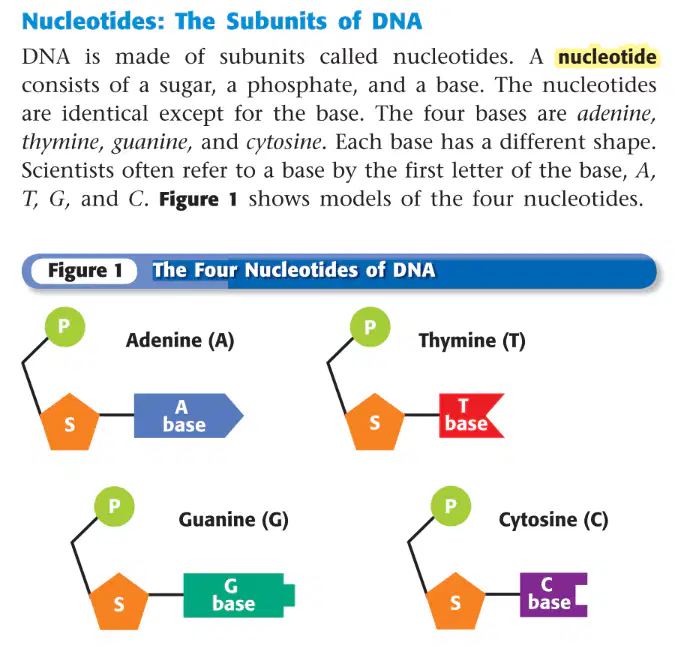
The subunits of DNA, which are called (a) , have a sugar, a phosphate group, and a base.
amino acids
lipids
carbohydrates
Read Section "Nucleotides: The Subunits of DNA" on page 144
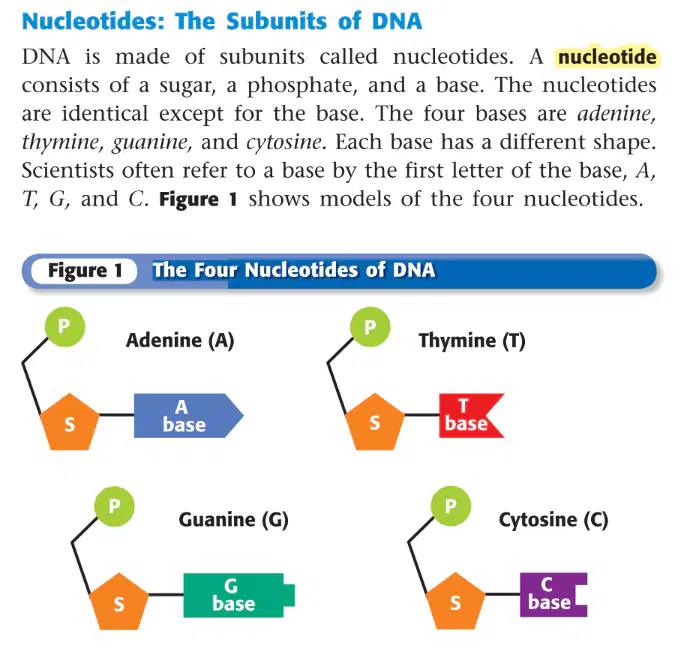
The 4 kinds of DNA bases are:
(a) ( A ) (b) ( T )
(c) ( G ) (d) ( C )
Read Section "Chargaff's Rules" on page 145
Chargaff found that the amount of adenine (A) in DNA equals the amount of . . .
(a)
Read Section "Chargaff's Rules" on page 145
Chargaff found that the amount of guanine (G) in DNA equals the amount of . . .
(a)

Read Section "Franklin's Discovery" on page 145
What did Rosalind Franklin show about DNA molecules in her photographs?
Their scientific history
Their spiral shape
Their cytosine
Their rules
Read Section "Watson and Crick's Model" on page 145
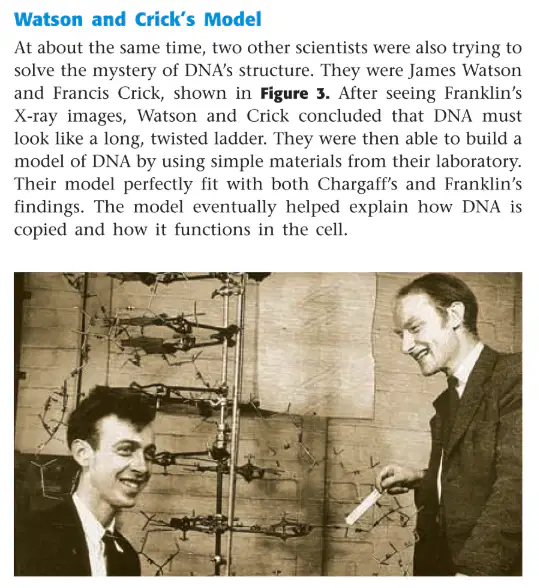
What did Watson and Crick think DNA looked like?
A model
A long, twisted ladder
A mysterious substance
A copy of a protein
Read Section "Watson and Crick's Model" on page 145
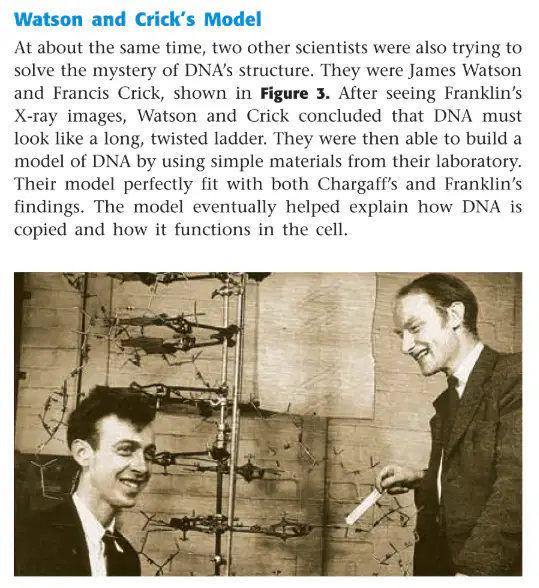
What did Watson and Crick build to help explain DNA?
A X-Ray
A simulation
A model
A cell

Read Section "DNA's Double Structure" on page 146
The twisted ladder shape of DNA is called a (a)
Single Helix
Triple Helix
Quadruple Helix

Read Section "DNA's Double Structure" on page 146
DNA is often described as being shaped like a twisted ladder. The rungs of the ladder are made of . . .
Bases
Cytosine
Nucleotides
Thymine
Ribose

Read Section "DNA's Double Structure" on page 146
The bases of DNA form specific pairs. Guanine always pairs with (a) and Adenine always pairs with (b) .
Adenine
Uracil
Read Section "Making Copies of DNA" on page 146
When cells replicate, what do they do?
They grow
They make bases
They make new cells
They bond with anything
Make copies of DNA
Read Section "Making Copies of DNA" on page 146
What do we mean when we say DNA bases are complementary to each other?
Each base pair specifically bonds with one other base.
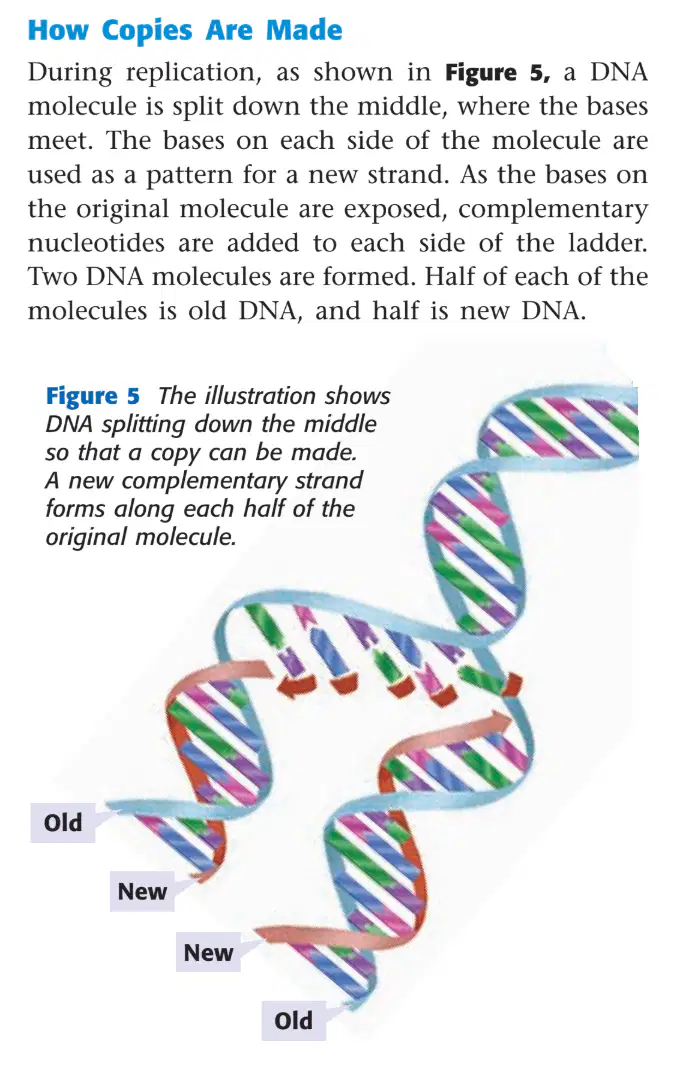
Read Section "How Copies are Made" on page 147
How is a DNA molecule split as it is copied?
Down the middle
By a strand
From top to bottom
By the sugars
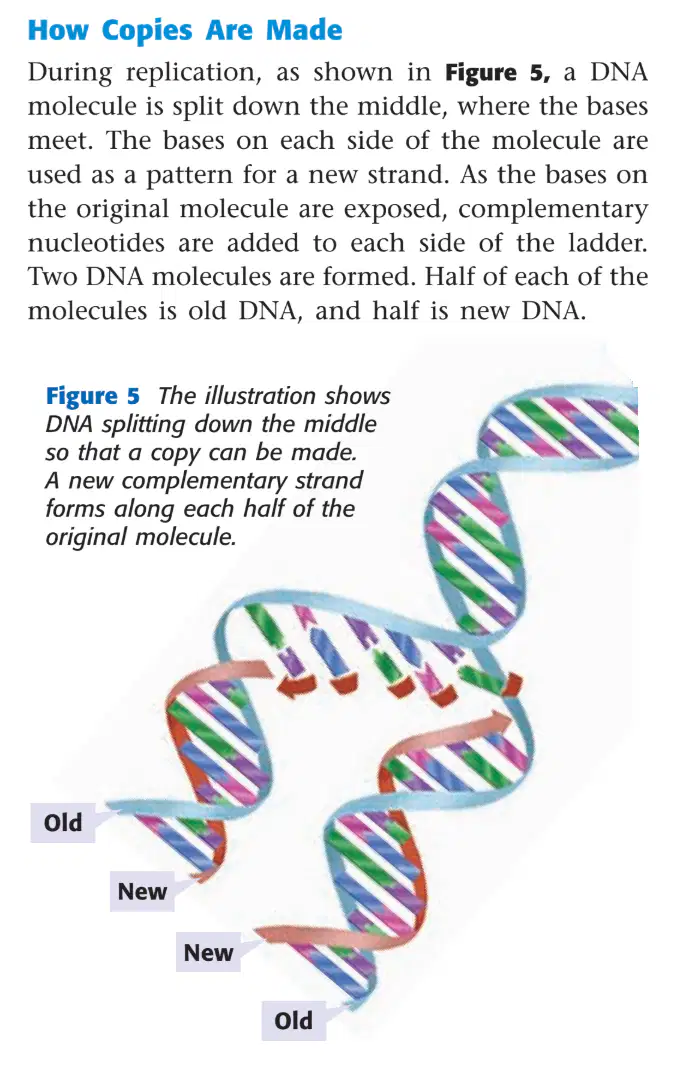
Read Section "How Copies are Made" on page 147
What are the bases on each part of the original DNA strands used for?
As a sugar
As a phosphate
As a pattern
As a protein
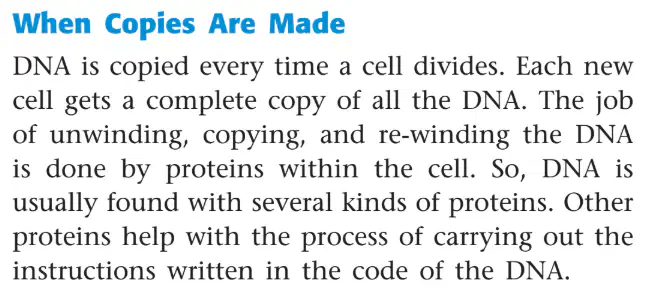
Read Section "When Copies are Made" on page 147
When is DNA copied?
When the nucleus gets big
When there are no proteins
When the DNA is read
Every time a cell divides
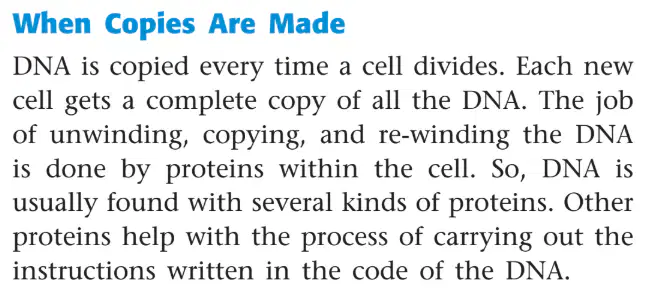
Read Section "When Copies are Made" on page 147
What material helps DNA copy itself?
Proteins
Phosphates
Sugars
Bases

Using what you know about DNA bases complete the following:
What would the complementary strand of DNA be for the sequence of bases below?
Sequence: C T T T A G G C T A C C C A C
(a)

