
 Worksheets
6th grade World History I - Q3 DCA
Total questions: 14
Worksheet time: 7mins

According to the information provided, which statement is accurate?
A. The Zhou dynasty ruled after the Han dynasty.
B. The Qin dynasty ruled after the Han dynasty.
C. The Han dynasty ruled before the Shang dynasty.
D. The Shang dynasty ruled before the Qin dynasty.

According to the information provided, what period in Ancient Greek history did the Battle of Marathon take place?
A. Byzantine
B. Classical
C. Hellenistic
D. Ottoman

The Greek philosopher Socrates taught in Athens around 420 BCE. Where does this event belong in the timeline of events from the passage? (P)
A. Between the first Olympic Games (776 BCE) and the Battle of Marathon (490 BCE)
B. Between the Battle of Marathon (490 BCE) and the building of the Parthenon (432 BCE)
C. Between the building of the Parthenon (432 BCE) and Alexander's conquests (334 BCE)
D. Between Alexander's conquests (334 BCE) and the Roman conquest (146 BCE)

Which of the following list of events is in the correct chronological order according to the information provided in the map? (P)
Qin conquers other states and unites China, Qin dynasty begins, Civil war ends dynasty
Civil war ends Qin dynasty, Qin dynasty begins, Great Wall links early defensive walls, Barbarians attack northern China
Barbarians attack northern China, Civil war ends Qin dynasty, Qin conquers other states and unites China
Great Wall links earlier defensive walls, Civil war ends Qin dynasty, Barbarians attack northern China
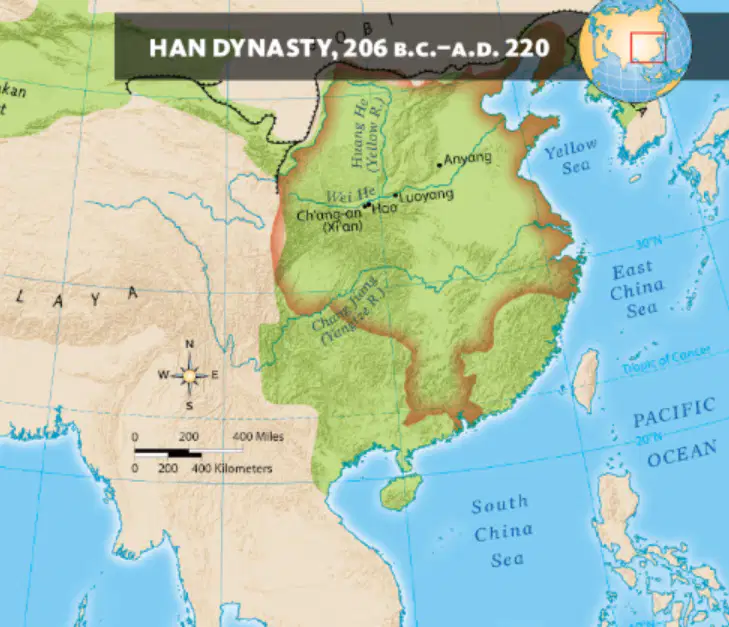
According to the information available in this map, the people of the Han Dynasty were protected by several natural barriers in addition to the Great Wall of China. Which statement is accurate?
They were protected by bodies of water to the East.
They were protected by bodies of water to the North.
They were protected by the Himalaya mountains to the South.
They were protected by the Taklimakan desert to the East.
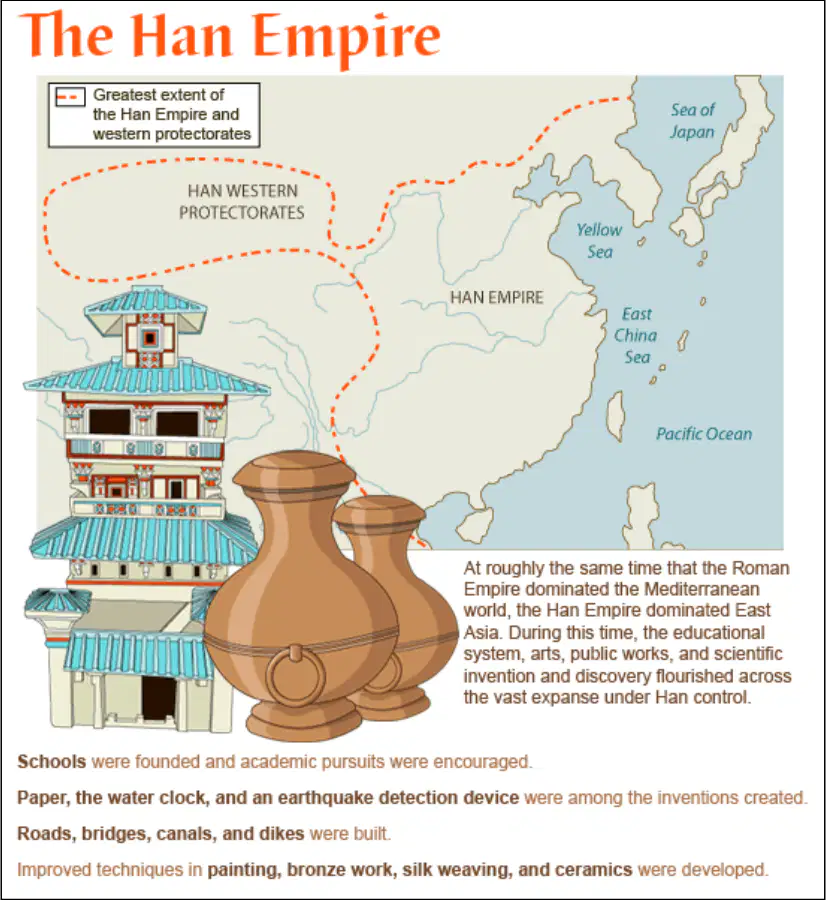
Using the infographic, what helped the Han empire manage such a large territory?
They didn't build any roads
They only had a few schools
They built roads, bridges, and canals to connect different areas
They only focused on making paper
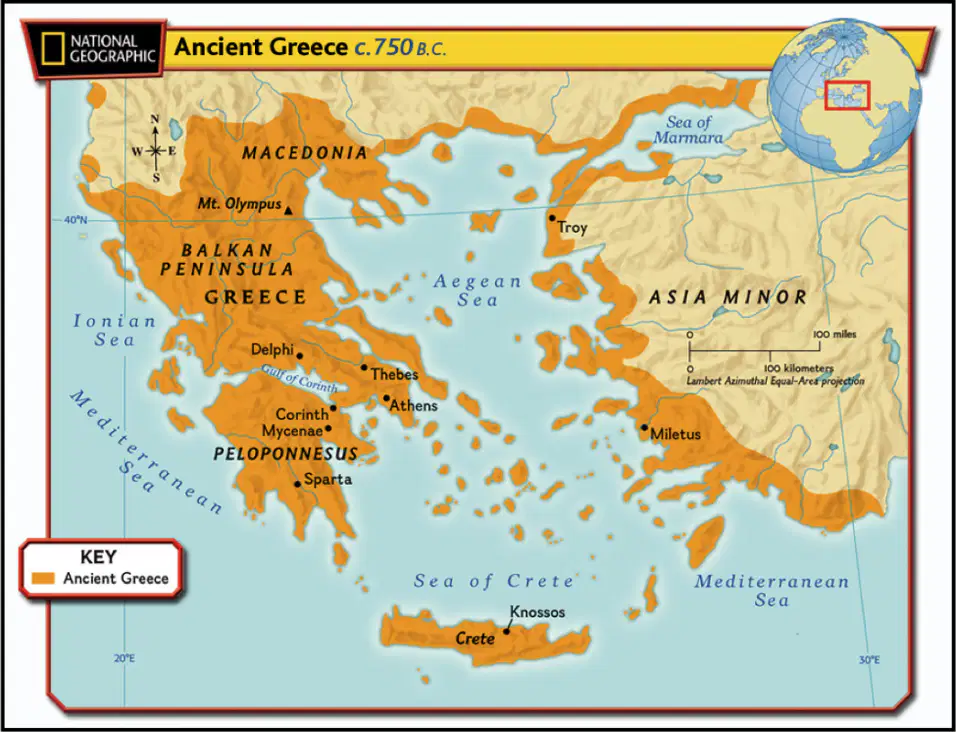
Due to their location, which of the following is true? (P)
Crete may develop a strong navy and focus on trade by sea due to its island location.
Thebes might have more unity among its residents.
Thebes may develop difficulty in communication with other city-states.
Crete may encourage more democratic participation with neighboring city-states.
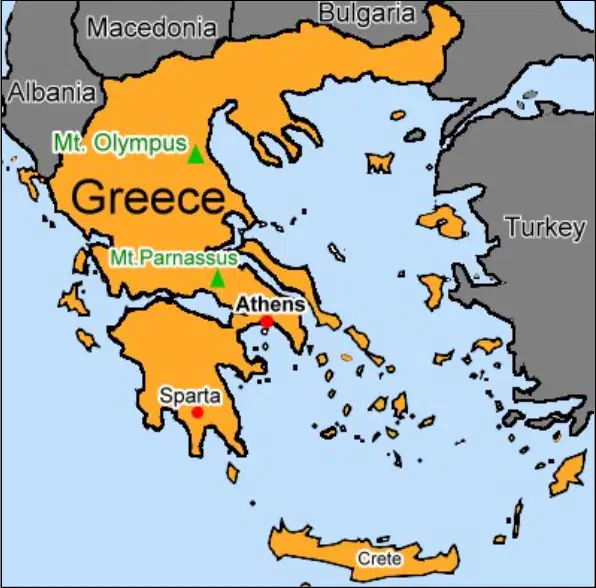
According to the information available in the map, what reason might people have had to settle in Athens? (P)
To access the temple to Athena on Mt. Parnassus
To be close to Mount Olympus
To trade with Albania
Access to the sea and trade
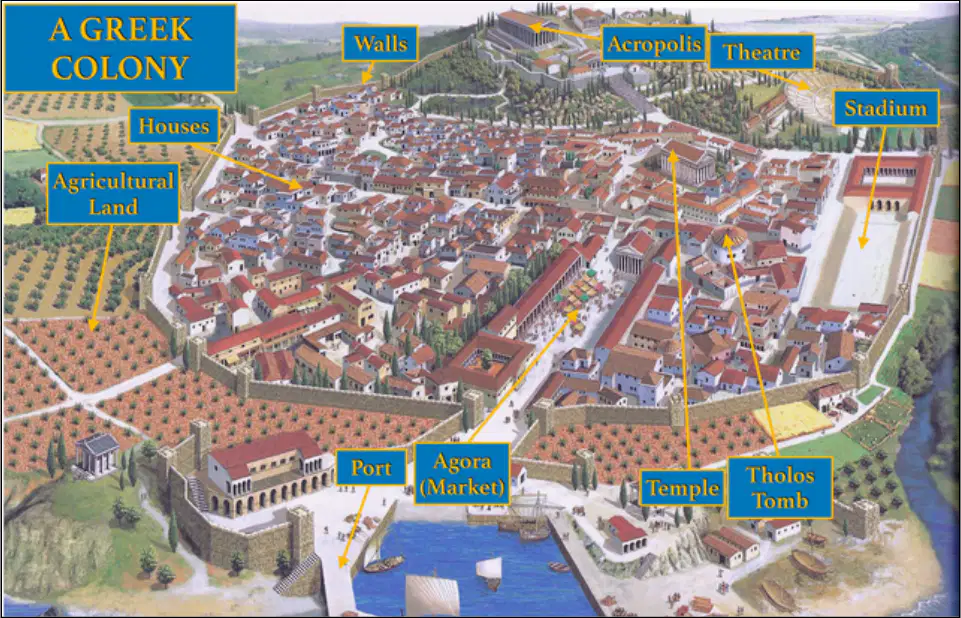
Look at this map of an ancient Greek city. What does the way they built their city tell us about what was important to them?
The presence of large temples indicates the importance of religion.
The extensive road network shows the importance of trade.
The fortified walls suggest a focus on defense.
The central marketplace highlights the importance of commerce.

According to this passage, one of the reasons that Athens developed democracy is because of citizens’ .
Artistic achievements
Religious practices
Athletic abilities
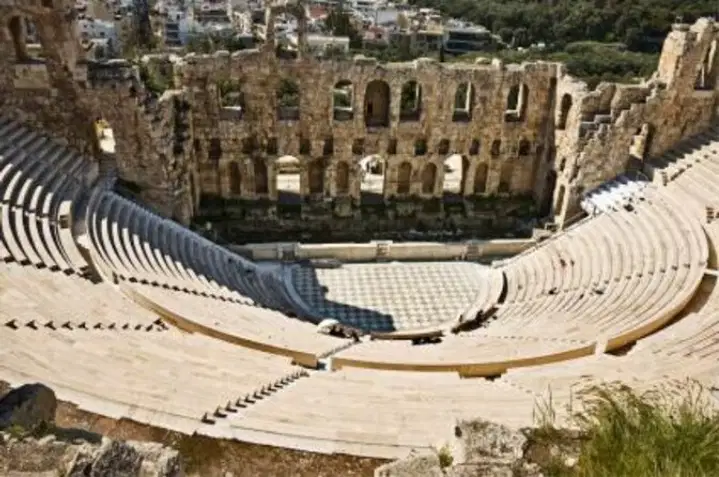
This image is of a theater in Athens known as the Theatre of Dionysus. What does the existence of theaters in Athens tell us about their values?
They discouraged public performances.
They valued public gatherings and artistic expression.
They promoted religious rituals.
They encouraged military participation.

This image is of Yumen Pass, a gate in the Great Wall of China through which the Silk Road passed during the Han dynasty. Which of the following does this image and information suggest? (P)
The Han dynasty valued both protection and trade.
The Han dynasty valued both trade and democracy.
The Han dynasty did not value education.
The Han dynasty did not value trade.
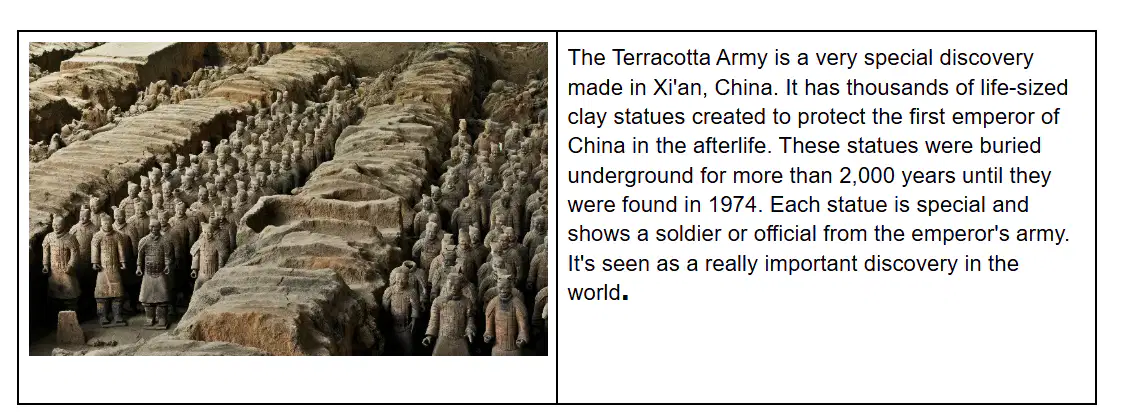
The creation of the Terracotta Army suggests that this society valued .
Art
Education
Trade
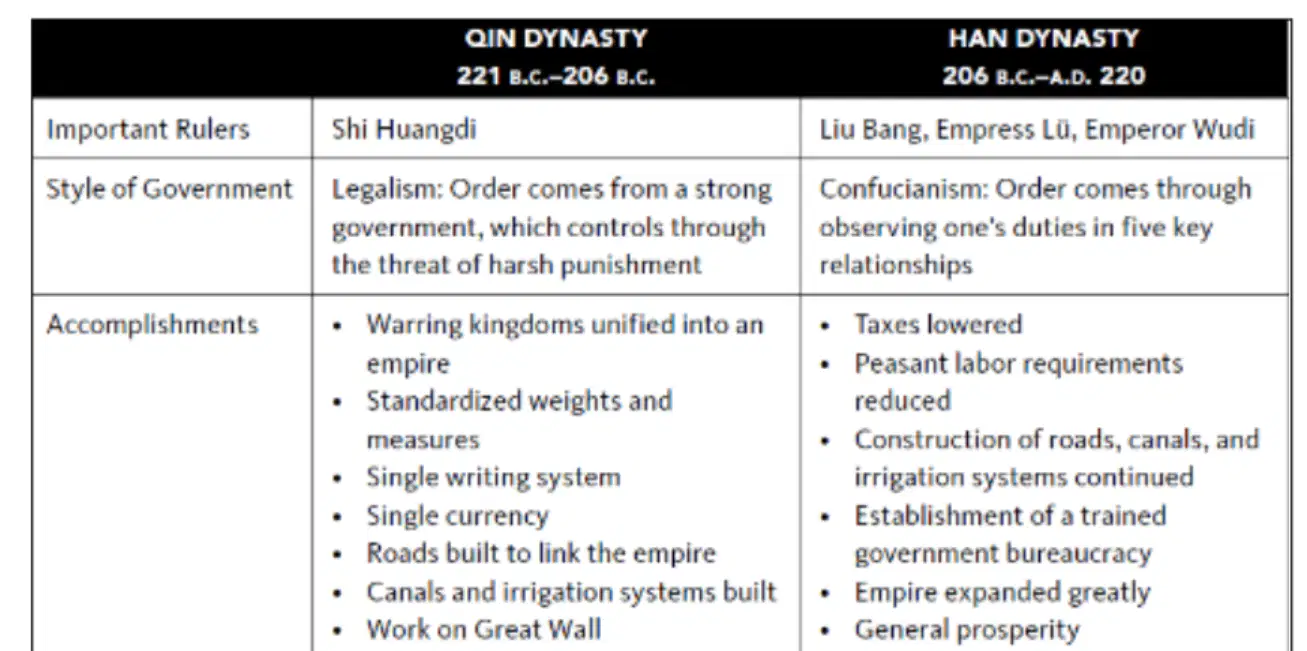
After examining the information in the chart, identify the dynasty that most likely created the Terracotta Army (collection of terracotta soldiers to protect the emperor in his afterlife).
Han Dynasty
Qin Dynasty
Tang Dynasty
Song Dynasty

