
 Worksheets
Periodic table mega quiz
Total questions: 157
Worksheet time: 52mins


A) Ernest Rutherford
B) J.J. Thomson
C) John Dalton
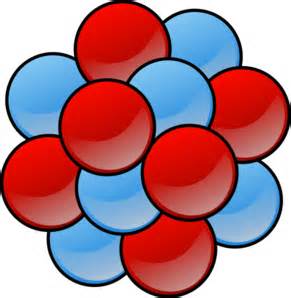

Order the atomic models below from the oldest to the most recent.
2, 1, 3, and 4
1, 2, 4, and 3
3, 2, 4, and 1
3, 1, 2, and 4

Protons are:
Negative
Positive
No charge
Atomic Number
Neutrons have
Negative
Positive
No charge
Atomic Number
Electrons are
Negative
Positive
No charge
Atomic Number
In the nucleus you can find the
Protons, neutrons, and electrons
Protons and neutrons
Protons and electrons
Neutrons
All of the mass is located in the:
Electron cloud
Radiation
Church
Nucleus
The smallest subatomic particle
Protons
Neutrons
Electrons
Atoms
An element has an atomic number of 9 and a mass of 19 amu. What is the number of protons this element has?
9
19
10
28
An element has an atomic number of 9 and a mass of 19 amu. What is the number of electrons this element has?
9
19
10
28
An element has an atomic number of 9 and a mass of 19 amu. What is the number of neutrons this element has?
9
19
10
28

What is represented by the letter T?
Nucleus
Electron
Proton
Neutrons
What is represented by the letter S?
Nucleus
Electron
Proton
Neutrons
What is represented by the letter Q?
Nucleus
Electron
Proton
Neutrons
What is represented by the letter R?
Nucleus
Electron
Proton
Neutrons
The atomic number is the same as the number of
Protons
Neutrons
Mass
Atom
What gives you the identity of an element?
Mass
Atomic number
Protons
Electrons
An element has 3 electrons and a mass of 7. How many protons does this element have?
3
7
4
10
How many protons does Boron, B have?
5
11
6
How many neutrons does hydrogen have?
1
0
How many protons does an element with an atomic number of 32 and a mass of 73 have?
32
73
41
How many electrons does Lithium have if it has an atomic number of 3 and a mass of 7?
3
7
4
What is the mass number of a Potassium (K) atom that has 20 neutrons?
18
19
20
39
An atom of Chlorine, Cl, has an atomic number of 17 and a mass of 35. How many subatomic particles are INSIDE the nucleus?
17
35
18
An atom of Chlorine, Cl, has an atomic number of 17 and a mass of 35. How many subatomic particles are OUTSIDE the nucleus?
17
35
18
What is the number of neutrons in an oxygen atom with a mass number of 16?
8
16
24
7
Which subatomic particle is located in the electron cloud of an atom?
Proton
Neutron
Electron
Nucleus
If an element has an atomic number of 12, what is its number of protons?
6
12
18
24
In ascending order, the maximum number of electrons each shell can hold is
2, 8, 8, 32
2, 8, 18, 32
2, 6, 8, 32
2, 3, 4, 5
Boron (B) has 5 electrons. Its electron configuration is
5
2, 2, 1
1, 2, 2
2, 3

The electron configuration of Nitrogen is
0, 2, 5
N, 2, 5
7
2, 5

The electron configuration of sulfur is
2, 8, 6
2, 8, 8
3, 8, 6
0, 2, 8

How many protons does Magnesium have?
24
12
2
16
An element has an electron configuration of 2,8. Which element is this?
(a)
The electron configuration of oxygen is 2, 6. What is its atomic number?
2
6
8
4
Aluminium has 13 electrons. How many electron shells would make up the atom?
1
2
3
4
What is the electron configuration of carbon?
2, 2, 2
2, 4
2, 6
1, 5
How many protons does Chlorine have?
16
19
18
17
Which element has the electron configuration 2, 8, 1?
Aluminium
Sodium
Neon
Magnesium
What is the electron configuration of Neon?
2, 8
2, 7
2, 8, 1
2, 6
Which element has the electron configuration 2, 8, 7?
Sulfur
Fluorine
Argon
Chlorine
What is the electron configuration of phosphorus?
2, 8, 5
2, 8, 7
2, 8, 6
2, 7, 6
Which element has the electron configuration 2, 8, 2?
Silicon
Aluminium
Magnesium
Calcium
What is the electron configuration of argon?
2, 8, 5
2, 8, 6
2, 8, 7
2, 8, 8

According to the periodic table what element is in group 9 period 4?
Hydrogen
Magnesium
Cobalt
Sulfur
According to the periodic table what element is in group 7 period 4?
Hydrogen
Manganese
Plutonium
Nitrogen
According to the periodic table what element is in group 1 period 1?
Hydrogen
Manganese
Oxygen
Nitrogen

How many valence electrons does Aluminum have?
1
3
5
7
How many valence electrons does Lithium have?
1
3
5
7
How many valence electrons does Helium have?
2
4
6
8
How many valence electrons do group 14 elements have?
2
4
6
8
How many valence electrons do group 16 elements have?
2
4
6
8
How many valence electrons do group 1 elements have?
1
2
3
8
Where is a Valence electron located?
The innermost shell
The nucleus
The outmost shell
A __________ goes up and down on the periodic table.
Group
Period
A _________ goes side to side on the periodic table.
Group
Period

What two elements are in the same Period?
K - Potassium and Na - Sodium
Li - Lithium and Mg - Magnesium
B - Boron and C - Carbon
Zn - Zinc and N - Nitrogen
The _______ tells us how many energy shells an element has.
group
period
atomic number
element symbol
The _________ tells us how many valence electrons an element has.
Group
Period
Atomic Number
Element

There are_______ periods and _________ groups in the periodic table.
8, 7
18, 7
15, 10
7, 18

How many valence electrons does this atom have?
4
2
6
Elements more reactive the further __________ on the periodic table.
Right
Left

How many energy shells does Fe - Iron have?
26
2
4
55

What period does the element I - Iodine belong to?
17
6
3
5

On the periodic table, Periods are
Horizontal rows
Vertical columns
On the periodic table, Groups (also known as Families) are
Horizontal rows
Vertical columns
What is a valence electron?
Electrons in the first energy level
Electrons in the second energy level
Electrons in the outer level
Total number of electrons
The period number tells you the number of _______ that an atom has
valence electrons
energy levels
total number of electrons
physical properties
The group (or family) number tells you the number of _______ that an atom has
valence electrons
energy levels
total number of electrons
physical properties
Most of the elements on the Periodic Table are
metals
nonmetals
metalloids
noble gases
Choose the elements that are metals
Potassium
Aluminum
Bromine
Oxygen
Gold
Which element is a metalloid?
Calcium
Mercury
Boron
Argon
Which elements are nonmetals?
Hydrogen
Xenon
Copper
Silicon
Oxygen
Calcium has how many valence electrons?
1
2
4
20
Chlorine has how many valence electrons?
1
3
7
17
Helium has how many valence electrons?
1
2
3
4
Magnesium has how many energy levels?
1
2
3
12
Carbon has how many energy levels?
1
2
4
6
Which element has 2 energy levels and 3 valence electrons?
Boron
Magnesium
Aluminum
Calcium
Which of the following is an alloy?
stainless steel
chromium
nickel
lead
Metallic bonding is...
a type of covalent bond.
a type of ionic bond.
an attraction between positive ions and a sea of delocalised electrons.
Which of these are considered properties of metals? (choose ALL that apply)
brittleness
low melting point
luster (shininess)
malleability
ductility
Which property allows metals to be drawn into wires?
Malleability
Ductility
Conductivity
Solubility
What is the primary reason metals are good conductors of electricity?
They are dense
They are shiny
They have a high melting point
They have delocalized electrons
Which of the following is a characteristic of metals?
Brittle
Non-malleable
High melting point
Poor conductor of heat

The diagram shows metallic bonding.
Which labels are correct?
X: atomic nucleus
Y: outer electron
X: metal atom
Y: mobile electron
X: metal cation
Y: mobile electron
X: positive ion
Y: negative ion
The Electron Sea Model explains why metals are ....
excellent conductors
are very reactive
accept electrons easily
form ionic compounds
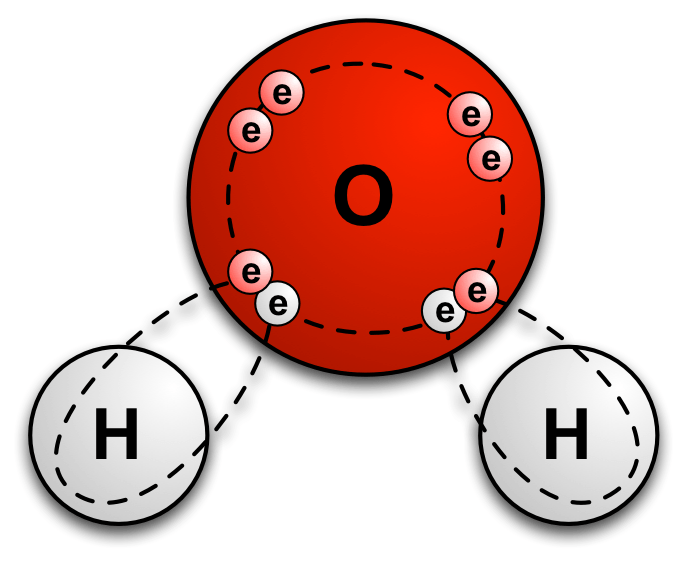


polyatomic ions
an element from Group 7
Calcium Oxide, CaO
Covalent Bond
Ionic Bond
Calcium Chloride, CaCl2
Covalent Bond
Ionic Bond
Why do ionic bonds form?
so the number of protons equals the number of electrons
to fill the outermost energy level to make the atom stable
so an atom can become unstable
If an aluminum atom has 13 protons (+) and 10 electrons (-), what is it's charge?
Al+3
Al+13
Al+10
Al-10
if NONMETALS are more likely to GAIN electrons, they will form ...
anions
neutral atoms
cations
In the chemical formula for an ionic compound, which item is written first?
positive ion (cation)
negative ion (anion)
subscript
it's alphabetical

The transfer of Valence electrons from a metal to a non metal is known as
Covalent Bonding
Metallic bonding
Molecular bonding
Ionic Bonding
A(n) _________ is an ion with a positive (+) charge.
anion
cation
ion
solute

