
 Worksheets
Dairy Cattle Test Review
Total questions: 36
Worksheet time: 18mins
________is the predominant carbohydrate in milk. Milk is the only natural source of this carbohydrate.
Lactose
Glucose
Fructose
Sucrose
________is the primary protein in milk and accounts for approximately 80% of all protein in milk.
casein
lactose
rennet
milk
Who invented pasteurization?
Henry Gloseclose
Lenny Pasture
Louis Pasteur
Leslie Applegate
The original method of pasteurization was ______, which heats milk or other liquid ingredients in a large tank for at least 30 minutes.
the batch method
the flash method
the ultra-high temperature method
the cold pasteurization method
What is the most common method of pasteurization in the United States today?
HTLT
LTLT
HTST
H1N1
What is the purpose of homogenization in milk production?
To add flavor to milk
To standardize and disperse milk fat globules
To remove fat from milk
To pasteurize milk
During homogenization, milk is subjected to high pressure, but nothing is _______ or removed from the milk.
added
extracted
filtered
separated
Why can only pasteurized milk be homogenized?
Because pasteurization adds flavor
Because pasteurization denatures an enzyme that induces rancidity
Because pasteurization removes fat
Because pasteurization cools the milk
Fill in the blank: _______ is a type of cultured/acidified milk.
buttermilk
yogurt
kefir
cream
What enzyme is unique to the cheese making process, and in its natural form is derived from the stomach of young cattle?
lactose
casein
rennet
surfactant
What is commonly called the 'most essential' nutrient for animals?
Carbohydrates
Fats
Water
In all species, what provides the bulk of energy in most livestock animal diets?
Proteins
Carbohydrates
Vitamins
Fill in the blank: Lipids or fats are the most _______ nutrient class.
energy dense
abundant
common
versatile
What are proteins built from?
Carbohydrates
Amino acids
Fats
Vitamins
Fill in the blank: Most animals don’t strictly have a protein requirement but rather a requirement for _______.
amino acids
carbohydrates
fats
vitamins
Which vitamins are required across animal species?
Vitamins B, C, D, and E
Vitamins A, D, E, and K
Vitamins A, B, C, and D
Vitamins C, D, E, and K
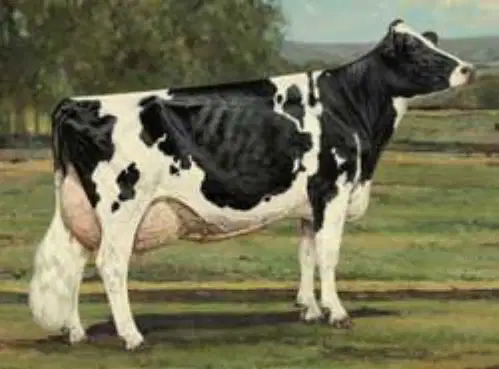
identify the breed of cattle:
Jersey
Guernsey
Holstein
Ayrshire
Holsteins originated in the ________ and were imported to the U.S. starting in the 1600s.
Netherlands
Germany
France
Spain
What are Holsteins known for in terms of milk production?
Producing less milk than other breeds
Producing a greater volume of milk than most other dairy breeds
Producing the same amount of milk as other breeds
Not producing milk
What is the smallest major dairy cattle breed?
Holstein
Jersey
Guernsey
Ayrshire
Jersey cows are known for their friendly personality, heat tolerance, feed efficiency, and producing rich milk, high in _________.
butterfat
protein
lactose
water
Where does the Jersey cattle breed originate from?
Isle of Man
Isle of Wight
Isle of Jersey
Isle of Skye
What is another name for the Guernsey breed?
Golden Guernsey
Silver Guernsey
Bronze Guernsey
Platinum Guernsey
What causes the distinct golden color of Guernsey milk?
High levels of beta-carotene
High levels of calcium
High levels of protein
High levels of lactose
The Guernsey cattle originated from the Isle of ________ in the English Channel.
Guernsey
Jersey
Man
Wight
Where does the Milking Shorthorn originate from?
England
Scotland
Ireland
Wales
What is the primary focus of the Milking Shorthorn dairy breed through breeding?
Milk production
Beef quality
Wool production
Egg laying
What is the color range of Milking Shorthorn cattle?
The color range of Milking Shorthorn cattle includes red, white, and roan.
The color range of Milking Shorthorn cattle includes black, white, and brown.
The color range of Milking Shorthorn cattle includes blue, green, and yellow.
The color range of Milking Shorthorn cattle includes purple, orange, and pink.
Where do Brown Swiss cattle originate from?
The Swiss Alps
The Rocky Mountains
The Andes
The Himalayas
Brown Swiss cattle are known for their ______ temperament and high protein-to-fat ratio in their milk.
docile
aggressive
nervous
unpredictable
What is the color range of Brown Swiss cattle?
Silver to dark brown
Black to white
Red to yellow
Blue to green
Where were Ayrshire cattle first imported from?
County of Ayr in Scotland
County of Kent in England
County of Cork in Ireland
County of Fife in Scotland
What are the colors of Ayrshire cattle?
Black and white
Rusty-red and white
Brown and white
Grey and white
Ayrshire cattle are well-known for their vigor and ability to ________ to the environment.
adapt
resist
ignore
succumb
The role of 'Udder attachment' in dairy cattle selection is to:
ensure proper milk production and ease of milking
improve the aesthetic appearance of the cattle
increase the cattle's resistance to diseases
enhance the cattle's ability to graze efficiently
How does 'Udder floor, teat placement and udder levelness' affect dairy cattle selection?
They are important traits for evaluating the milking ability and overall health of dairy cattle.
They have no impact on dairy cattle selection.
They are only considered in beef cattle selection.
They are irrelevant to cattle selection.

